“Music and singing have been my refuge. And music and singing will be my light.” —Frank Ticheli, Earth Song
In high school I started school every morning by singing in choir during the first period. While I was singing I could escape from the bullying, the stress of academics, and the pressure of being an athlete. Music allowed me to sink into the sound and out of my head. The need for music to soothe my soul continued into college, where I sang in a select chorale and an a cappella group.
Last weekend, I attended a college choral reunion, and I was transported back thirty years, watching my former director, or “DP” as we all called him, pull music out of a choir of middle-aged singers just as he once pulled it out of us as adolescents. His mannerisms hadn’t changed. His arms, his facial expressions, the way he showed us what he needed and what we needed to give—it was as if time had not moved forward.
Throughout the reunion weekend, I heard many stories of the history of the college choral program. DP arrived at the university in the early 1980s with a charge to rebuild the university choirs. Early on, he started a Christmas candlelight service, one that was recorded several times over the years, played on PBS, and was nominated for two Emmy awards. As a child who lived locally to the university, I attended in person – and I loved it.
It was magical. The soprano beginning “Once in Royal David’s City.” The “ringing in of Christmas” with the handbells stationed throughout the chapel. The congregational singing of “Silent Night.” It touched me spiritually and musically in a way I can still feel. Though we only attended once or twice, I watched it on television many more times, in awe of the music and the conductor who made it all happen.
Then, one year in high school, I was singing in the district chorus, and DP was our guest conductor. I recognized him as the person behind that amazing Christmas candlelight service. Somewhere in the back of my mind, a possibility started to take shape. What if I could sing for him? What if I could continue to be in a choir when I went to college?
By the time I landed on campus, I knew I was going to audition for the university chorale. Unfortunately, I was incredibly sick during auditions. It was that back-to-school time when germs circulate, especially among first-year students, and I could barely sing. I forced myself through the audition and left thinking it had been terrible. How could he choose me when he could barely hear whether I could match pitch, let alone whether there was any quality to my voice? I was honestly surprised when he put me in the choir. Despite my sickness, he saw something in me, and I am eternally grateful.
He placed me as an alto, even though I had been singing soprano for years. I never knew whether it was because I had auditioned with a frog in my throat or whether my soprano voice just wasn’t good enough to keep up with the rest of the girls. Regardless, for four years of college, twice a week I could go to rehearsal and escape into the music, under the direction of someone fabulous at teaching and pulling the musicianship out of us. I keep coming back to that word—pulling—because it is how I remember his directing. You could viscerally feel how his conducting arms and facial expressions pulled the sound he needed from us, whether it was the quietist pianissimo or the grandest forte.
At the reunion banquet, he invited alumni to share their stories. As people shared, I thought about my experiences. I remembered the first tour I took with chorale. After falling asleep by the pool and getting incredibly sunburned, I fainted during one of our concerts. As we were recessing, I just went down, and my friend picked me up and carried me down the aisle. Later, DP had to call my parents with the kind of opening no teacher wants to deliver: Kristen’s fine, but…
It was a funny memory, but as I thought harder about my history, I realized that the real story was that this program had been part of my life since childhood. I had watched from the audience, watched on television, hoped to join, and eventually stood among the singers.
And still, I have always felt inferior when it comes to my music. I have never had the self-confidence I probably should have. Even though I was well prepared by an amazing high school director, especially for someone growing up in a rural area, I walked into college feeling behind. I felt like I was always catching up, working hard to be on par with everyone else.
I felt some of that again last weekend. Coming back into this choral space after thirty years away, singing hard music with people who knew what they were doing, was intimidating. I chose to sing in the soprano section, as I had been singing soprano in a church choir for over a decade, and I was suddenly very aware that I wasn’t the leader I had been in my church choir. I wondered if I belonged.
But at the banquet, our conductor explained why he had chosen to work at a small liberal arts school rather than a conservatory. He wanted to work with students who, no matter what discipline they were studying, had a passion for their music. That was what he loved about directing. For thirty-two years, he made room for those students, and I was one of them.
I was chosen for a select choir. I worked hard, and I did a good job. I didn’t think of chorale as my family when I was in college. It was a place I went to sing and escape. Returning after thirty years helped me recognize that I was, in fact, part of a music family. And I belonged.
We sang “Earth Song” in the reunion concert, and its words struck me. Music and singing have been my refuge for most of my life. I could picture the high school girl starting her morning in choir, and the college student finding relief in rehearsal while wondering whether she was good enough to be there.
I could also hear something ahead of me in the words. This reunion closed a full circle of bringing singing back into my life. It started with the thirtieth reunion of my a cappella group, continued with a reunion for my high school choir director, and culminated in this reunion of my college choir. I returned to people who taught me, sang beside people who remember me, and made room for music in the life I am figuring out now. I am now filling one night a week with an oratorio choir, and, as in the past, singing brings both joy and escape. Music and singing have always been my refuge. And I know they can also be my light.
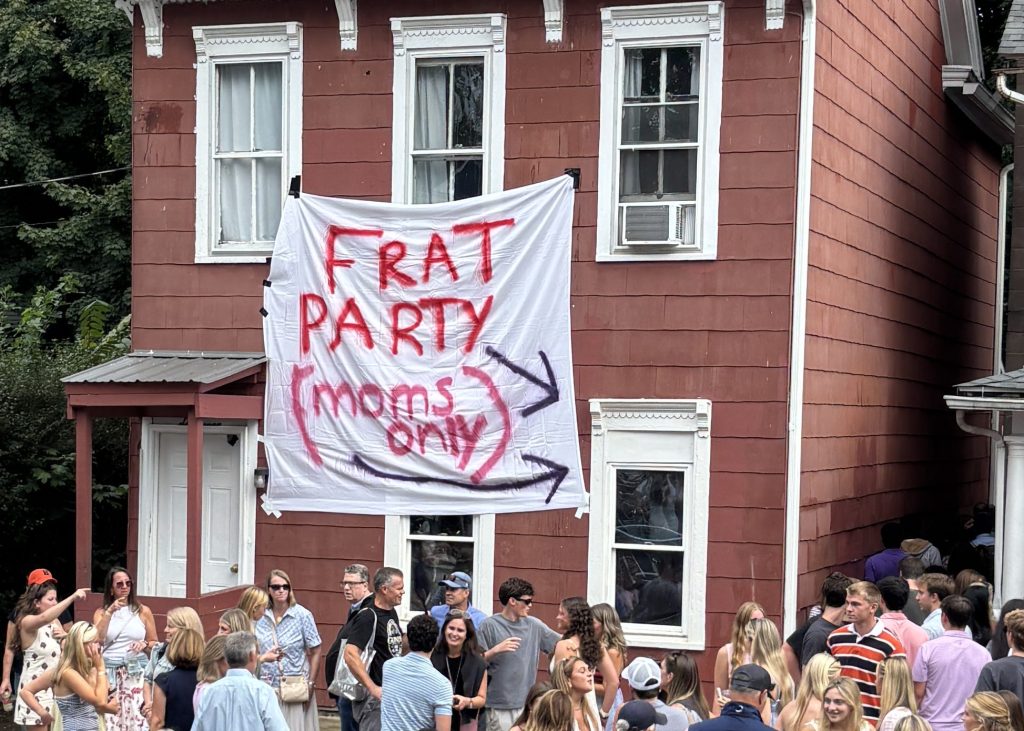
Over the course of ten days, I spent over 25 hours sitting – in a car or on a train – and five nights out of my own bed. With a visit to each of my kids sandwiching a 24-hour work trip that ended with concert tickets, it was an intense stretch. Over the two weekends, we visited our children, met our kids’ new fraternity brothers and sorority sisters, and partied like it was 1996.
And in some ways, it almost felt like it was.
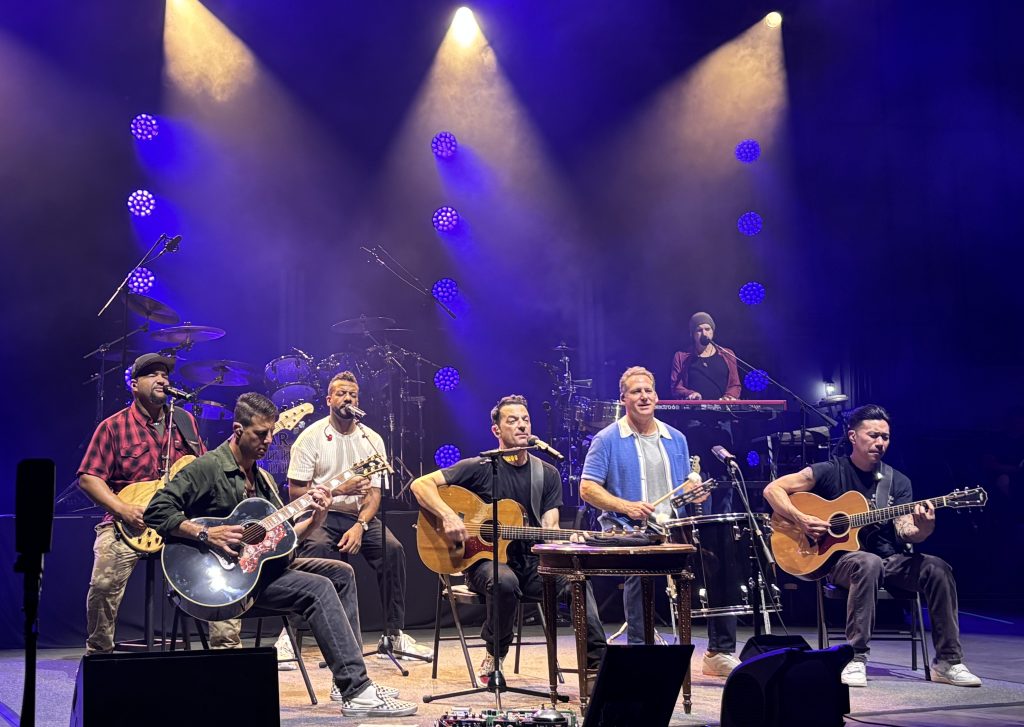
The college visits were a bit different than they had been in the past. We were specifically invited into the party-scene, where we met both my kids’ new friends and their parents. At my daughter’s school, I reconnected with several friends who also currently have children attending. In between the weekends, my husband and I saw one of our favorite bands, one we have followed since we were just a bit older than our kids. Dancing at my son’s fraternity party, singing along live with a favorite band, and hopping from party to party at my daughter’s family weekend invited me to reminisce with my husband about our own adventures years ago, and somehow that mindset helped me see my kids as maturing adults in a way that I hadn’t before. It reminded me of the first time I sat at a bar with my younger brother in our shared college town and saw him, suddenly, as an adult, a true friend and not the little brother he had always been. Sharing a real college experience with my kids put us on the same playing field. They’ve leveled up this year.
It was easy to slip into a college frame of mind. My body did not slip into it quite so easily.
When I ended my ten day whirlwind, I was wiped. The travel, the socializing, and the energy it takes to present at a conference had caught up with me. I wanted to think deeply about my work and get things done, but for a while I had very little to give. My body hurt. My brain had limited function. I needed rest.
Ironically, after such a hectic stretch, my new commitments to filling time via a choir and yoga class kicked in the next day. I was worried that these scheduled activities were going to seem like chores given how tired I was. On the contrary, they gave me some of the rejuvenation I needed. When I sang, my voice felt strong. My mind and muscles relaxed as I took in the sounds of the lush SATB choir around me. At yoga, I was welcomed into an established community with warmth, and my body got the stretch it desperately needed.
Starting the week by keeping those commitments helped me to give myself a little grace – I skipped the gym twice, took a few extra naps, and generally just slogged through the week. By the weekend, I was ready to face the upstairs hallway, where piles had been sitting for over a month since my kids moved back to school. Clearing the space helped clear a little room in my mind, too, and I began to feel some of my brain and physical energy returning.
Though I’m feeling refreshed, I’m acutely aware of how long it took me to recover. I loved my ten days of craziness. I loved seeing my children and sharing a little of their world. I loved the reminders of who my husband and I were in college. And I’m learning to give grace to the fifty-year-old body that carried me through it.
I have steaks sitting at home defrosted in the fridge. I took them out of the freezer over the weekend, not accurately calculating my time this week to cook them. I also defrosted chicken, which I did turn into a pretty mean gluten-free chicken and broccoli last night while I was on a video call about the marketing of my new book. I scarfed down a plate of it (seriously, I thought it was delicious) before hopping on a webinar for my university. My week has been almost as hectic as my first week of the semester. I am currently sitting in a hotel outside of DC on a 24-hour business trip.
Gluten-free cooking has its challenges (hence the reason I was impressed with my chicken and broccoli, which rivaled any restaurant-style I’ve ever had), but gluten-free travelling is almost always a challenge. Two years ago I stayed in this same hotel, attending the same conference. I did not expect to have many options to eat, because then, when I searched Find Me Gluten Free (my favorite travel app), I had basically one good restaurant choice near the hotel, and a Whole Foods about a 10-minute walk away.
When I arrived today, I checked the app and was pleasantly surprised. Not only were there 4-5 restaurants within a few block radius, I realized a Whole Foods had opened last year on the back side of the hotel. With Whole Foods as a backup, I started perusing menus.
Something non-gf people probably don’t realize is that getting an order of fries is a luxury for those of us who are celiac/sensitive. I love fries. I rarely can have them because they are fried in a fryer where gluten-containing items are also fried. Cross-contamination is a real thing. So as I searched for a walkable restaurant, I looked for one with fries I could eat.
I found a grill that said it had celiac-safe fries, which immediately got my attention. The place featured burgers (which I don’t like) that could be subbed for a chicken breast. Doable in order to get my fries. But then I looked more closely at the menu and saw that I could order a steak.
My mind immediately went to the defrosted steaks in my fridge at home. Could I really order a steak when I would need to cook the ones I had taken out of the freezer in the next few days?
I was halfway to the restaurant, enjoying the afternoon sunshine, when I made my decision. I wanted the steak.
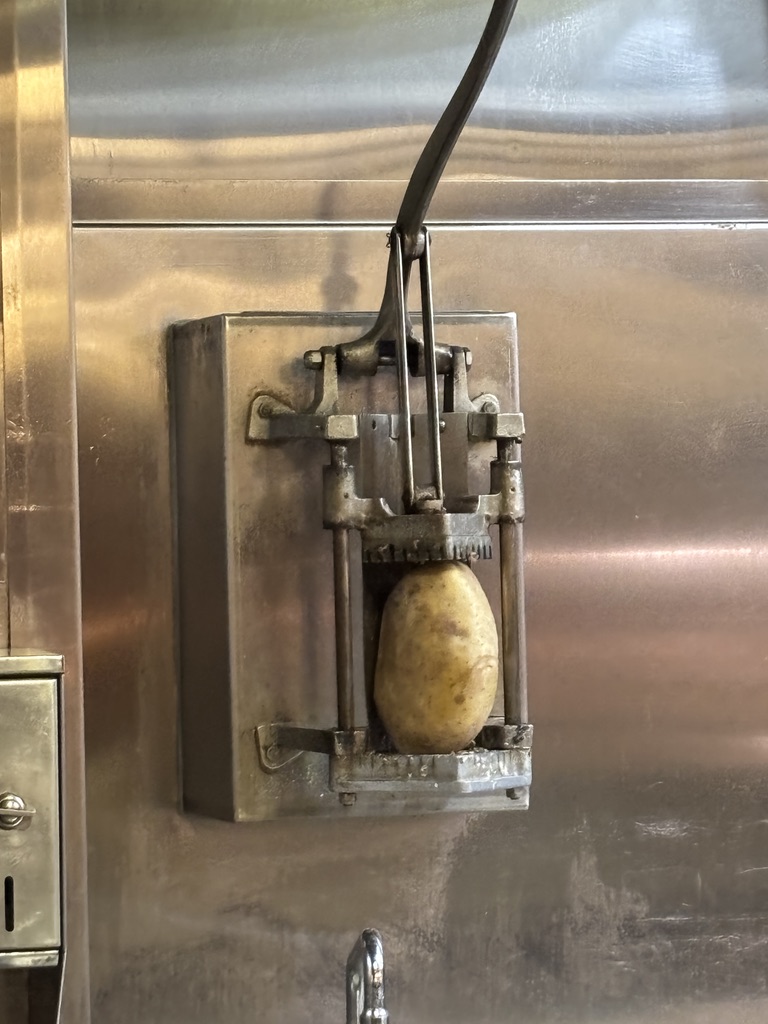
I also wanted to make sure I could eat the fries, which was my whole purpose for going to that restaurant. As soon as I entered, at the 5-PM empty-hour, I chatted with the host and the manager about the fries. They assured me they were safe, bragging about their 3-fryer system, and I assured them I was ready to eat at their restaurant. They told me it was happy hour at the bar so I found a seat — by myself — and I ordered a happy hour margarita, a steak, and the fries. As I waited, I noticed the 3-fryer system that had been described to me, as well as a fresh potato slicer just in front of me. I felt safe. I felt good as I indulged my cravings, sitting alone there at the bar.
It was kind of awesome.
Of course, I had engineered the awesomeness of sitting at that bar alone, basking in my professional accomplishments.
I was there because the next morning, my university was receiving an award.
We were among the institutions that earned a completely clean accreditation review: no stipulations and no areas for improvement. Only 32 institutions received that distinction this year, and my university was one of them. That alone means something to me.
When I started my job almost ten years ago, I knew almost immediately that I had to fix the education program if we were going to get through accreditation. I had 18 months to do it. Luckily, I was able to hire a faculty member (even before my contract started), and I picked a gem. Nancy had skills and chutzpah that are rare. Because the accrediting body (and for me, the state in which I was getting accreditation) was new, we both had a lot to learn. But we embraced the challenge, dug in, and trusted each other out of the gate.
I quickly learned that we had an enormous amount of work to do. Six months into my job, I attended the accreditation conference, the same one I am attending tomorrow.
I showed up pretty naively, and by the second hour had taken pages of notes. By the end of the day, I had filled my legal pad. That night, I was awakened by a fire alarm, and as I evacuated, the first thing I grabbed wasn’t my wallet or even my phone. It was my legal pad of notes. I knew that the future of the program was dependent upon my understanding of what we needed to do to earn accreditation.
Eighteen months after I started my job, we submitted the self-study of our programs that would ultimately be approved for accreditation. Nancy and I took a program that absolutely would have failed and passed with only two areas for improvement and no stipulations (big red flags that portend doom!). Out of five categories upon which we were evaluated, we only had two that were flagged for improvement, and those two were related to things largely outside the program. Basically, they were out of our control.
Nancy and I had fixed what we could fix, and I implemented departmental systems that would help us to continue our improvement. Then I spent the next five years trying to fix the rest, including the university structures that had led to the areas that our accreditor had identified as needing improvement.
I was a dog with a bone.
Over that time, people at the university changed. Rules changed. Structures changed. Education was something of a stepchild, sitting in the graduate school while much of the university’s attention was understandably focused on the undergraduate college. Trying to build the systems we needed for accreditation was an uphill battle. But gradually, we did it.
We used accreditation to push the university on data collection. We built systems within our programs that had never existed before. We created processes for looking at evidence, asking questions about what we were doing, making changes and then looking again.
When our latest accreditation review came back completely clean, I knew we had accomplished something. As soon as I knew we had a clean review, I also knew we would be recognized with recognition given to all programs that had the same accomplishment. I had seen it presented at the two conferences I had attended previously, and, quite frankly, I was chasing the prestige of being on that short list.
What I didn’t know was that we were also going to receive another award. Our university was recognized as a standout program that sought and achieved continuous improvement using data to make decisions. Among all the institutions accredited by the organization, our small university (and even smaller program) was awarded the highest honor.
When I got the email notification, my first thought was, “I’m not in Education anymore. I’m not even working with these programs. I have this whole other job and this whole other thing I’m building. I cannot attend this conference to accept this award.” I dismissed the possibility of attending.
But then someone from the organization reached out and asked whether anyone was coming to accept the award. If so, they said, they would love for us to present about the work we had done. That was when I started looking more carefully at what we had actually won. I realized that we were not just receiving the standard recognition, but that we were being truly recognized. I felt like someone should go to the conference and present our work.
But, there was literally nobody at the university who could make the presentation besides me – because it was truly my work that needed to be shared. And that realization led to an understanding that is somewhat uncomfortable for me to write:
That’s not actually my university’s award. It’s actually my award.
Except it isn’t. It belongs to my university. It belongs to the Education programs. And it absolutely belongs to the team of people who did this work with me. But I am proud of it, as a team member and as the team leader.
My final slide tomorrow is a picture of the four of us who became the inquiry team behind much of the work that is being recognized. We all worked. We listened to each other. We questioned, pushed back, and collaborated. We allowed ourselves to be guided by whoever’s expertise mattered in the moment, and we trusted each other. But I can’t erase myself from the story in the name of humility.
I led the work. I chose every single one of the team members, and I chose well. I could not have done this without them, and I built the team. I implemented systems that had not existed in the department, the programs and, ultimately, parts of the university. I kept pushing when people changed and structures changed and it would have been much easier to accept that this was simply something the university wasn’t particularly good at. I could have been okay with another round of areas for improvement and continued to work on those areas. But I wanted our program to be great, our university to be great.
So, yes, the award goes to the university.
But. My team won this award.
And I know I get to claim it too. Once I realized that, I decided I wanted to be at the conference to accept it.
The problem was money. I knew the university did not allocate funds to send me—or anyone else—to this conference. So though I wanted to attend, I had to make a decision of whether I would fund my own travel. Here comes the problem solving!
Get the organization to waive the conference fee. (Check)
Find the cheapest means of travel for a day trip. (Check)
Ask for reimbursement of the train ticket from the university. (Check)
My original plan was impressively efficient. Take the train to the conference (3+ hours). Accept the award at the 8 a.m. opening session. Present immediately afterward. Get back on the train. Go home.
This plan checked a lot of boxes. I wouldn’t miss teaching my afternoon class the night before the conference. I wouldn’t ask my university to pay for a hotel. I wouldn’t cost anyone very much of anything. (The train ticket totaled a bit more than $100).
And then I started thinking:
Well, that’s a lot on me.
And I needed a break. So I decided to take a train after my class and spend the money to stay in the hotel myself. Paying for the hotel would ultimately make it easier on me – physically and mentally.
Then I realized that teaching an extended block in the afternoon and trying to get to a train station 40 minutes away on a tight schedule would cause me angst. So I arranged for someone else to teach my class in order to make it easier on me.
With those two concessions made, I stopped thinking about it. I had done what I could do to make it easier on me. So my plan in the morning was to work from my husband’s office, across the street from the train station, until my evening train, booked well before I decided to cover my class. Though I had looked to change trains, I realized that an earlier departure would cost more money.
As we commuted, my husband said, “You are going to get in pretty late. Why did you schedule it that way?” I answered honestly – it was the cheapest. I was not looking forward to the late arrival, especially because I knew eating at a late hour would be difficult. But until he asked the question, I was not considering my well being. And then I started to reflect. The start of the semester has been intense. Taking the kids back to school took more out of me than I expected. Work has been relentless. I was tired.
So the first thing I did when I opened my computer (while at my husband’s office) was to see how much an earlier train ticket would cost. It was $36.
$36 dollars would allow me to stop worrying about how I would eat gluten-free between my husband’s office and my hotel bed. I had already paid for my hotel room, so why wouldn’t I spend $36 dollars on my peace of mind? After all, I considered this trip more about my ego than I did about my university (who could advertise the award regardless of my attendance to receive it in person). I booked the earlier train.
After I checked into my hotel and decided to go to the restaurant with the fries, I bumped into a woman I met when I first started at my university. In our state, she is hailed as the queen of accreditation. She has volunteered in her retirement to help the accrediting organization – and our programs in our state.
I shook her hand and told her that she had helped me all those years ago and that our small program was getting an award. She told me she was getting the volunteer award. Both an individual and a very small program from our state being recognized at a national conference – as I chatted with her, the timing of all of this felt right.
I’m leaving this part of my professional life. In many ways, I’ve already left it. I’m doing something new now, something that asks me to think differently about education and about what I want the next part of my career to look like. But maybe before I could completely move into that work, I needed to pause and recognize the work I’ve done in this last chapter.
Almost a decade ago, as I attended this conference, overwhelmed and insecure, I grabbed my accreditation notes instead of my wallet during a fire drill because I had suddenly realized the magnitude of what I needed to do. This year, I will walk into the same conference and accept an award for what my colleagues and I created, despite all odds.
I know my university would not be receiving this award without me. And I also know that I wouldn’t be accepting it without my team.
I think I needed to be here to let myself acknowledge that.
I did it. I did what I could do. Now I need to move on and do something else.
This realization came as I sat alone at a bar with a margarita, celiac-safe fries and a steak. I was there at that restaurant because these are some of my favorite things. I was there in that town because I can accomplish great things. And it’s important that I recognize that as I move forward in FillingTime.
The first week of the semester (or school year) is always incredibly hard. My brain is challenged in different ways even as my body adjusts to a new schedule. Last week was a particularly brutal one. I logged almost 50 hours of work without breaks, and that doesn’t include my commute.
Given the schedule, I needed to give myself permission to take a week off from FillingTime.
So I broke the streak.
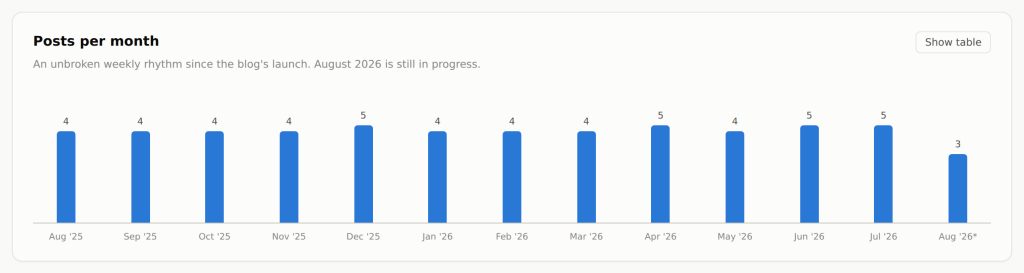
For more than a year, I have written something here every week. Sometimes I knew exactly what I wanted to say. Sometimes I sat down without much of an idea and discovered it through the writing. The commitment to write weekly gave me a reason to pay attention to how I was filling my time and what I was learning about my new role as an empty-nester. Somewhere along the way, the commitment to write became a streak, or perhaps more accurately, a forced habit. It is time to shift the purpose.
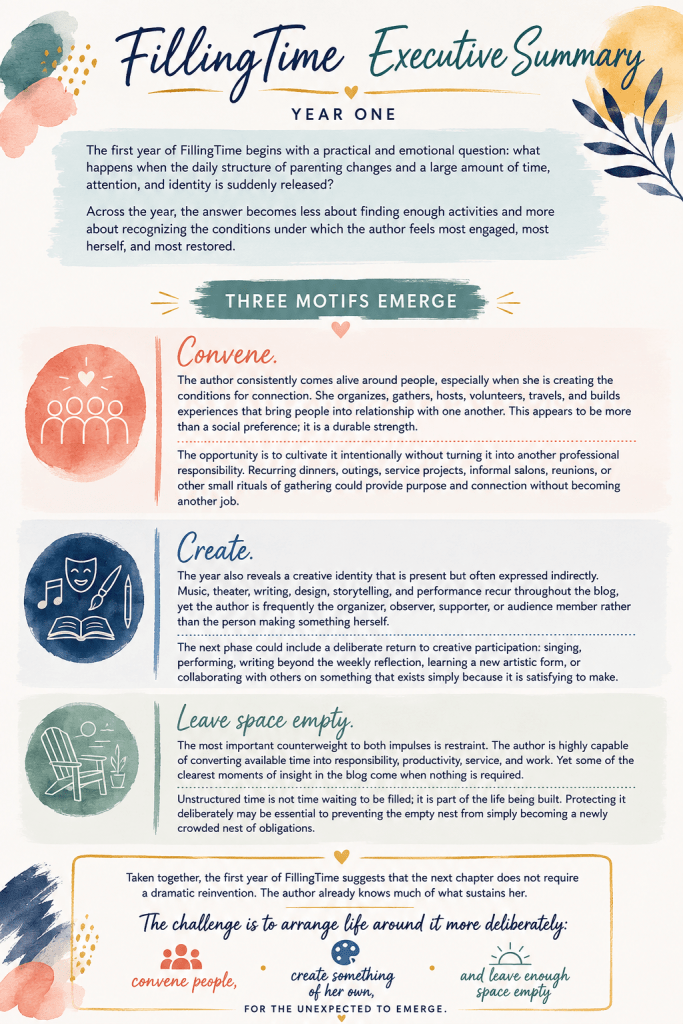
A few weeks ago, I asked AI to analyze the first year of FillingTime. I wanted to know what patterns it saw across all of my posts. It identified three recurring ideas: convene, create, and leave space. I found the analysis surprisingly useful. AI didn’t uncover some secret about me that I didn’t know, but through its analysis of my words, it revealed who I am and what I’m seeking. The recommendations felt right.
And so I made some decisions. I joined a choir, and I signed up for a yoga class. Both are limited-time commitments, which is intentional. I don’t know yet whether I want to fill my time with structured, weekly commitments, but I’m testing them. The choir brings music back into my life on a regular basis, and yoga asks me to leave space in my head, which I need.
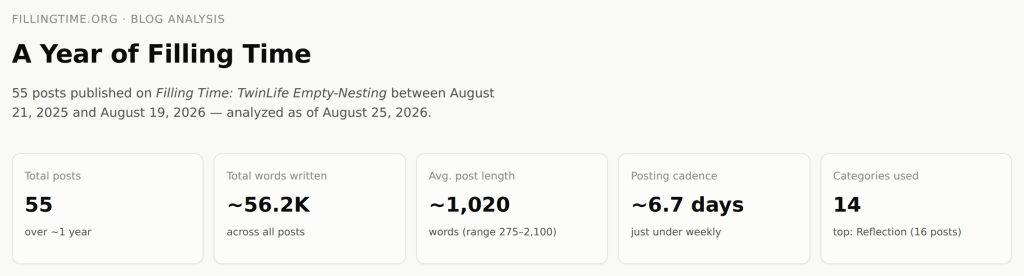
I am going to try them and notice what happens, and I think I need to make a similar commitment to test something in my writing. Weekly discipline got me here with a 55-post weekly streak. It made me write when I would not have otherwise. It made me take notice of things, especially small things, and to find humor in my world. But I don’t want to be locked into weekly writing. I want to write purposefully.
This week, something happened that made me want to write: My co-teacher told our students about his friend Paul.
A week after Paul landed his dream job, a plane crashed into his floor of the World Trade Center. Paul, a good natured man, natural observer, and simply amazing human, arrived early to work. He always did. He died on September 11, 2001, and my colleague and the friends who knew Paul made a commitment after his death: every year, during the week of September 11, they would tell Paul’s story.
Twenty-five years later, they still do, and this year, our students became part of the circle of people who now know Paul.
As I listened to Paul’s story, I thought about something I had written several years ago. At the time, I was coordinating a writing and healing group for teachers. We were writing about collective trauma in our teaching contexts, and when I began my own reflection, three moments emerged immediately for me: Columbine, September 11, and the sudden death of my student Pam.
Responding to the prompt “I was there the day after…”, I wrote:
I was there the day after Columbine, when fear coursed through the school and Code C drills became normal.
I was there the day after 9/11, when Mary’s seat stayed empty and field trips became something of the past.
I was there the day after Pam died, when we sat together in disbelief and grace became just a little more present.
In each case, I remembered the same thing about being a teacher in the aftermath of something tragic. My students and I shared collective grief, and we needed to heal together and separately. The writing group surfaced the feelings, and eventually, my initial writing became a more polished piece about September 11.
Shattered Innocence on September 11
On the morning of September 11, 2001, I rose early, drove 45 minutes to school, arriving between 6:30 and 7:00AM, plenty of time before the 8:00 bell, and started the day prepping, planning, and grading. It was just like any other day.
I taught in a school with block scheduling, and it was a B day, my “easy” day with only two classes. First period lasted from 8:05 – 9:34, and I have no idea what we did during that time. I’m sure it was a neatly planned combination of mini-lesson, individual and small group work, reading and writing – the basics of any of my lessons in English class. I’m sure it was an Academy class, a college-level class for a magnet school housed at the public high school, because after that period, I walked down from the Academy building to the main building for my prep/duty periods. As I approached the corner door, I passed Keri, my Academy teaching partner, who looked dazed, and perhaps even frightened.
“What’s wrong?” I instinctively asked her.
“Planes hit the World Trade Centers. I was watching up in the media room. You should go up there.”
I was confused, but I followed her advice. I popped into the media studio, a tiny room that housed a few TVs, joining about ten colleagues already there, eyes riveted to the screen. Other teachers came in behind me, the news quickly spreading through the school. Quietly, those in the room, those in the know, filled us in on what had happened while we were blissfully teaching our first period classes. As the whispers whipped around the room with questions, speculations, incredulity, someone cried out, “I think it’s falling!”
What? Were my eyes deceiving me? The screens were so small. Could it be real?
The tower fell, and my stomach sank. How many people were in that building? Was my father-in-law in that building? Were my students’ family members in that building?
After I watched the second tower fall from the media room, I ran to the attendance office, the only place where there was a phone where I could make an outside call. I connected briefly with my husband, who did not know if my father-in-law had gone to the city that day. At the time, during his phased retirement, he was traveling to the World Trade Center less and less frequently. My husband felt confident that he would not have been in the tower.
I had a feeling of dread. As I walked down the hall, headed back to my classroom on the hill, the building moved in slow motion. Faces of incredulity stared, searching eyes making contact, unanswered questions lingering in the air as we passed in the corridors. As news spread through classrooms and parents began calling the school or simply showing up to collect their children, the community braced for the unknown to come.
In my last block class, the room of 14-year-olds looked to me to lead them. They had questions, of course, and we would not have answers for quite some time. I knew, however, that their innocence was shattered that day.
And that is what I realize when I look back. Our innocence was shattered on 9/11. The titanic shift in the world that would come as a result of the terrorist attacks similarly rocked our school community. Field trips were cancelled, and ever after justified first by examining the safety of students in light of potential threats. Teaching and learning took place in a new context, one where war was fought on US soil, not somewhere far away. Students began debating issues like the constitutionality of the Patriot Act, and Muslim students felt hatred that they had not before experienced.
In some ways, I don’t think our community has fully healed, as the prejudices seeded that day have grown.
Twenty years after September 11 – a date that does not need a year to bring visceral feelings – I reflect on the day when time stood still. It took a while for me to heal. My family had a good ending, as my father-in-law, who actually had been in the tower and had been entering the concourse when the first plane hit, finally came home. Mary’s uncle did not, and her sadness filled our classroom and her writing for the entire year. The juxtaposition of our stories was omnipresent for me. In her story I saw what could have been mine – and so many others in our school community who feared for loved ones that day. In her story I saw the stories of so many students who also did not have a happy ending. It was creating a space for these stories to be shared that helped me to heal, and hopefully, helped my students as well.
When I reread the piece now, I’m struck by the importance of stories. Embedded in my short reflection are so many personal stories of that day: Mary’s, my father-in-law’s, my husband’s, my own. Surrounding it are all the stories of others who were impacted that day and beyond.
September 11 is all over my social media feeds and on my streaming platforms as we approach the 25th anniversary. One rabbit hole led me to BOATLIFT, An Untold Tale of 9/11 Resilience.
The stories of the boats is one I hadn’t heard, but it resonated with me, especially because it’s how my father-in-law got out of Manhattan. I’m sharing it because it’s important to carry stories forward, to not let them disappear. My colleague keeps Paul alive by telling his story, and it matters.
I didn’t write last week because I didn’t have anything left to give to writing. Forcing myself to produce a post simply because another week had passed would have missed the point of what FillingTime has taught me.
This week, I am writing because a story reminded me of another story, and because something I wrote years ago suddenly had a reason to be read again. So perhaps breaking the streak helped me decide why I want to write in this second year of FillingTime.
The weekly practice served me well. I suspect I will still write most weeks. But I’m giving myself permission now to leave the space empty when I need to—and to fill it when there is something I believe is worth carrying forward.
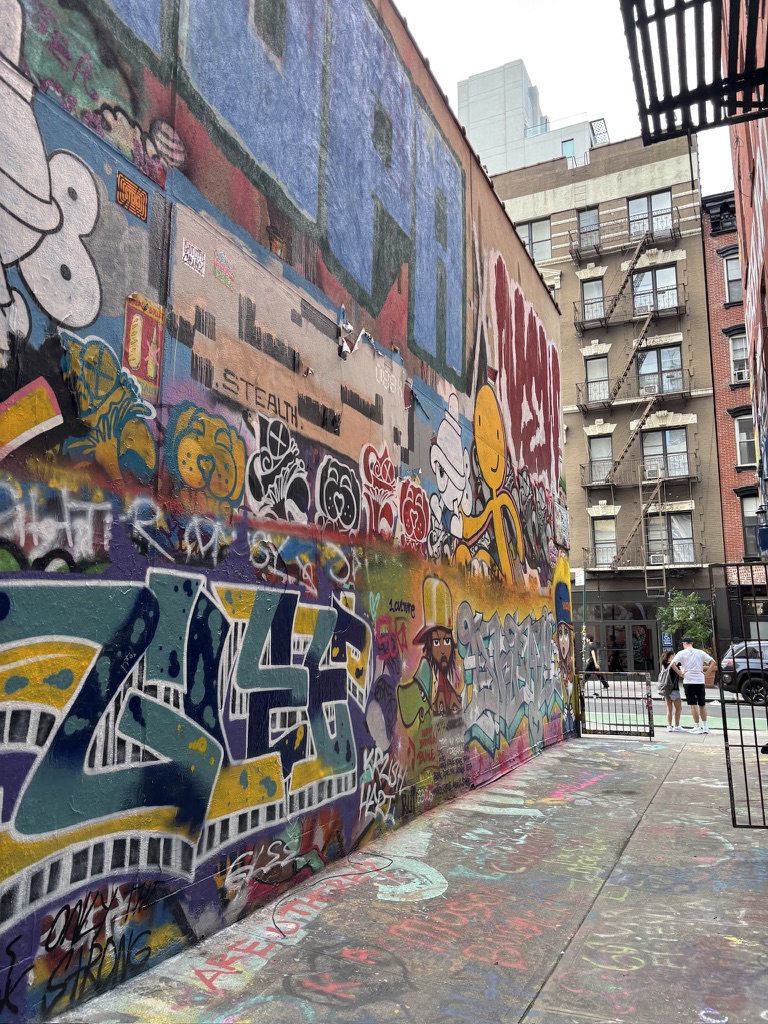
One of my very long days last week included a trip into lower Manhattan, where I stumbled across this alley of beautiful art. It feels right to share it in this post.
The kids went back to school, and my husband and I drove over 1000 miles and climbed a lot of stairs last weekend. We returned to a quiet house.
But this week’s post is not going to be about that. Instead, it’s a time to stop and reflect on one year of FillingTime. To do that, I’m merging my personal and professional identities and bringing AI into the conversation. I will admit that I’ve been experimenting with AI throughout this year of FillingTime, just as I have in my professional life. I do not think I could have published weekly for a year without AI. Let me explain…
I started writing TwinLife: Having It All in order to work through my feelings, struggles, and celebrations during my life as a mother of twins who worked outside the home in a pretty demanding job. It was a way to stay engaged with my inner, personal writing self while I was pursuing tenure. I did not want to lose my voice while I was focused on publishing professionally.
But writing is hard, and my time and energy was limited as I focused on my job and my kids. So I only wrote on TwinLife when I had something to say. It became a space for me to emote when needed, not one I curated regularly.
This past year of writing FillingTime was different. I challenged myself to write weekly, and it forced me to look at my week (and reflect through my camera roll) on a regular basis. I needed to find something to say, which sometimes forced me to curate my empty time and sometimes left me wondering at the end of the week what was worth emoting.
There were weeks where I faced the blank screen and just wrote, posting nearly first draft pieces like I did when I was writing TwinLife. There were weeks when I didn’t have the focus, nor did I have the energy to write my way through it (as I do in my professional writing). In those moments, with my self-imposed deadline looming, I’d talk it out like I used to do with my mom when I was struggling to write – except now I used Voice Memo. Whether I was driving home from work, making dinner, or sitting in the hot tub, I could turn on the recorder and just talk through my week. Then with a click of a button or two, I could grab the transcript and drop it into AI.
AI would take my transcript, which came in a single, very long paragraph, and break it into a clean paragraph form that I could read and reflect on. If my thoughts had coherence, I copied the clean version of my spoken words and started editing. If I was a little all over the place, I used AI as a thinking partner to help me find a thread worth writing about.
Every once in a while, I asked AI to generate a full draft based on my initial input. I never used that draft. It was always crap and never really me. In fact, in one conversation with ChatGPT, where I tried repeatedly to get it to edit its output to be something I found acceptable, I told it that it was crap. It agreed with me and told me my blog was much stronger when I drafted. It was right.
I’ve had fun playing with AI through this writing process, and recently, I’ve been bringing multiple AI chatbots into conversation with each other. I ask one or more for feedback on my writing, and then I give the feedback to the other one to see what it says. I feel like I have my own personal writing group, and to be honest, it’s making my writing better.
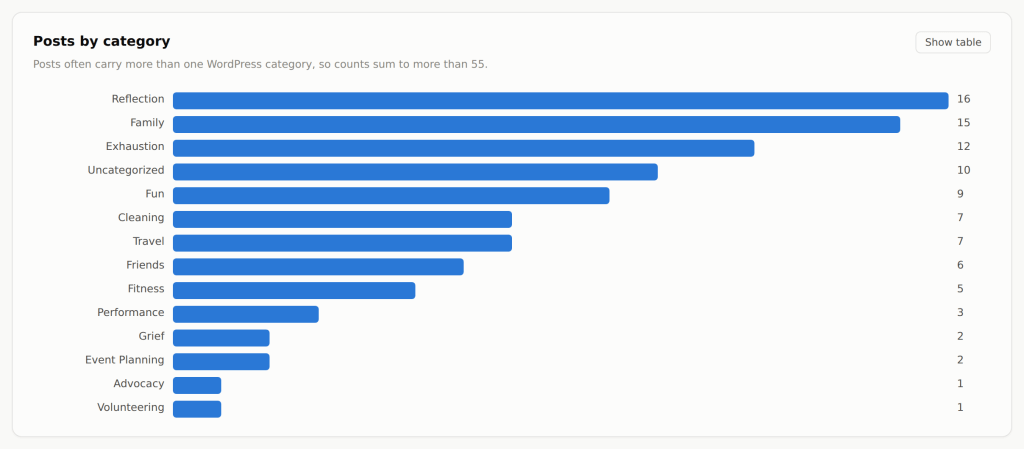
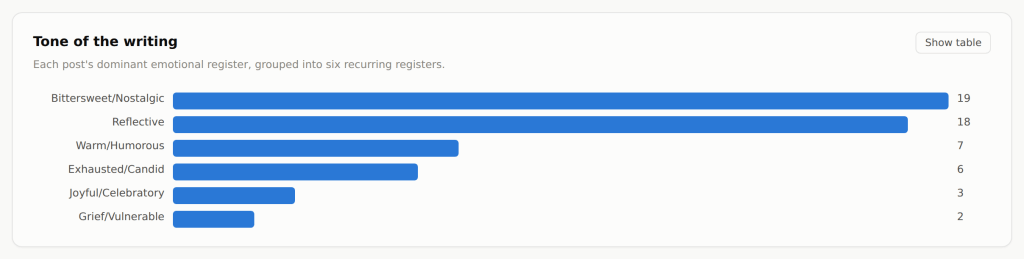
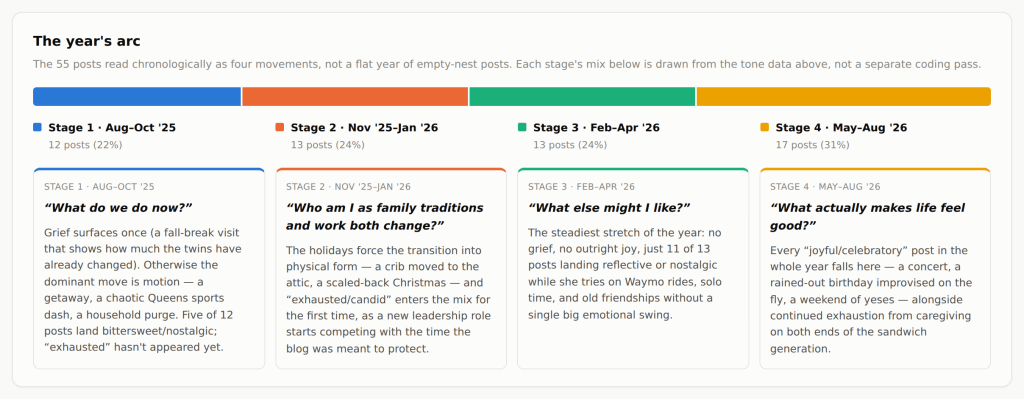
All this to say, I’ve been writing for a year, and I thought it would be useful to pause this week and see how my writing partners thought I should start filling my time based on everything I have posted on FillingTime. AI is particularly good at thematic analysis, so I asked ChatGPT, Claude, and Gemini to analyze FillingTime.org. Importantly, I told them not to use any of the chat history in their analysis and to focus only on the blog itself. I asked for the output to include a description of the author and recommendations for how this person could fill their time.
Gemini’s response came quickest, but it was the most superficial. It didn’t teach me anything I hadn’t already considered. ChatGPT and Claude (which took the longest in its analysis) gave me different insights, some of them overlapping and some of them distinct. I used them as thinking partners, feeding them each other’s responses and asking them to incorporate ideas that could enhance their own analysis.
By the time I was done, I had a pretty clear picture of where I might go in this next year of FillingTime.
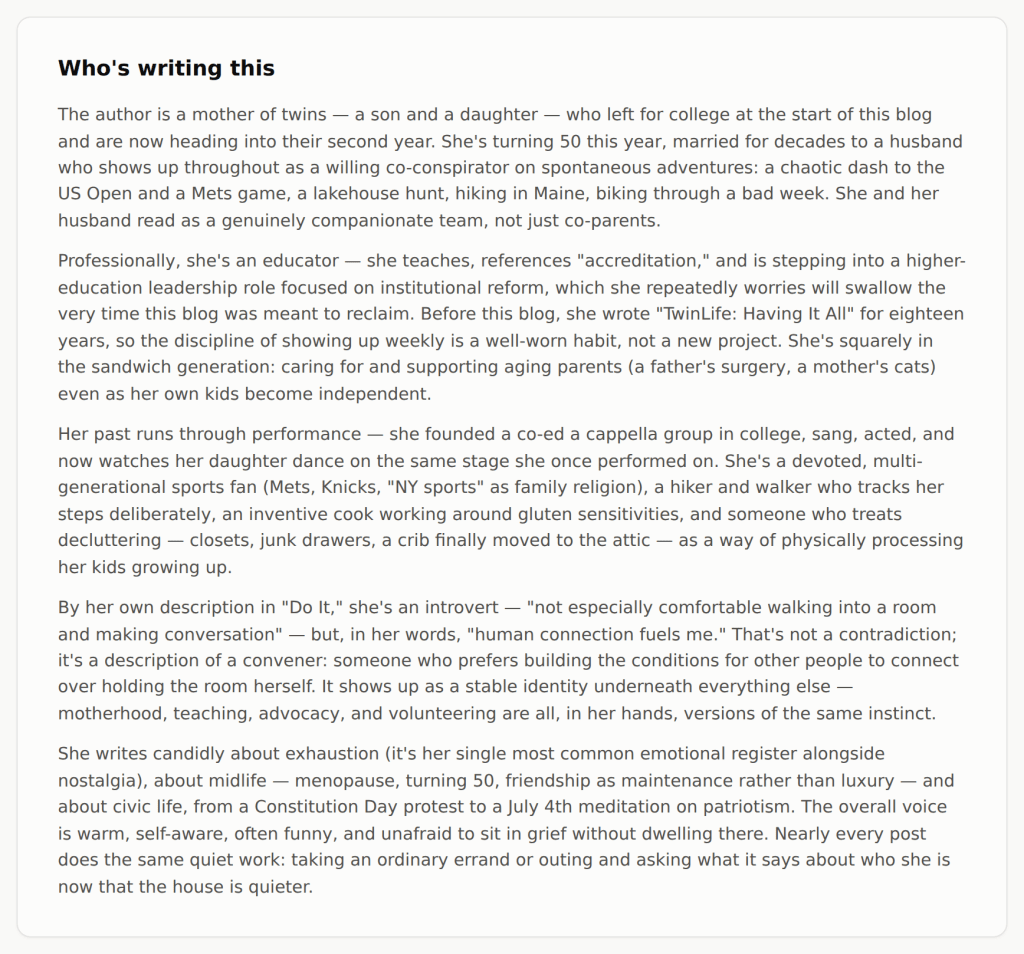
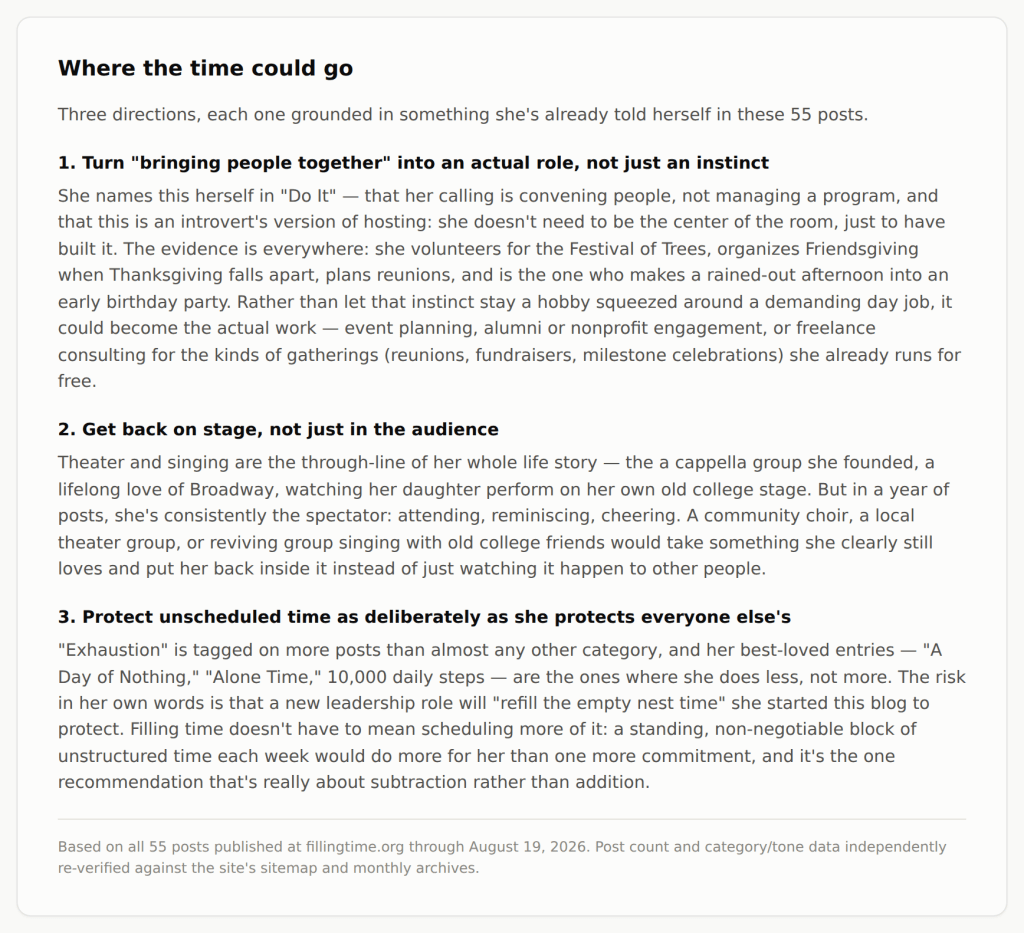
First, here is Claude’s final analysis.
I particularly liked the way Claude characterized my husband’s and my partnership of being “co-conspirator[s] on spontaneous adventures” and a “companionate team.” Like Chat, Claude thinks I should convene, create, and protect unscheduled time.
ChatGPT’s executive summary complements Claude’s more detailed report and gets to the heart of the recommendations for FillingTime.
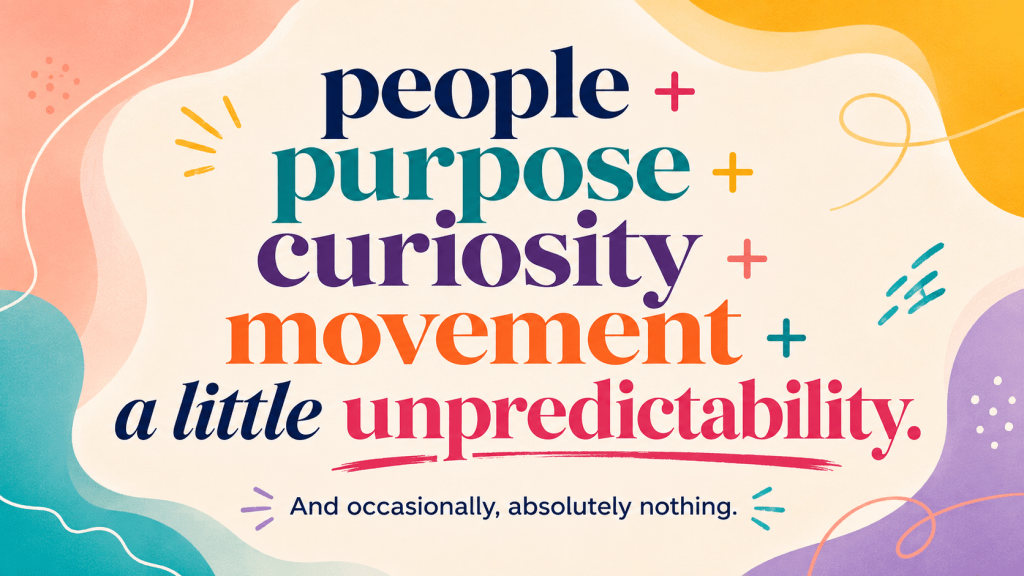
In Chat’s first analysis, it said my time this past year led to this equation:
The purpose is important, I think.
One thing missing from both of the analyses is that I need to find my purpose for giving back. Volunteering has been a core part of my identity for as long as I can remember. Moving forward that purpose might be in convening women over 50 (Claude suggested I start a podcast!), but I’m not sure that’s it. During TwinLife, my life was full of volunteering. I did relatively little of it this year comparatively. I want to get back into the community and find a place, not tied to my kids, that can use my talents and skills.
As I continue to search for that right fit, I think my AI thinking partners are correct: I need to convene, create, and give myself permission to leave space empty. I’m already working on the plan to fill my time!
For the second time in six months, California wouldn’t let me leave. Both times I got stuck for an extra night because of weather on the East Coast, and last week, it meant that I did not have any time to recover before I went directly back to work. I should have been exhausted, but instead, I had an incredibly productive week – perhaps making up for the week when I had been sick.
Meetings. Planning. Writing. Decisions. I moved a lot of projects forward in a few short days.
And then I hit the weekend with the realization it was going to be the last one with both my kids at home for a very long time.
Of course, they weren’t really home. They were both consumed by fitting in as many things as possible before they left for school. Hours at work turned into evenings with friends, and whenever they could squeeze the time in, packing and cleaning their rooms.
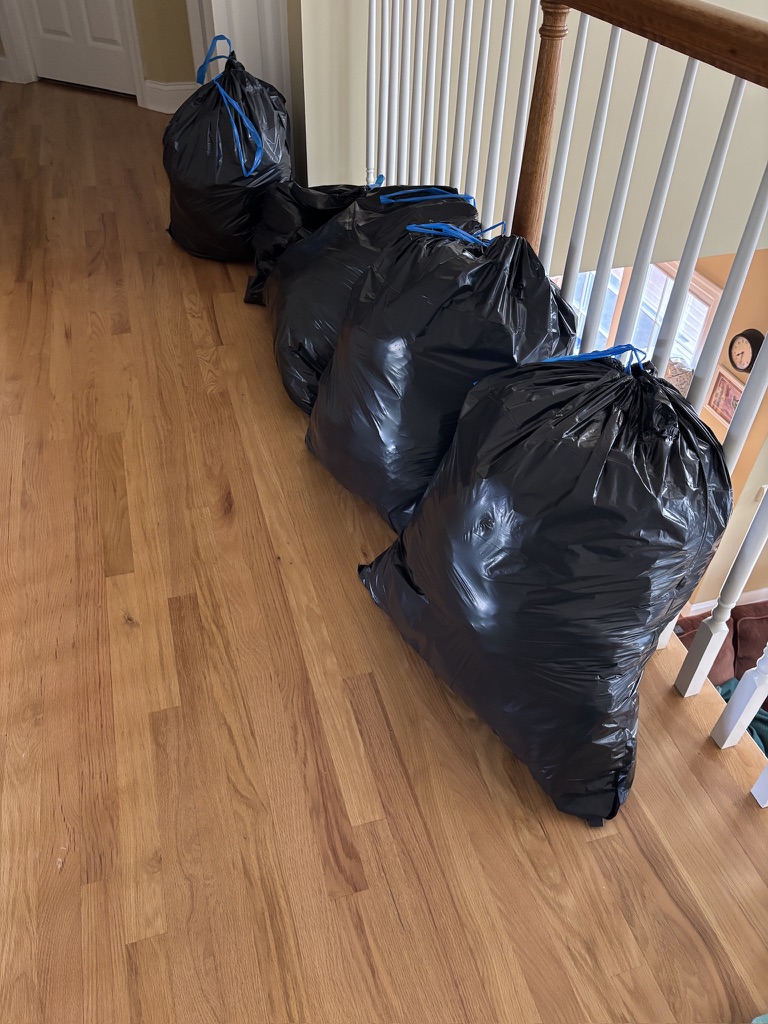
I returned from California to find five garbage bags full of clothes and shoes and who knows what else from my daughter’s room to be donated. It was a proud mom moment, especially because a year ago when I wanted her to purge, she wasn’t ready.
Her effort made me realize that my workforce was about to disappear. Earlier in the summer, we had lost our every-other-week house cleaner, which is admittedly among the most first-world of first-world problems. But somewhere in the craziness of summer, a month had passed, and none of us had actually cleaned the house. I had decided to kick that can down the road, and the road had suddenly come to a dead end.
So while everyone else was out one night, I made a four-column-list and assigned each of us tasks to get the house cleaned before the kids moved back to college. I left the list on the table where everyone could find it, and I waited for the response. I knew they all knew how to clean – Covid had forced us into family-cleaning mode – but I also knew that everyone was busy.
Without going into the details of everyone’s reaction to their individual list, I’ll just say that it all got done. I personally spent a rainy Sunday tackling the kitchen (which I had assigned to myself because it’s the hardest job) and my other tasks while I contemplated the growing unease in my gut. I needed to stay busy so I didn’t focus on the fact it was the last weekend.
After finishing my downstairs tasks, I walked up the stairs and passed the five bags my daughter had left in the hallway. With my gut anxiety rising, I decided a closet purge might calm me. I was brutal in my decisions, and by the time I was done, I dumped two more bags onto the pile to be donated – one filled with bags I had collected over the years from my teaching conferences (teachers love bags!), and one filled with clothes I decided I would never pick to wear. I still liked some of these clothes, but I hadn’t worn them in over a year. I wanted a cleaner closet; I wanted someone else to have the option to choose these clothes.
So I purged things that had made it through the two purges I had already done in the past year.
By Sunday night, the kitchen was clean. My closet was cleaner. Five bags of my daughter’s plus two of mine were lined up in the hallway, waiting to leave the house just like my kids were. I was settled in bed, ready for the work week, when my husband walked into the room.
“He’s outside, building a ramp. It’s 10:00 at night, and he’s building a ramp with a chop saw. He’s going to be out there forever.”
I knew what my son was doing. He had spent the summer interning with a nonprofit that serves food to people in a nearby city, and the ramp was part of a project he wanted to complete in order to help the volunteers more easily move the food from storage to the distribution location. He identified and took on this project himself, and at 10:00 at night, with the end of summer bearing down on him, he was outside building it without the best tools to accomplish the task.
So I got out of bed, and I helped.
There was something reflective about working with him as he tried to finish a project at the last possible moment. The intensity was familiar to me, as I often butt up against deadlines. But the moment was different, as I was just the support mechanism, not the driver. This was his work. His commitment. His project. I was just there to hold the wood steady and offer another set of hands.
I went to bed before the ramp was finished, but he did finish it. And the next morning, as I walked downstairs to go to work, I passed all the bags in the hall. I knew that those bags would soon be replaced by the blue bags of college waiting to leave too.
I knew that soon the house would feel empty again.
Last year, I thought a lot about what I might be losing when they left. This year feels different. I know they are headed off to grow and to learn, and I look forward to meeting the different people who come back home. I also know that they do come back home, and they are never entirely gone.
This past week was about pushing forward, sorting through what belonged in the past, finishing what needed to be finished, and deciding what to take forward. And fortunately, in the process, my house got cleaned.
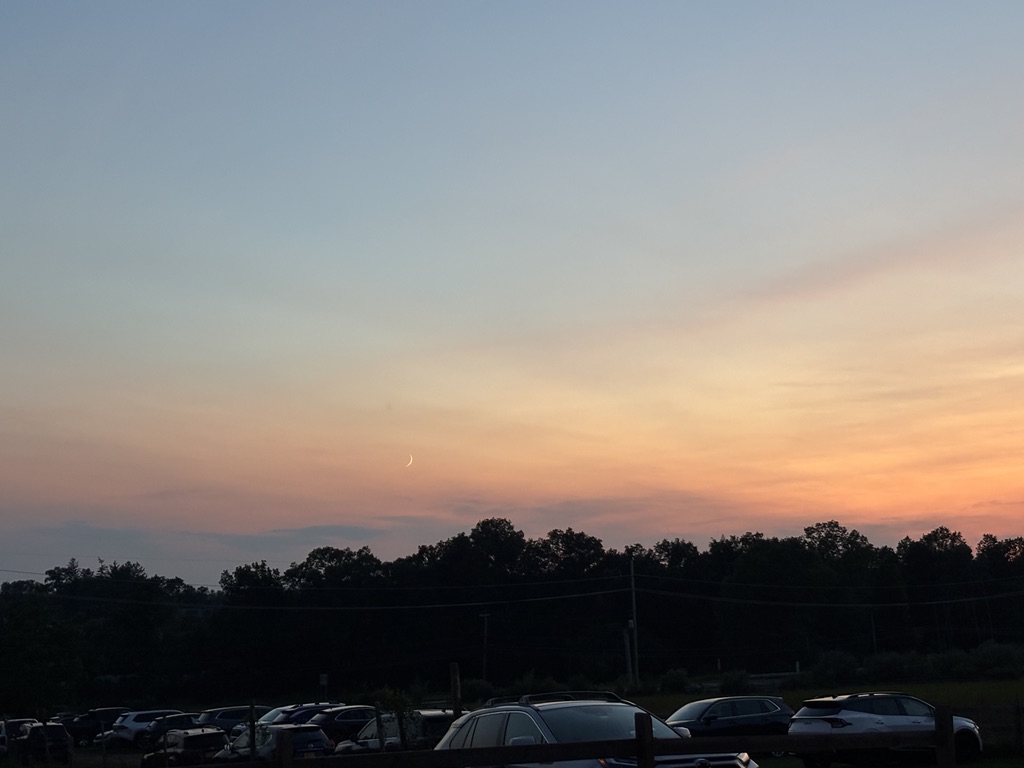
Despite the fact that we all had our own things going on this past week, we did spend one night together as a family, watching the sunset. This was the best way of FillingTime this last weekend together before summer ends.
Despite the fact I’m East Coast bred, I was born on the West Coast. The six months that I spent there as a baby have somehow seeped into my soul, and perhaps this is why I love hot summer days and the sunshine on my face. I’ve always credited my blonde hair and blue eyes to the fact I was born in the proverbial California sun, and the fact I married a man whose family hails from the West Coast somehow seems metaphorically perfect. Even today, I have family that lives there, and so whenever I have the opportunity to cross into Pacific Time, I try to arrange my schedule for a visit.
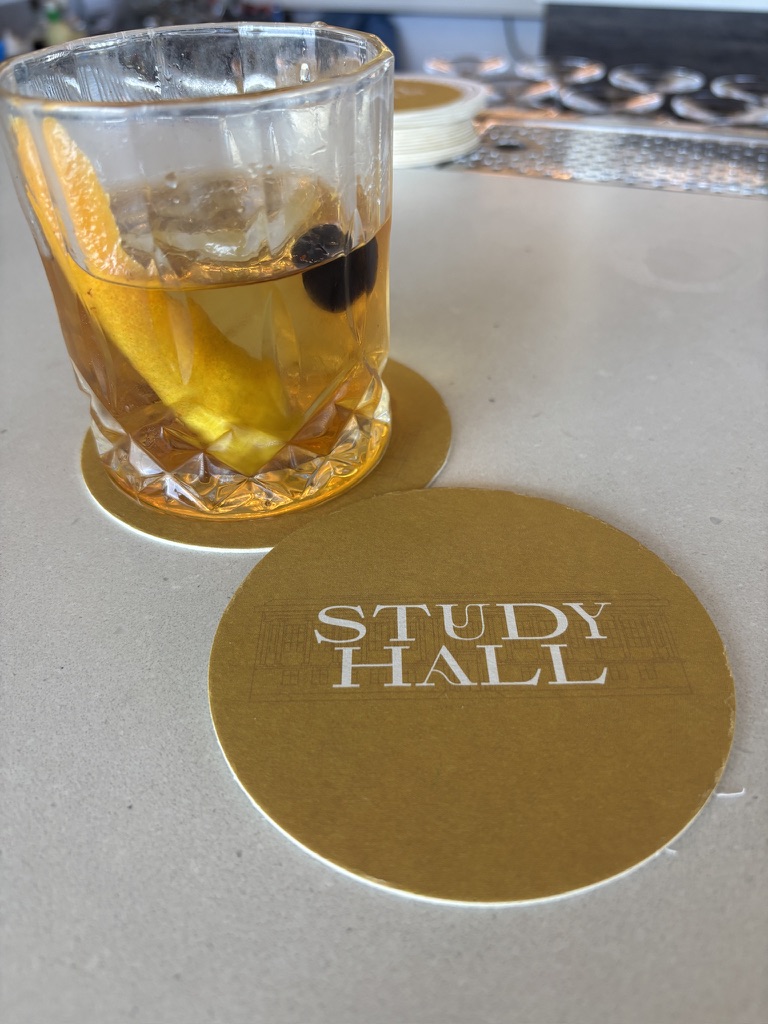
I was invited to give a keynote at a conference in San Francisco this past weekend, and ironically, it marked the second time in six months that I put on my professional hat in San Fran before hopping a short flight to LA to engage in the tangent thinking that only my brother and I can do together. The entire trip actually fueled my professional brain, so the irony in the name of my hotel bar, “Study Hall”, was not lost on me. This trip to the California sun was not a vacation. I shared some of my latest thinking at the conference and then “beat it up” with my brother shortly thereafter.
Of course, it can’t all be about work, so I forced my bro to get out of the house, and we did an urban hike on Sunday. The rest of this narrative documents our hike, from the perspective of two kids who have hiked Mount Washington several times and who have spent many miles on the trail with our father.
The fact we had no idea that we were embarking on what would become a ten mile hike is a glimpse into how the two of us can just go with only a concept of a plan and then get lost in a story. In this case, the story occurred on two levels. One was at a professional level as he and I shared our current work situations. Peppering that more serious storytelling was our narrative that transformed the urban, West Coast scenery into a wilderness hike along an East Coast trail of our past. To our credit, the side questing was beautifully woven into the professional arc.
Here is the story of Our Ten Mile Day.
———————-
We started in the urban forest, where we quickly found the first blaze for the orange trail. Like on East Coast trails where you need to sometimes search for the blazes to keep you on track, this trail also made us work hard cognitively. It was actually pretty clearly marked as the orange trail, but the blaze markers changed depending on the section of trail we were on.
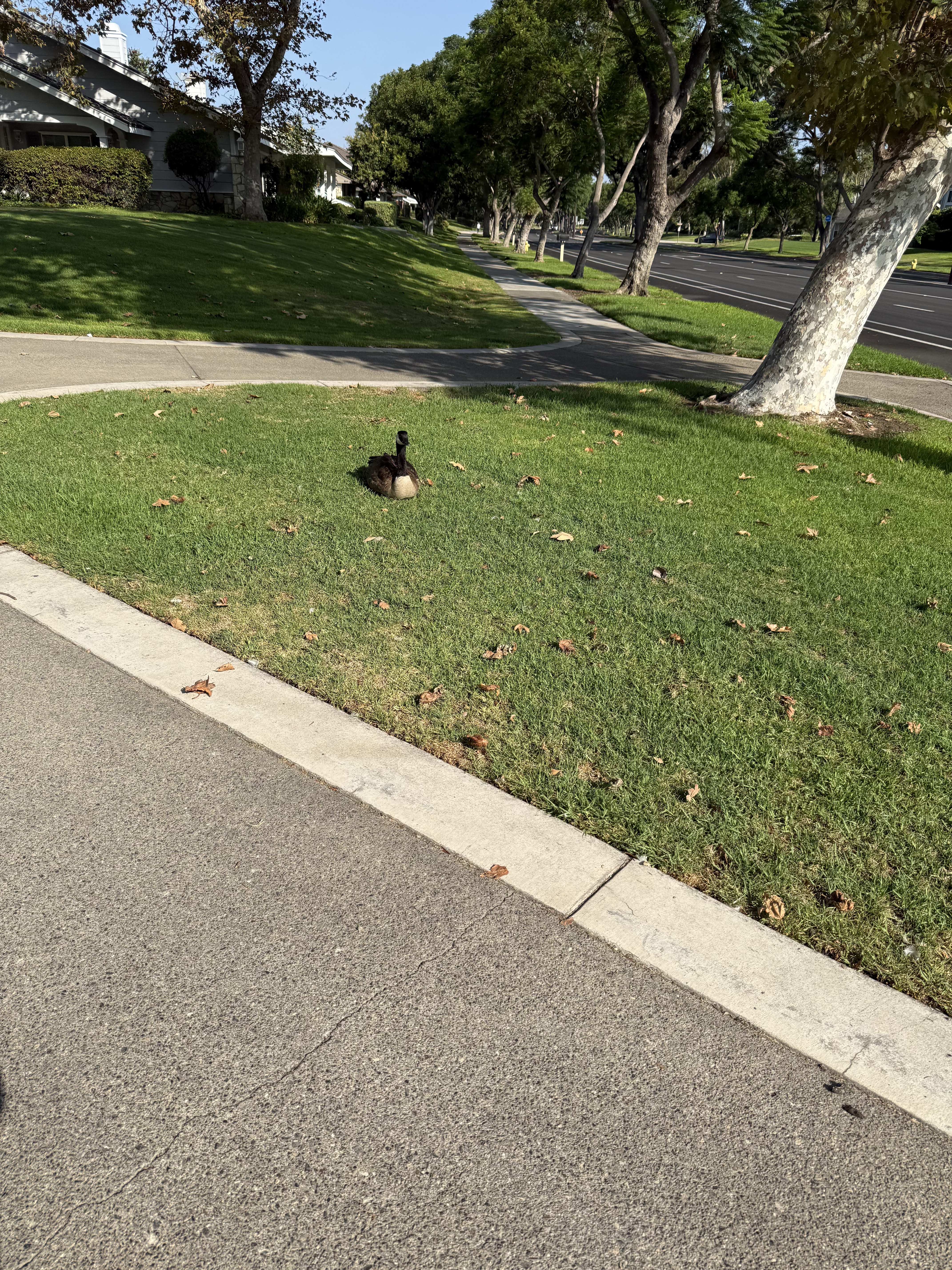
There were several water features along the trail, including a waterfall with local wildlife. Local wildlife was in abundance, though it does look a little different than the bears, snakes, and other living beings we have seen on our past hikes. For the most part, the wildlife was friendly – and colorful – and luckily the trail keepers made sure we were safe from the more aggressive beasts, which were in a migration pattern during our hike.
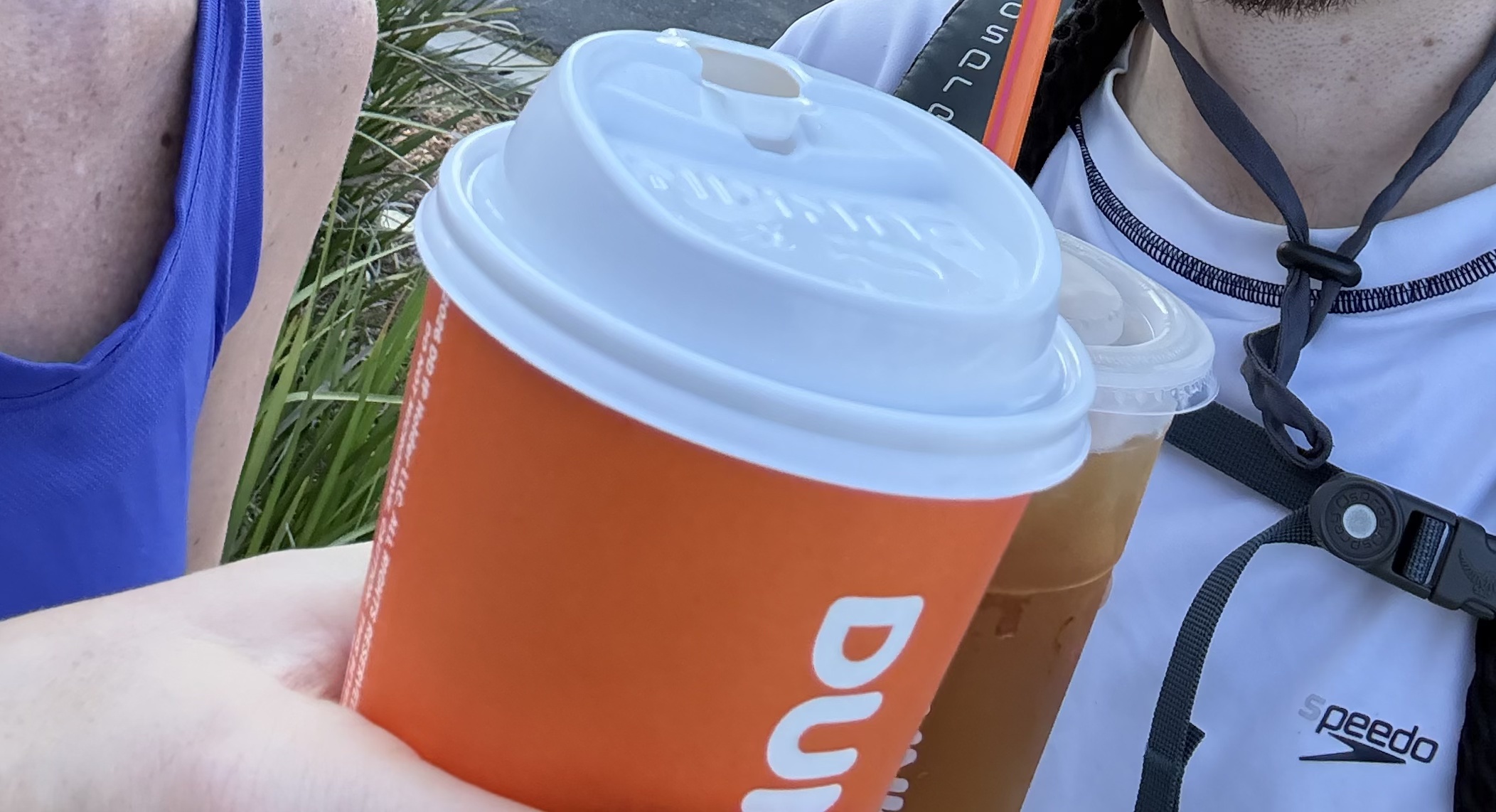
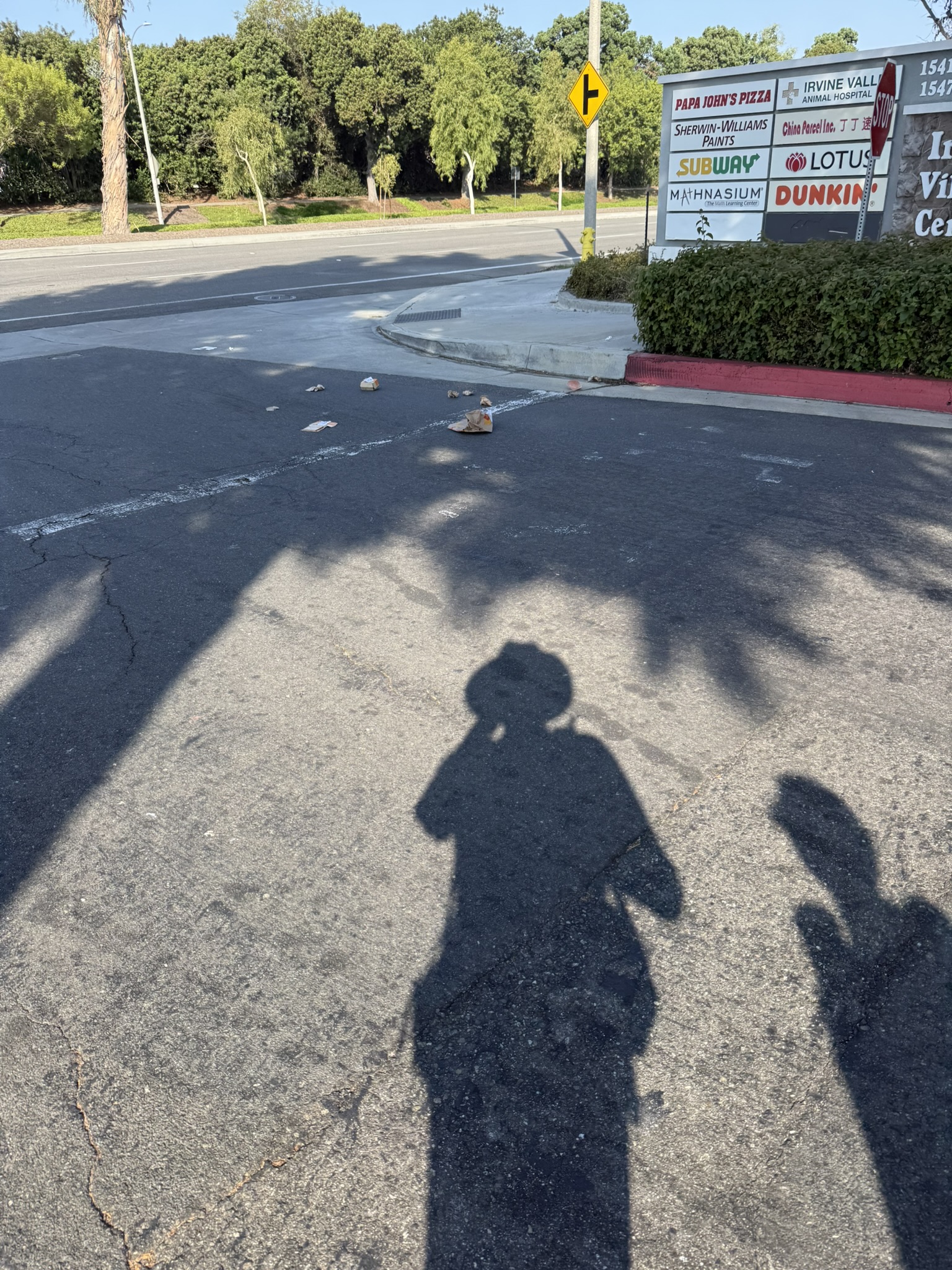
We refueled with some tea and coffee, exclaiming, as we always do, “Everything tastes better on the trail!” and then discovered that someone had not cinched their food bag tightly enough. What a mess! We were pretty sure the trail keepers were not going to be happy with those through hikers.
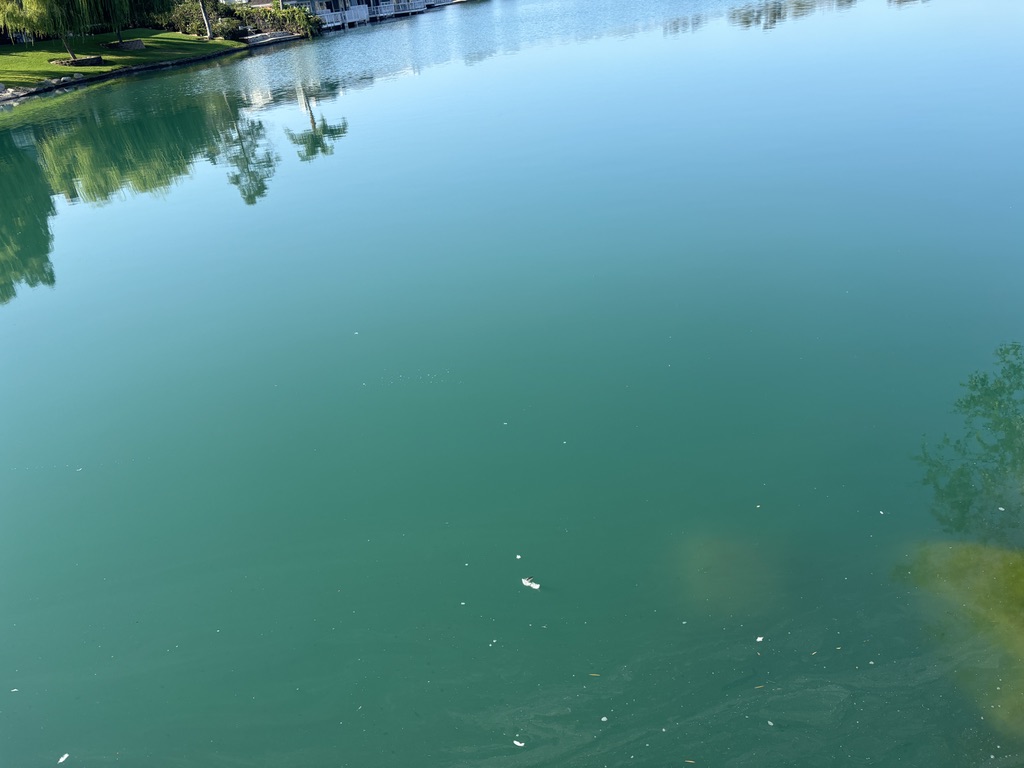
As we entered a particularly serene portion of the trail, we were greeted by the local trail keeper, who did not ask us to sign the hiker log. We did not think to bring our iodine tablets, so we decided not to refill our water bottle at the local watering hole nearby. Ultimately, the amount of water we had packed was just fine. Despite the hot weather, the terrain was relatively easy. Only in the last third of the hike did we encounter a steep grade that proved to be any kind of effort.
That being said, while we were traversing through the area dominated by the migrating wildlife, my hips started screaming at me. I asked my brother, “How many miles have we done?”
Looking at his watch, then realizing (1) it was in kilometers, and (2) he had reset it when we had taken a side quest, following the double blaze into the jungle of Target, he simply said, “I don’t know. Maybe 5?”
I immediately questioned my hiking prowess because I thought it was closer to ten. But he had the watch. And he is the one who thinks in km, so I trusted his quick math but replied, in homage to all the younger generations, “I think it’s probably 6 or 7.”
Ultimately, we made it back to his place, both of us complaining about our middle-aged bodies and wondering how 6 or 7 miles of relatively flat terrain could hurt so much. After he looked up the actual route we had taken, he let out a yelp. “It was 10!” I knew it. My hips didn’t lie.
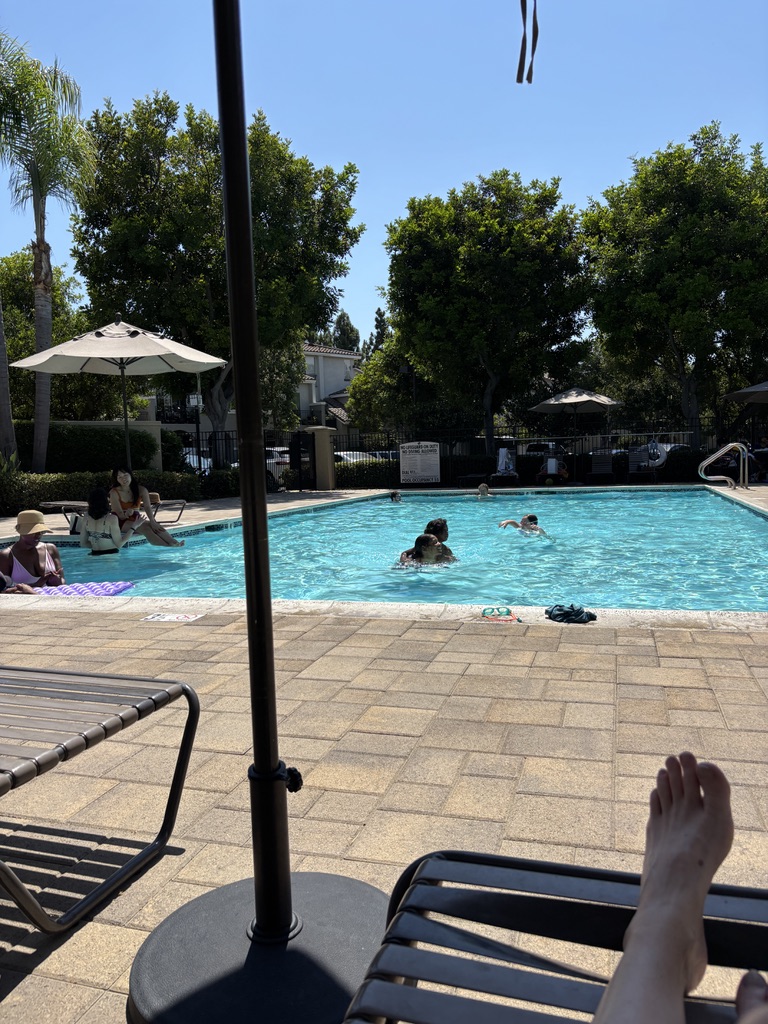
He went for a nap, and I went to the local swimming hole to rest.
Our ten mile urban hike was a good way to fill time. In fact, it made time go quickly. As we chatted about our present and future, we connected to our past. It was almost like we were in the mountains.
I spent most of last week fighting sickness. I crashed on Tuesday, missing the gym and most of the work day while languishing in bed or on the couch. My respite gave me enough power to be back at it on Wednesday with just a nap in the afternoon. I’ve been enjoying the golden hour solo lately with my kids off working or friending and my hubby dealing with his long commute. Like most days when I’m alone, I went for a walk under the sun. I didn’t check the weather. I simply said bye to my daughter, who was getting ready to leave herself, and walked out the door and down the street on my typical 5,000 step route. My body needed the activity.
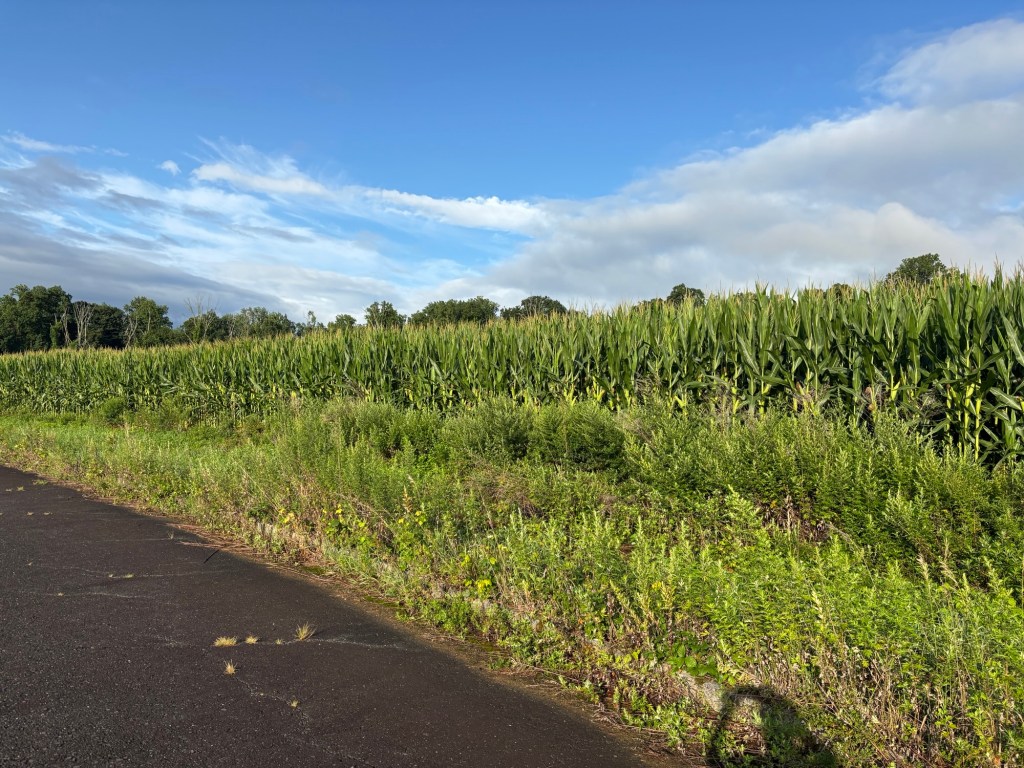
The route takes me through our small neighborhood and then across the road up into a field. The farmer swaps out corn for pumpkins each year, and this year it is corn, and the stalks have grown high in the last month. They tower over me. Always aware of bears and deer and foxes, which can dart out of the crop without warning, I was happily listening to my podcasts as I hiked the small hill through the field, oblivious to the darkening sky.
And then the air shifted. The prickle of wind and drop in barometric pressure that signals a storm is coming was palpable. I was near the top of the hill and picked up my pace to make the turn to head home before I got caught in the storm that was brewing. I was a little more than a half mile from home at that point.
My problem solving brain ticked off my options: (1) call to see if my daughter had left yet and if she could pick me up; (2) run; (3) walk faster and pray.
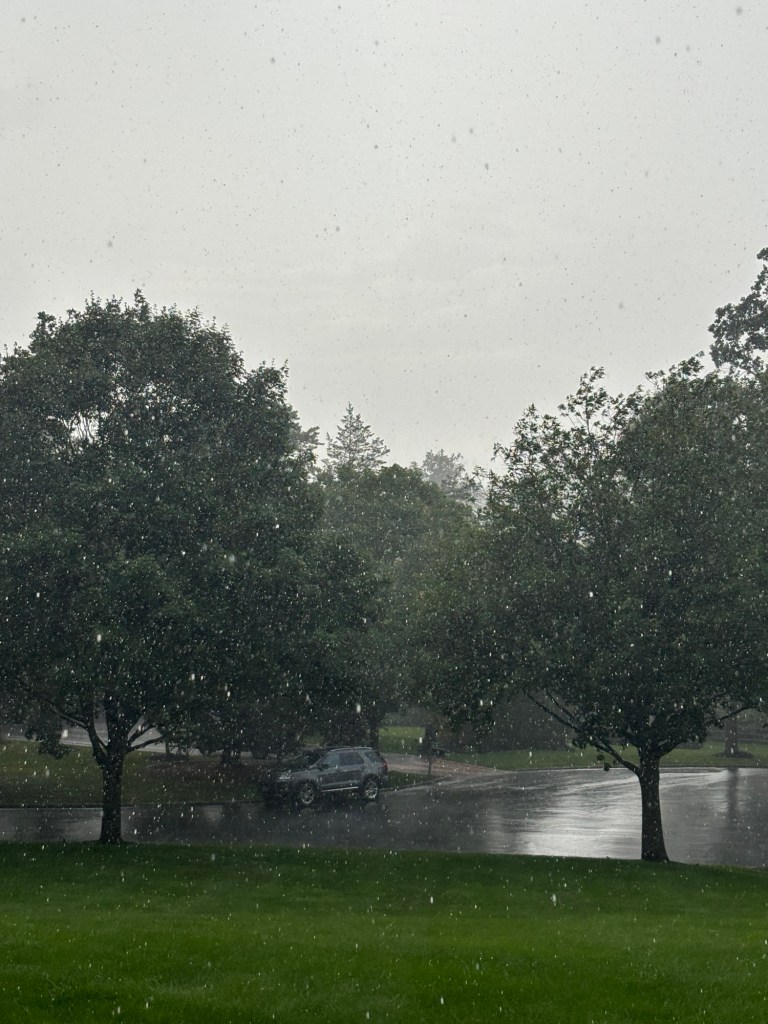
Since I knew my daughter had already left, and I hate to run, I chose 3. It didn’t work. I made it to the bottom of the hill and crossed the road into our neighborhood when the downpour came. Then I started to run.
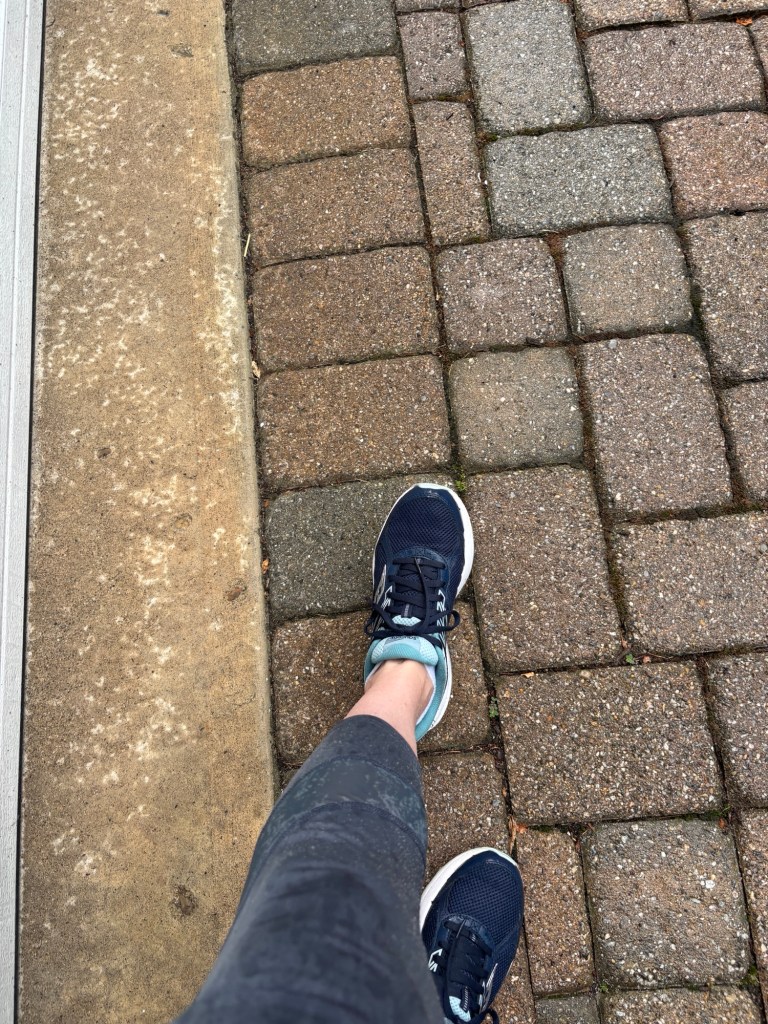
There’s something freeing about running to shelter in the rain. As the water pelted my face and soaked my clothes, I embraced the joy in it. It felt surprisingly good. Not the running part, of course, because I definitely hate running, but the getting caught in the rain.
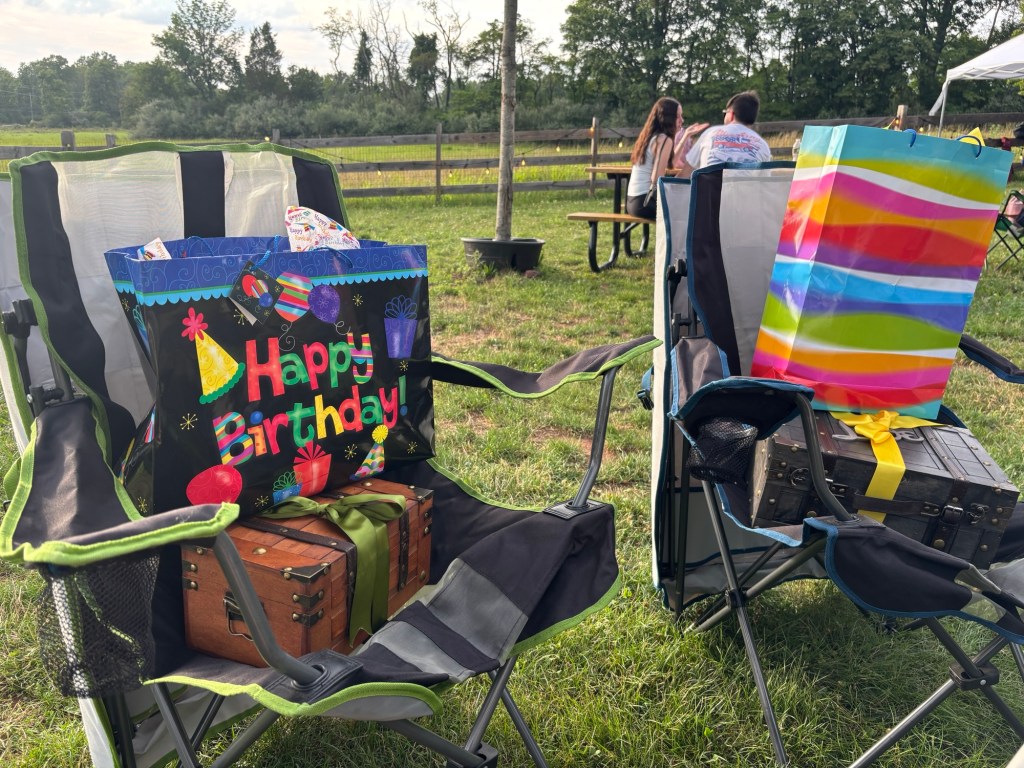
After I had a good laugh at myself, I took a hot shower and started to assemble my kids’ birthday presents. We had to celebrate a week early because my son was travelling abroad for his birthday, and I was headed to a conference across the country. Because it was going to be the first time my kids and I had been apart on their birthday, I wanted to do something special. So I arts and craftsed my way to a special gift for each of them, and the next two days I planned a mini-party for the four of us at our local cider mill. I made sandwiches and a fruit platter. I got store-bought sushi and a gluten-free crumb cake at the local Peach Festival. I recycled my birthday balloons, which deflated almost as soon as I took them out into the hot night air, and I spent most of the evening trying to get them not to float into our food.
The celebration was perfect, despite the sad balloons. The four of us chatted, adulted, and generally enjoyed each other’s company.
The week was filled with small, beautiful moments that countered the struggle. I’d spent most of the week coughing and generally feeling awful. I got caught in a downpour I never saw coming. My son was leaving the country, and I was leaving for work, which meant we were celebrating my twins’ birthdays on the wrong day. None of this was what I would have planned for one of the last week’s of summer with my kids.
But joy isn’t always found in perfectly executed plans. Sometimes it’s found getting caught in the rain.
I spent four days last week immersed in work. It was mentally taxing, and by the time Thursday night came around, I had used up most of my mental capacity. I really needed the weekend to recover.
Music is part of who we are as a family. When I went to college, my dad jokingly told me to find a guy with a big CD collection. Ironically, my guy was still playing cassette tapes, but he did love music. He could name virtually any singer or band of any song we heard, and it became my family’s joke that he would be their “phone-a-friend” for music trivia. When Jeff Probst hosted Rock & RollJeopardy for a short time, we watched with my husband in his element.
When the kids came along, music became even more important. Whether is was music at bedtime or dancing in the kitchen, my daughter always asked, “Tunes, Daddy” with the joy only a young child brings to the world. Though I shared singing and performing with my children, my husband shared their generation’s version of the mixed-tape: playlists. They have curated our “party list” to about 1000 songs, and they love talking about music in the backyard, in the car, or generally anywhere.
When my daughter was nine, my husband took her to her first concert – The Killers. He loves to tell the story about how everyone was high fiving her. Since then, he has taken both the kids to numerous concerts and supported their ticket purchasing power at many more. All three of them definitely enjoy live music.
I like it too, but it’s not something I love. Unless I know enough of the words to sing along, I get bored, and there are very few bands or artists that inspire me to listen on repeat enough for my brain to absorb the songs. Because my brain works differently than the rest of my family’s, I’m usually not in the mix when we talk about concert lineups. This summer had a long list of possibilities, but only one that everyone said, “Mom, you should definitely go to this one!”
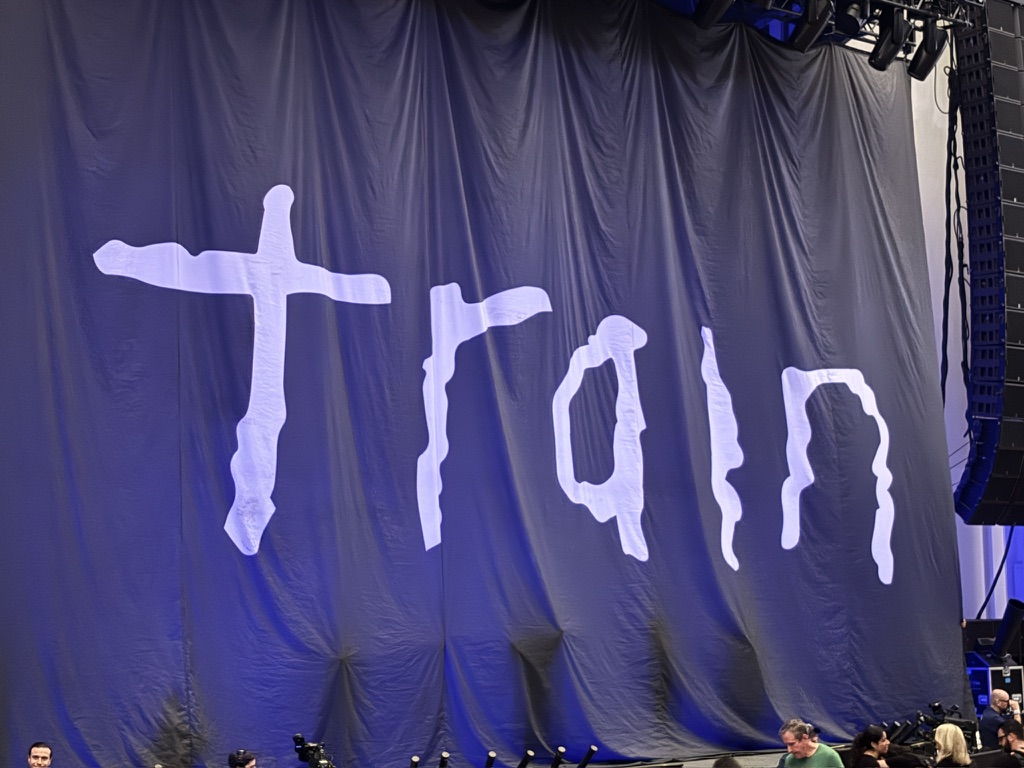
So months ago, we coordinated with family friends to take everyone to see Train, Barenaked Ladies, and Matt Nathanson. I was even on board! Still, for a variety of reasons, we talked about it much longer than we acted on it. By Thursday night, we still hadn’t bought tickets for the Friday show. My daughter had decided to go on a trip with a friend, so was no longer available, my husband was ambivalent about it, and similarly, there were some hiccups with our friends’ schedules. I was ready to just abandon the idea and sleep off the long week at work!
BUT – this is my year of yes, and ultimately we went to the concert. Sometimes the things that almost don’t happen turn out to be exactly what you need. I was completely relaxed in the space of the music, and I knew more of the songs than I realized I would. Each one seemed to carry a memory with it, and I loved my internal reminiscence with the external joy of the concert goers. The music belonged to different years and different versions of me, but somehow all of those versions were there together, singing along on a summer night with people I love.
It was pure joy.
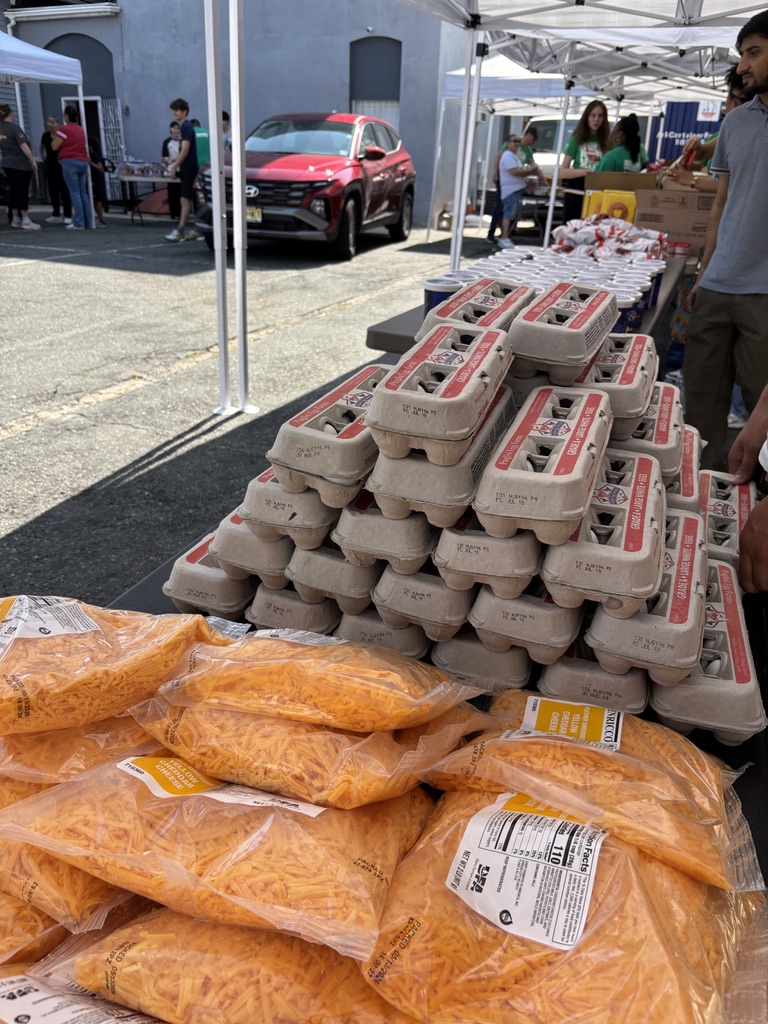
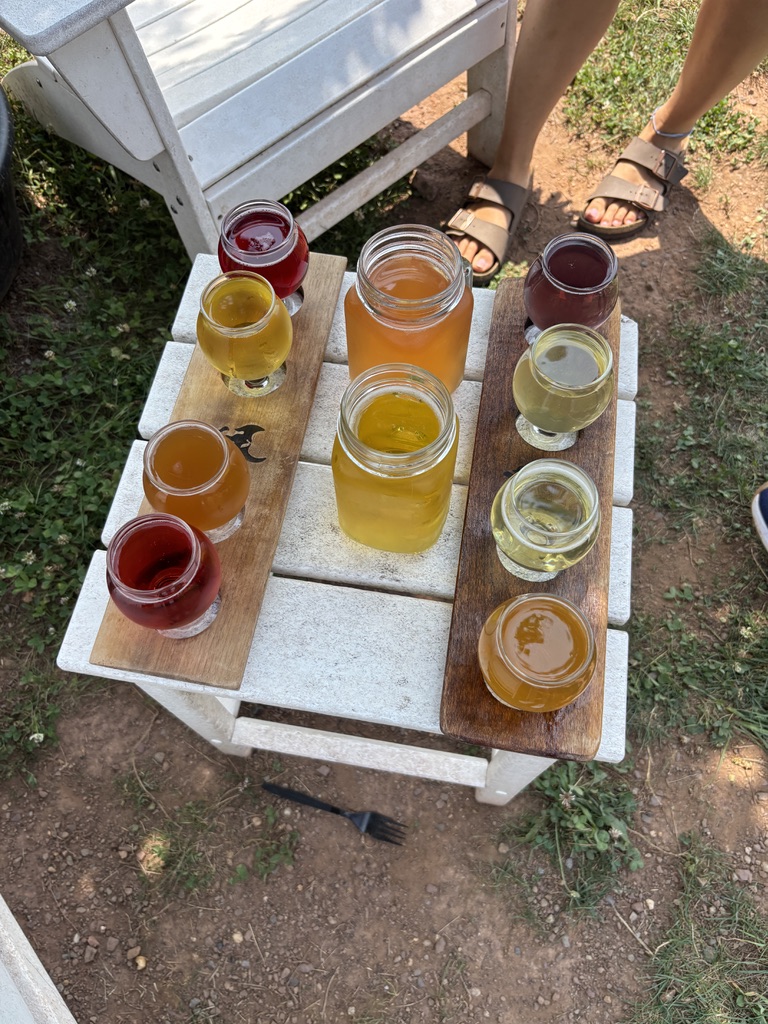
And the weekend had just started! The next morning I tagged along with my son to his volunteer gig, a once-a-month food distribution to fight food insecurity in Newark. By Saturday afternoon I was hanging at our local cider mill, tasting the various flavors and drinking in the beautiful weather and getting to know our son’s girlfriend better. We followed that with dinner with our daughter, who told us all about her trip. The joy radiating off my children was infectious.
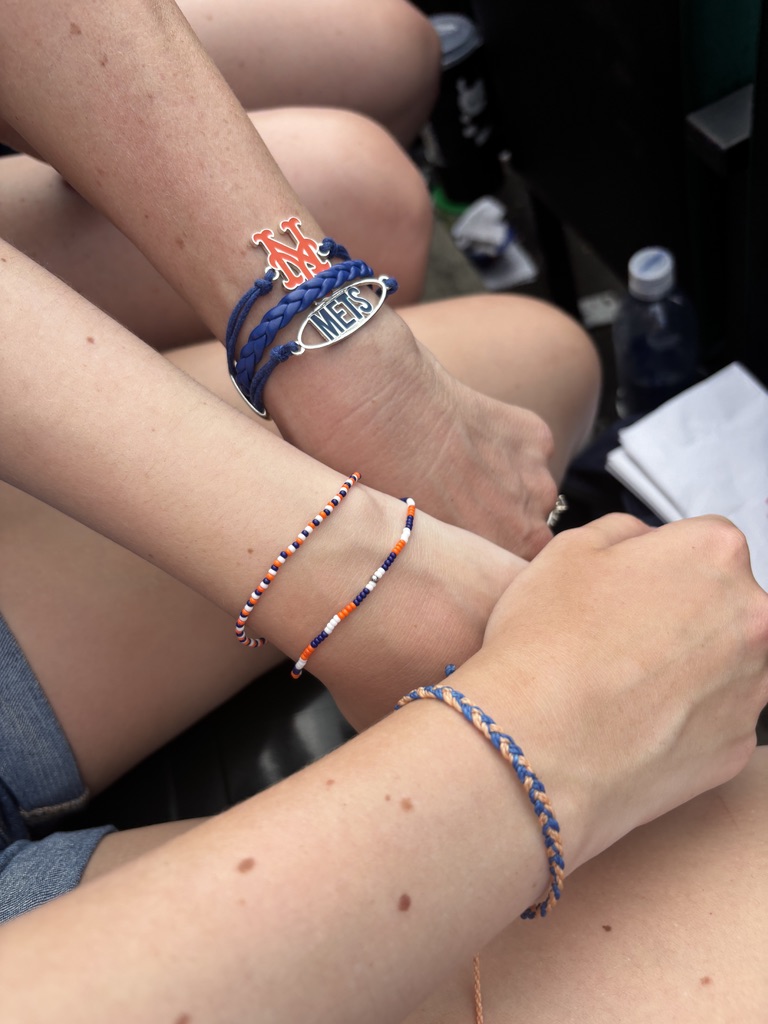
Earlier in the week, my son had texted to ask if we could go to a Mets game while his girlfriend was visiting. My husband, a die-hard Mets fan who takes every disappointing season personally, did not immediately jump on board. I did. After months of trying to coordinate four increasingly independent lives, I recognized the invitation for what it was: a chance to spend time together.
So all five of us headed to Citi Field, where we relaxed in the sunshine, took pictures with Mr. and Mrs. Met, ate a bucket of pickles, and cheered as the underdogs (our team) took the game.
The car ride home from Queens is always more joyful when the Mets win, so we were all in a pretty good mood. As we chatted, I told them there was a lot to write about for the blog this week and that I already knew what I wanted to title it: “Pure Joy.”
The title wasn’t only about the Mets game. It was the entire weekend: live music and baseball, old friends and new additions, smiles from strangers, cider in the sunshine and singing songs I have loved for years. I have spent a lot of time lately wondering how I want to fill the next stage of my life. Last weekend offered a beautifully simple answer. Fill it with the people who make you laugh. Say yes when your children ask to spend time with you. Buy the concert tickets. Go to the game. Find the joy by making it happen.
There are moments in life that invite us to stop, look at the path we’re on, and ask, “If I’m not doing my current job, then what?” For those of us in higher education, it’s a societal moment as we face an uncertain future. For people celebrating a milestone birthday, it’s a natural time to take stock. For parents entering empty-nesting, it’s part of the need for an evolving identity.
I am sitting at the intersection of these three identities right now.
My answer to the question, “If not this job, then what” has always been rooted in humor. “A party planner,” I say with a smile, “except I don’t want to work nights and weekends all the time.”
I have a sticky note on my computer at home that says, “You are good at bringing people together. Do it.” The note reminds me that I am, in fact, good at producing an event. I enjoy the organization, but even more, I love the execution of figuring out how to get people who don’t know one another talking, laughing, and perhaps making a connection they otherwise never would have made. Seeing people interacting, happy and animated gives me a natural high.
If I look back on my younger self, I’m surprised that party planning is something that has become part of my identity. I am an introvert, and I’m not especially comfortable walking into a room and making conversation. But over the years, I’ve realized that being an introvert is not the same as wanting to be alone. Human connection fuels me. I host events that bring people together, not because I want to be the center of attention, but because I enjoy creating spaces where others can connect. That part of my identity has shaped my professional life: at work I create programs, workshops, and communities that give people reasons to come together. And it has also shaped my personal life: how I have gotten involved in my community and how my family has always opened our home to others.
My husband and I used to entertain regularly. In fact, we created spaces in our basement “pub” and backyard that were intended for gathering. Similarly, I used to organize monthly Girls’ Night Out (GNO) Gives Back events that brought women together for an evening of socialization, conversation, and giving back to local charities. Over the years, however, our lives focused more on work and the kids, and our energy for hosting parties focused on our adult friendships waned.
I miss the “bar parties” of our past. I miss GNO. And now that the kids are off to college, I even miss the egg hunts, where I filled about 1000 eggs and spread them across my lawn, and the various other kinds of parties I planned for and with my children over the years. Party planning was always a lot of work – but it held a lot of reward for me.
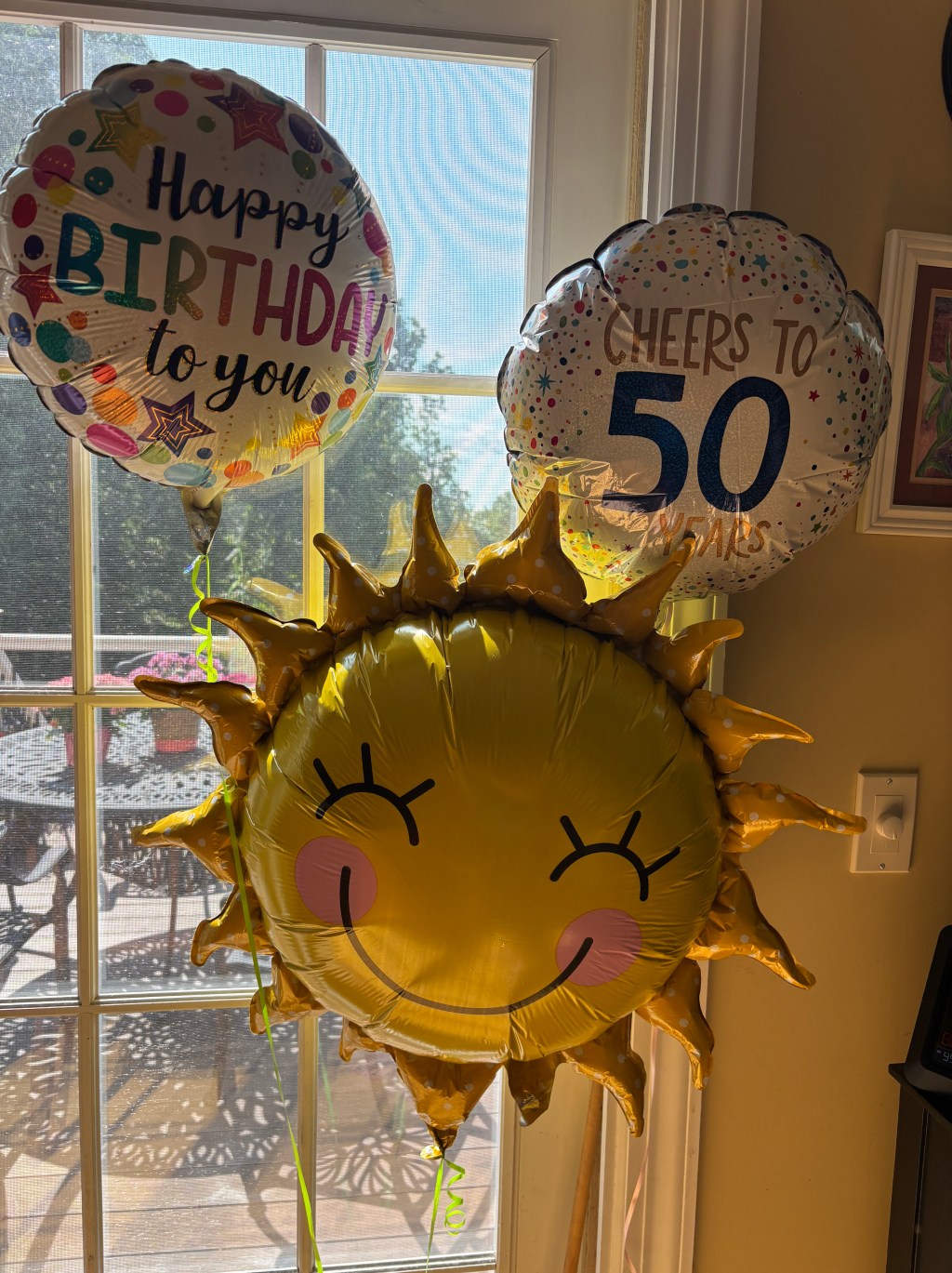
On Sunday I turned 50, a milestone that I felt was worth celebrating, especially as it fell toward the end of my year of writing about FillingTime and in the heart of my transition at work. My week was filled with preparation for a party that my family had planned for me. Sadly, we had to cancel the party due to the threat of severe storms. It was a hard decision, one that affected me deeply because the event represented something I had been truly missing – bringing my friends together in my home.
Despite the disappointment, my weekend turned out pretty perfect all the same. I spent time with my family eating cake, playing “evil” Uno (as my son has dubbed the game Uno No Mercy), and laughing at the picture board my mom put together of all my hairstyles from 1976 – 2026. Then I spent time chatting with my girlfriends, who showed up with mimosas the morning after the cancelled party, just to make sure I celebrated. People still came together, smiled, and made connections. It was good.
Maybe “party planner” isn’t my real answer to “If not an educator or academic, then what?” But creating spaces where people connect is almost certainly part of it. As I round the bend into the second half of my first century (I plan to live to at least 102), I want to make more room for that part of myself. I have spent enough time missing it. Now I need to follow the instruction on my sticky note: Do it.