Ironically, I’m an English teacher who hates to read. Also ironically, I’m a published author that doesn’t love to write.
So much to say here about what may or may not fill my time in the future, but I want to focus on the reading this week since that’s how I filled my time – kind of.
This semester, I’ve been professionally developing as I step back into teaching adolescents. Though I’m not in a high school setting, the teens and early twenty-somethings I’m working with this semester are a different generation than the ones I taught in the early 2000s as an English and social studies teacher, the NYC students I visited and interviewed in the in-between-generations that had a smartphone for the first time, and the 8th graders I taught during my sabbatical in the 2010s. With my professional hat I can say that reading and writing have changed a lot since I personally learned how to do both, and I’m constantly thinking about me as a high school and college student – who literally hated to read and figured out the formula for how to write – and how I may or may not have survived formal education in our current era.
My basic philosophy is that in order to improve yourself, you need to read and write. But what that means to me is probably not what it means to you (reader).
Reading and writing has changed, even though school doesn’t (at large) accept it. Take this conversation I had with a student last week as evidence. We were discussing his final project in the course, which would bring together personal narrative, library research, interviews, and his ideas for how to chart a path forward. We were working on the personal narrative, and I asked him to create a “life map” and talk me through what he created.
He had sketched out some images and added some words, just as I had suggested he do for this brainstorm session. As he talked, I started to imagine his sketches and words as a combined product, rather than a traditional narrative essay, and I invited him to create it. I suggested an art form or even a comic book form, to which he responded, “Really? I can do that? That would be so much easier for me!”
And why shouldn’t he be able to express his ideas in a form that works for him, especially in an era where most of what we consume (i.e., “read”) is based in image, video, and short snippets? All this to say that my approach as a teacher this semester is to count everything, and moments like the one I had with this student affirm that stance.
At the same time, I’m definitely still learning. In fact, I am always learning. I’m not the expert in the room, but I am a lead learner, so despite the fact I don’t like to read, I know that I learn from other perspectives. As I try to model learning for my students, I decided I needed to do what I was asking them to do.
The second portion of their project was to “read” at least five sources in order to ask “big questions” that might fuel their future inquiries. We spent a class session roaming the stacks in the library – mostly because one of my students did not know that the library existed (yes, you read that correctly). I asked them to find a book that looked interesting and to read it – perhaps abandon it if warranted.
And now back to how I filled some time last week – especially because this blog is not supposed to be about my work life. After work hours that same day that my students explored the library stacks, I attended a panel presentation titled Pioneers in Dance: Celebrating Black Women Who Have Made History. This is exactly the kind of event I would have been interested in attending before my life of FillingTime – and that I would not have done because I would have been on a baseball field, at a dance recital, or otherwise attending to my kiddos’ lives. With nothing but time to fill after work last week, however, I decided I could finally just say “yes.”
And I am glad I did. The panelists included the first African American Rockette, as well as one of the founding Black ballerinas of the Dance Theater of Harlem. Their stories about discrimination, the devaluing of Black bodies, and breaking color barriers were new to me, and as I thought about my own dancer now off at college continuing to dance, a girl who had access to a school that allowed her to dance every year on the Alvin Ailey stage, I began to wonder about access to the arts for every child, especially those who do not grow up in a community where access is easy.
At the panel I learned that the Swans were a group of five women who are reclaiming the historical narrative of Black ballerinas, one that was complicated not that long ago when Misty Copeland became the first African American woman to become principal dancer at the American Ballet Theater. Lost in the celebration of breaking the 75 -year history of ABT was the fact that she was not actually the first Black female principal dancer of a dance company.
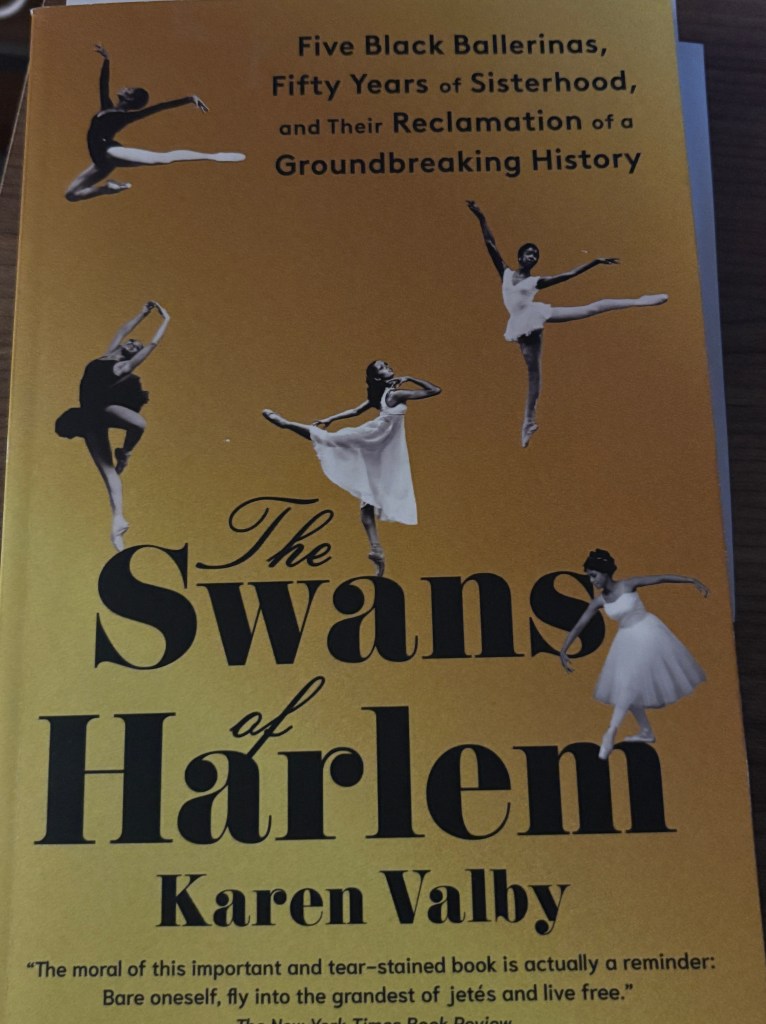
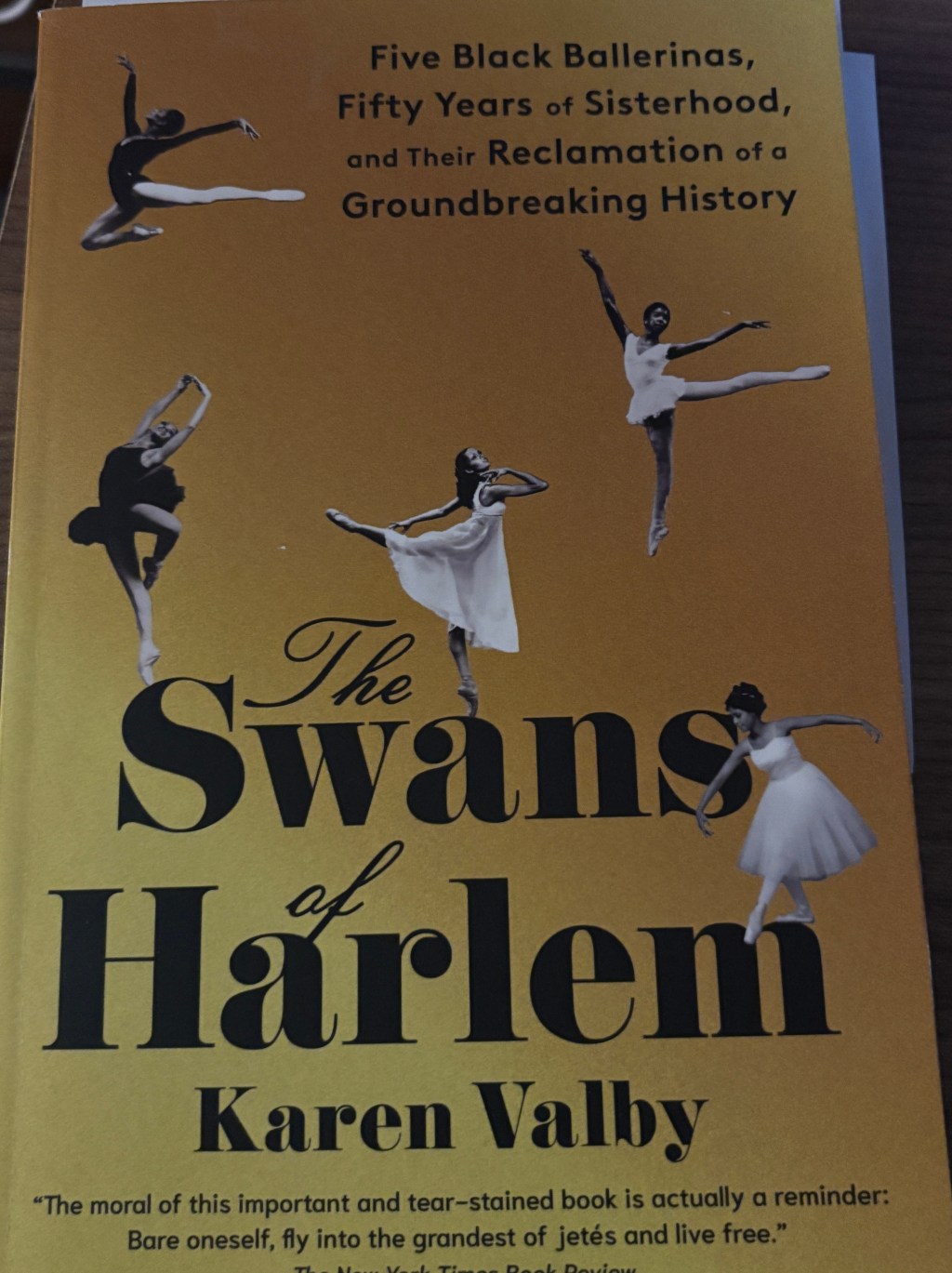
The Swans’ story is now a book, which I bought at the event I attended and then spent some time reading over the weekend. I’m reading the book in print – something I haven’t done in quite a while – to engage my brain differently and to, perhaps, mirror the discomfort my students might feel while they walk the stacks in a library they didn’t know existed on campus.
I “read” a lot. I’ve been in book clubs in the past, mostly for social/political conversation. But to participate, I almost always listened to the assigned books. In fact, nowadays I almost always listen. It’s doable on my commute (to fill the time), and it’s easier on my middle-aged eyes when I’m at home. I can also multitask, engaging my brain in a book while I cook, clean, or organize my always quiet house. This weekend, I listened to two fluff books. And I started reading a print book that I bought at an event. I read – in multiple modes and for multiple purposes – to fill time. But also to learn and to grow, which is a pretty good way to spend time.
 Filling Time: TwinLife Empty-Nesting
Leave a comment