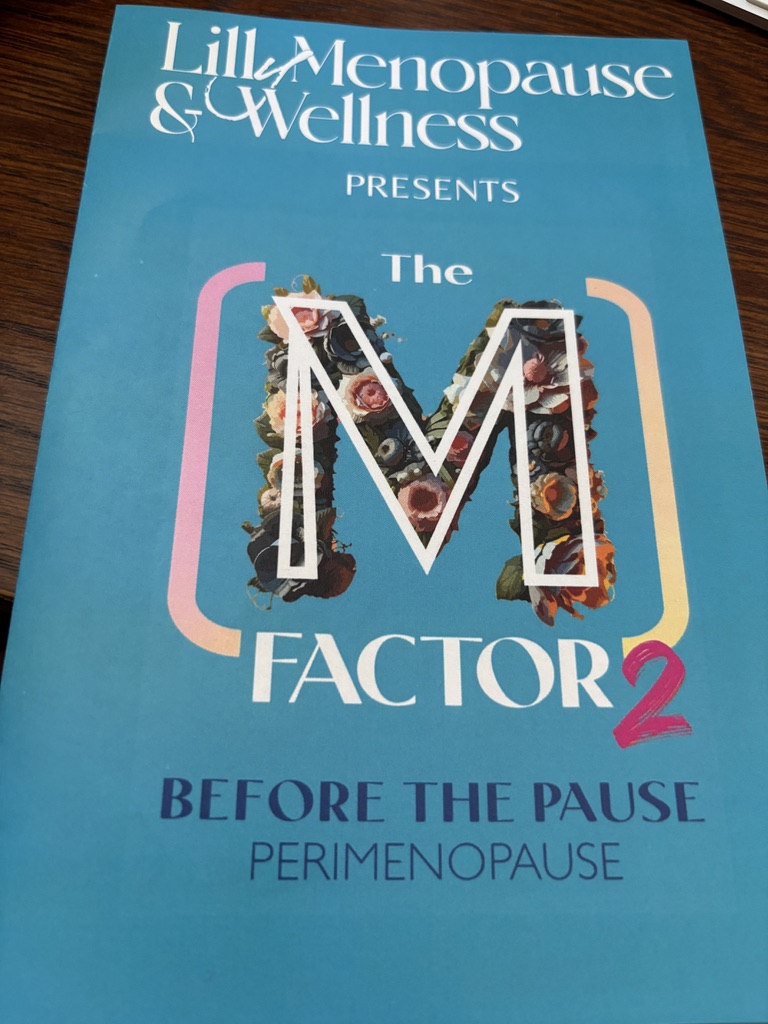
A friend invited me to attend a screening of The M Factor 2: Before the Pause – Perimenopause, a documentary about perimenopause. Of course, I said yes. Not only was it going to be a night out with a couple of women I enjoy spending time with, I figured I’d learn something about myself. I am celebrating 50 all year, after all.
Growing up, I knew almost nothing about menopause. Beyond the fact that it was something that happened to older women, I couldn’t have explained what it was, what symptoms might accompany it, or how dramatically it could affect someone’s quality of life. Looking back, I am not sure the adult women in my life knew much more than I did. They experienced it, certainly, but nobody really talked about it with the younger generations. Society, in general, has not been in the habit of talking about women’s health.
That’s what struck me most during the film. While perimenopause was the topic, as I sat in a theater amongst friends, I couldn’t help but think about how much had changed between my mom’s generation and my own.
Women have been socialized to quietly endure – to push through and accept discomfort/pain/disorientation without complaint. We joke that if men had to give birth, the human race would go extinct, but in that humor is an uncomfortable truth: Women are expected to tolerate suffering until it becomes impossible to ignore. At what point do we tell women to wait until symptoms are moderate or severe before they seek help? Women are encouraged to minimize symptoms, power through exhaustion, and postpone their own care while they take care of everyone else. We normalize women’s suffering in ways that would seem absurd in other contexts.
My mom’s generation didn’t talk about menopause publicly because they had been conditioned not to. Many of them suffered in silence because nobody explained what was happening to them. Yet they were also the generation that fought for the right to control their own bodies. They fought battles that created opportunities my generation inherited. They entered workplaces that were not designed for them. They challenged assumptions about what women could do and where women belonged. I have tremendous respect for what they accomplished.
And yet, a lot of Gen X women have found themselves learning about menopause while they are living it, just like their moms did. We can research almost anything instantly, yet many of us reached our forties and fifties with only the vaguest understanding of what was coming. Anxiety. Insomnia. Brain fog. Joint pain. Rage. Depression. Heart palpitations. The list goes on.
As I watched the film, I couldn’t help but think about my own health, and also about my mom and my daughter. I don’t want my daughter to suffer in the same ways I have. I don’t want her to get to age 50 and be surprised by the information I learned in the documentary. I would like her to recognize symptoms instead of being blindsided by them and to know what questions to ask and what options are available.
One of the gifts of being Gen X is that we seem more willing to compare notes. We talk to one another. We read articles. We join online groups. We share experiences that might once have been kept private. We go to screenings of documentaries designed to help us see that everything we are experiencing is normal. And then we start a text thread so we can be in it together.
These conversations matter. My mom’s generation fought to be seen. My generation seems increasingly willing to tell the truth about our experiences. We are not sharing as a way to complain or to say that we are not resilient. We are talking because silence is not a particularly effective health strategy.
I am grateful I said yes to an evening with friends, a good meal, and a documentary I might not otherwise have seen. I walked in expecting to learn something about menopause. I left thinking about generations of women, the socialization of silence, and the hope that, because we are finally talking about it, our daughters might not have to figure everything out on their own.


Leave a Reply