Imagine this: it’s 7 PM on a Friday night. A group of writers gathers to find out what they will be writing that night. Each takes a starting and ending line home to write a 15-20 minute scene that will become part of a larger play. By dawn, the scripts are complete. The next morning, actors arrive at the theater, get their lines, rehearse all day—and at 8 PM Saturday, they perform.
This was the 24 Hour Theater Project held at a local community theater this past weekend. When I saw the advertisement for tickets, I was intrigued. I wanted to know how it would work, so I grabbed a friend and went for a wild night on the town. (And by wild, I mean that we had a martini before going to the show.) I was incredibly impressed both with the quality of writing and with the acting, especially because the actors all had their lines memorized. Throughout the performance, my mind wandered to what the last 24 hours had been like.
I could imagine it pretty viscerally because I have been involved in theater since I was young. I was three when I first stepped foot on stage. Family lore has it that I cried when my parents tried to have me sing in the Bible school choir, but I begged my mom to let me perform in the high school musical she was directing. I wanted to be with “my friends,” the seventh graders who were pseudo-babysitting me at rehearsals every day. So she put me on stage with the “big kids.” I was in one chorus number in Oliver! and one in The Wiz, but it was enough to start bringing me out of my quiet, timid shell.
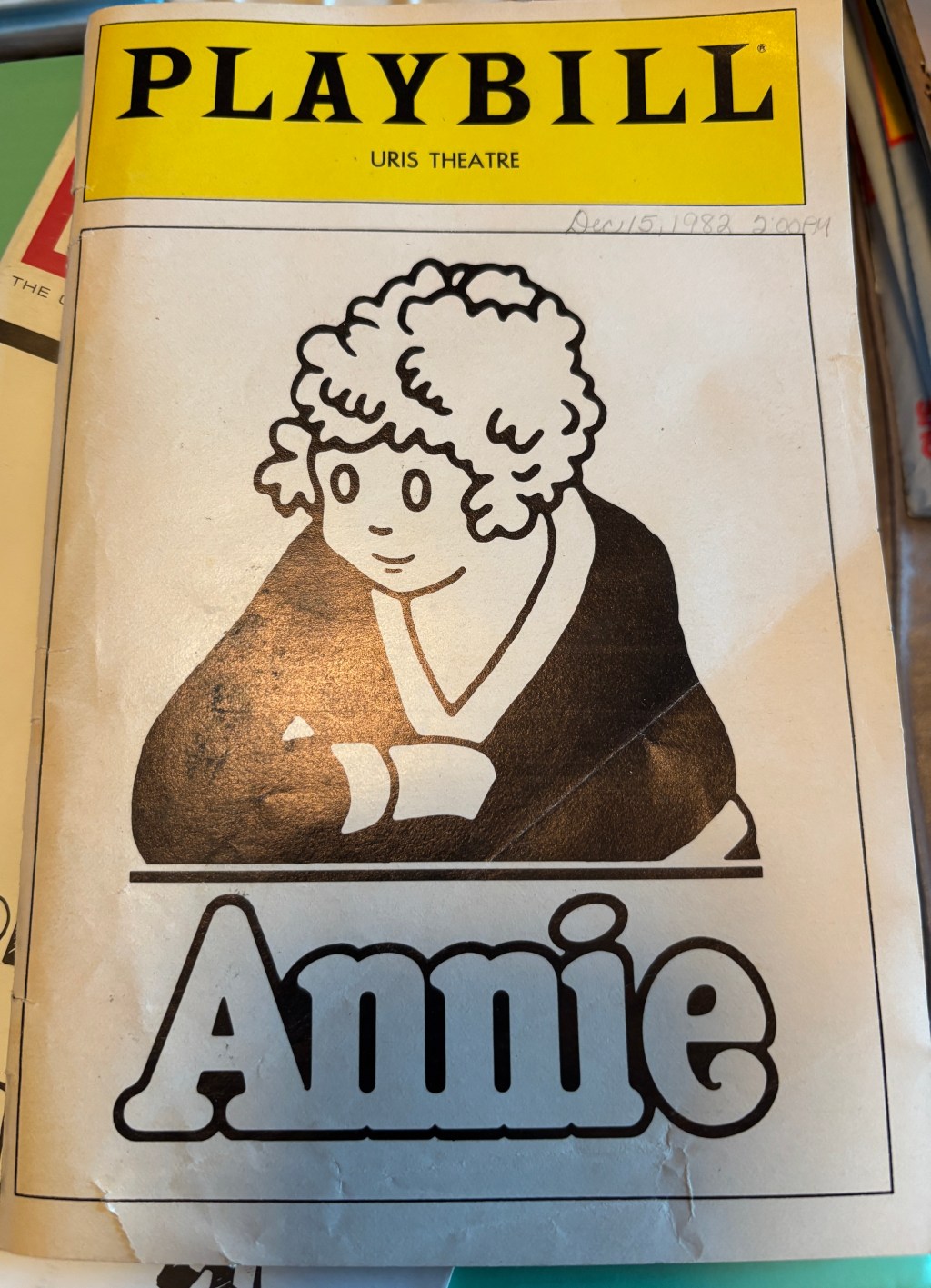
When I was nine, our local community theater posted audition announcements for Annie. My Nana and mom had taken me to see Annie on Broadway, and I loved it. My parents got me the record (yes, the record), and I played it constantly, singing at the top of my lungs, belting out “The Sun Will Come Out Tomorrow” and “Maybe” and all of the songs that Annie is known for. To make a long story short, I was cast in the title role, and by the end of the first decade of my life, I had been bit by the theater bug.
Through high school and college, and even post-college, I kept finding my way back to theater. I performed, directed, and wrote. I learned I really love the back side of theater – the production of it all. When I was producing and directing, I got to unleash my creativity, encourage people to do their best no matter their role, and help it all come together to entertain the audience. It’s something I do professionally when I create conferences or other spaces that help people come together, but there is something magical about theater – where life is suspended for a beat and I can inhabit another space, character, or timeline.
So when I saw the advertisement for the 24 Hour Theater Project, I knew it would be a great way to fill time. Hanging out with my friend was bonus time. And now I’ve got all kinds of ideas of how I can bring 24 Hour Productions to my job and my career context!
Part of my identity involves being an advocate. I’m not usually the shout-into-a-megaphone kind of person, so my kind of advocacy might be called everyday advocacy. It involves showing up, organizing, and listening in spaces where voices need lifting. In the last week, I’ve found myself in three very different spaces that reminded me what advocacy can look like in practice.
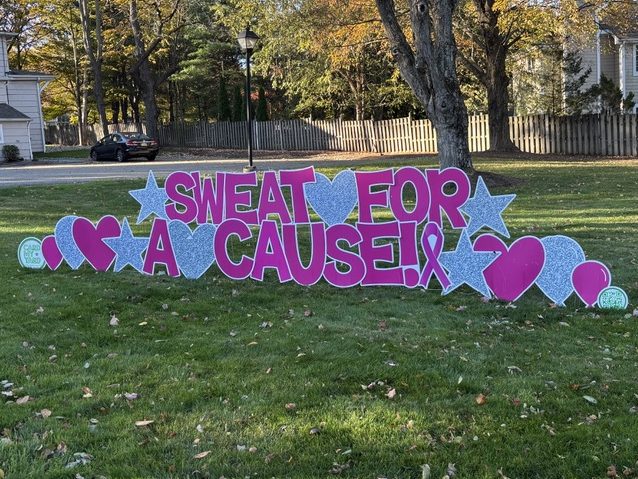
I started my Saturday like I usually do – at the gym. But this past week, most of us in attendance were decked out in pink. My gym organizes an annual workout to support breast cancer awareness, and whenever I’m in town, I carve out time to attend. Facing a weekend of FillingTime after my kiddos went back to school, there was no question where I would be Saturday morning – sweating for a cause!
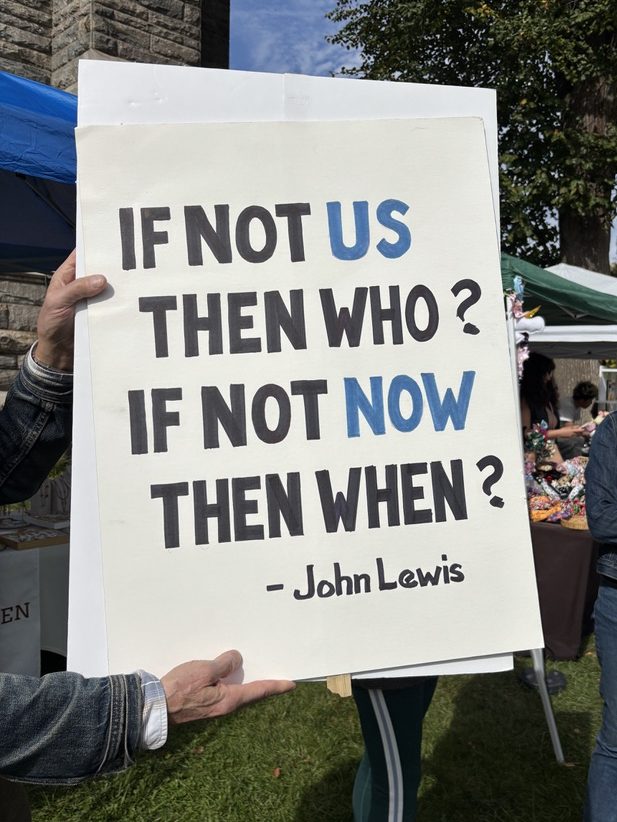
Getting there was a little tricky because I had committed to join a friend at a local rally that same day. In fact, several of my gym friends did not go to the workout because they were headed to the rally. But it was important to me to do both – and in my mind, the two causes were connected. Women’s healthcare is important. And its availability has been under attack lately. As I said to my husband before I left the house, “As a man, your rights do not change when you cross state lines. Your daughter’s can.”
It was important to me to show up in both spaces that day, to join in solidarity with my local gym community and to join a crowd in a public space to take a stand for justice. The larger rally called out the importance of being an American who values the humanity and lives of all. Equity and justice for all. It was an event filled with speakers from a variety of organizations, clergy who led us in a spiritual togetherness, and, always my favorite, singing. Being in community with others fueled my soul and reminded me of the importance for aligning ourselves with others’ and showing up to stand up for all.
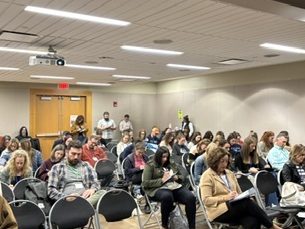
Then yesterday, I got a second dose of soul-fuel. For the last three years I have organized an AI and Writing Symposium at my university. Educators from across the state have come together to think critically about the impact of generative AI on writing, thinking, and learning. This year’s event was even bigger than the last, and the energy hummed through the rooms. At the end of the day I asked each participant to use an old-fashioned tool of writing – a pen and piece of paper – to jot some thoughts from the day. Then, I invited them to turn and talk to someone they hadn’t talked to during the day, not necessarily the person next to them. I asked them to be human, to engage in conversation, and to create community in a space that was intended to help them be advocates for their students. My hope is that they are inspired to go back to their schools and make changes that will lift up access, engagement, and, ultimately, learning for all.
The day itself was a success, in part, simply because it brought people together in the same space to talk. Just like the event at my gym and the larger rally, it was a space where people could take a stance, listen to other viewpoints, and think about how to organize others to the cause. Advocacy isn’t just political; it’s personal, physical, intellectual, and communal. And everyday advocacy is a great way to fill time.
As I grabbed a basket of laundry, a few of my son’s clothes tossed on top, the tears threatened. They had been lingering just below the surface for over 48 hours.
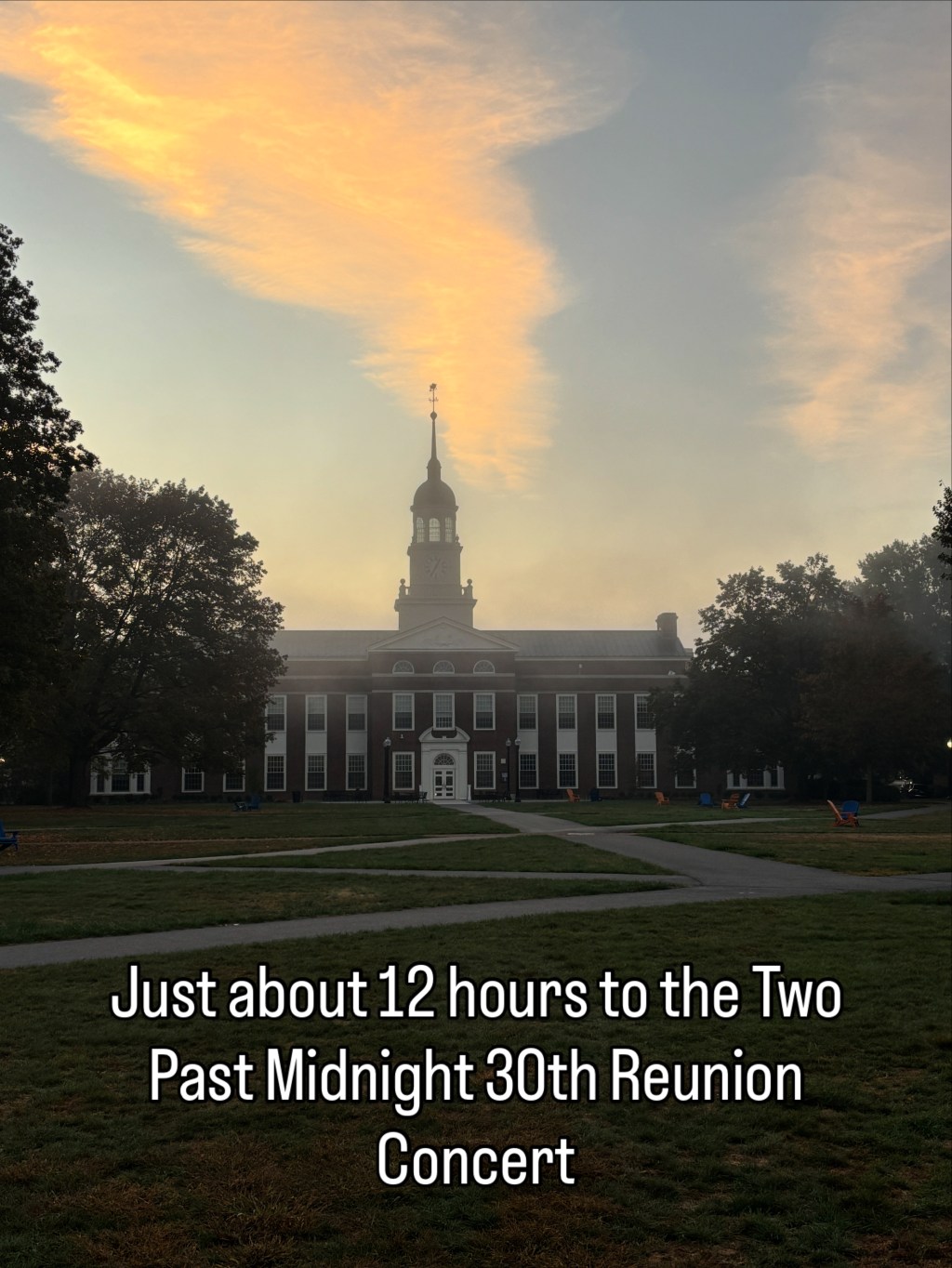
It was Tuesday morning, the last day of fall break for both my kids. The previous ten days had been filled with more emotion than I wanted. While I was riding the high of a musical reunion for the 30th anniversary of the founding of my college a cappella group, my college freshman, who had just turned 18 in August, called me.
“I don’t know how to say this,” were the words I heard over the phone line. I proceeded to listen to the most heartbreaking message, one that made me ache for my child and for the family of another child.
Parenting from afar is hard, but I learned it’s even harder when your kids don’t know how to talk on the phone. As a teacher, I know about wait time. I know you need to let people process their thinking before stepping in. As a human born in the 1970s, I know how to have a conversation on the phone – without visual cues for how long to allow for wait time before it becomes awkward and nothing more comes of the conversation. My kids, born into a world of FaceTime, do not have these phone talking skills. Helping my child navigate the feelings that traversed through the stages of grief last weekend made it clear to me that parenting via phone was going to be very hard. I needed to be in the geographical same space to offer support – and also to read the aura. Was my kiddo ok? Though we had talked several times a day since that first phone call, the week had been overtaken by midterms, and I wasn’t sure where my child stood emotionally.
Luckily, the week turned into fall break, and after a 4+ hour train delay, all four of us were in the same house together. Were my kiddos okay? This question became the lens through which I viewed the weekend. Because my husband had a business trip, it ended up just being my twins and me for 48 hours of it. Both of them had many things to do, so I just sat back, watching them, listening when they talked, and jumping in to play a game of Taco Cat Goat Cheese Pizza and watch a movie assigned to my son for one of his classes. It was great. We were all happy, seemingly all ok.
Except I felt weird the entire time, and it wasn’t something I could attribute to parental worry and trying to figure out if my kids were okay in their new worlds and lives.
Tuesday morning, their last day with me, I woke up early to go to the gym. I came back to a quiet house, which isn’t unusual nowadays. But that day I knew my kids were asleep upstairs – and that they wouldn’t be the next morning. The next morning, the quiet wouldn’t end. I went about my morning business, including making coffee. Shortly thereafter, my son came downstairs, telling me he was meeting a friend at the diner for breakfast. It made me happy, despite the fact that I knew I only had about two hours left before he went back to school. Friends are family, and it’s important to cultivate those relationships.
With the house quiet again, I refilled my coffee mug, and as the liquid poured into it, my tears overflowed. Of all the moments in the last two months, it was a strange time for the emotion to escape. There was nothing about putting milk in my coffee that should have released the valve. After they both went to college, many people asked how I was doing. At the time, I was honest and said I was fine – almost like the weight of mom-parenting had been lifted. My husband, on the other hand, took their departure hard. I understood – and perhaps I compensated for it. I let him grieve while I was focused on being excited for their next adventure.
At the same time, I knew that it would likely hit me when they went back to school after fall break. I literally told everyone who asked me how I was that they should ask me after fall break. I thought that it would be because the house was empty without the veil of “summer camp.” But I didn’t realize how strange I would feel for the entire time they were home too. I didn’t realize the dam would break even before they left to go back to school.
Having them home has been surreal. It’s been both normal and different. I had just enough time to adjust to life without dance and baseball and all the things. And not enough time to adjust to them. Them. Their adult selves. They were markedly different, though not in a way I can clearly articulate. They were functioning adults, doing their school work, seeing their friends, and chipping in around the house. They were good roommates and great conversation partners. They seemed appreciative to be home; I was thankful they both were. They were changed, just a bit, but enough to notice, and it threw me off kilter.
I was keenly aware every moment that it was different – and also that being in the space with them was temporary. I couldn’t unstick myself from that perspective. Subconsciously I think I knew that I wouldn’t have enough time to fully understand what had shifted. At random times I found myself swallowing hard, wishing away nerves in my belly, and fighting to keep the tears under lock.
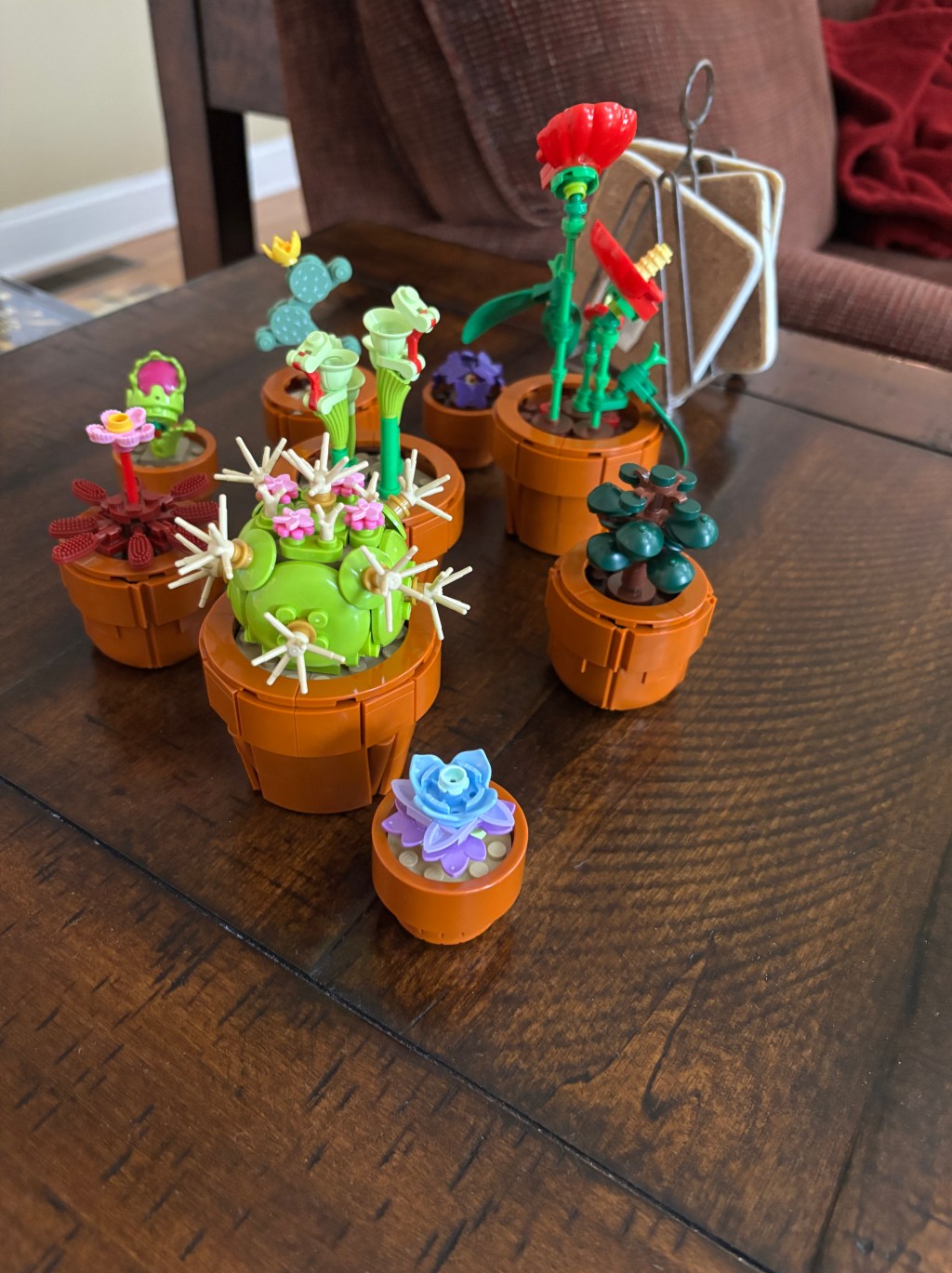
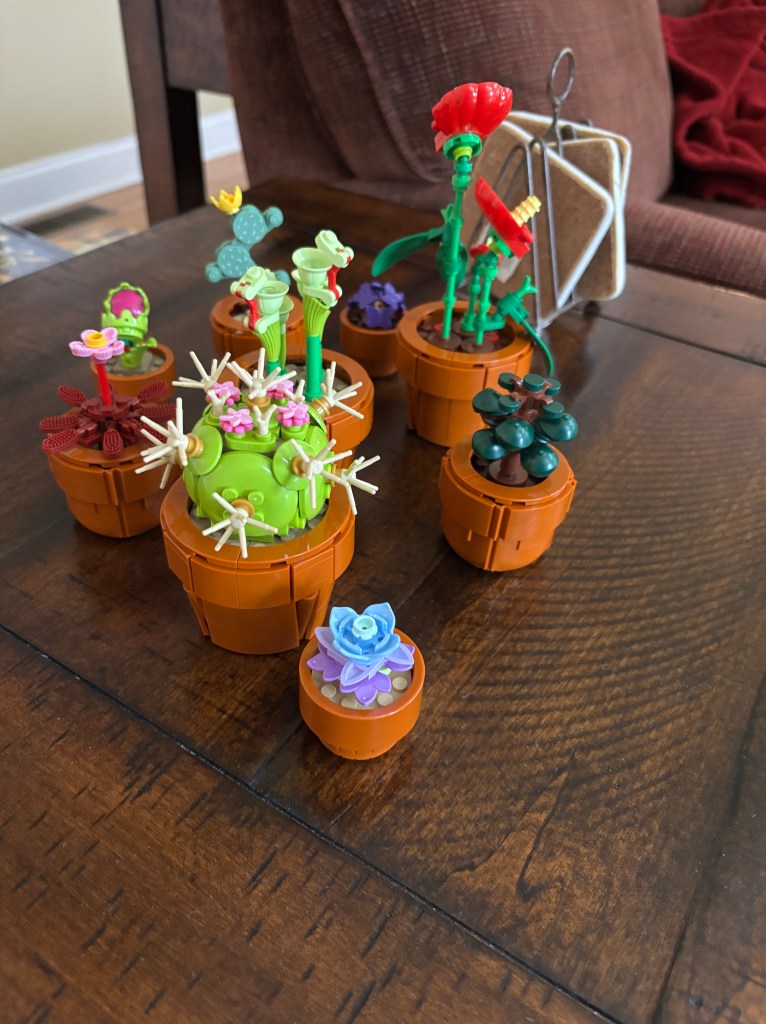
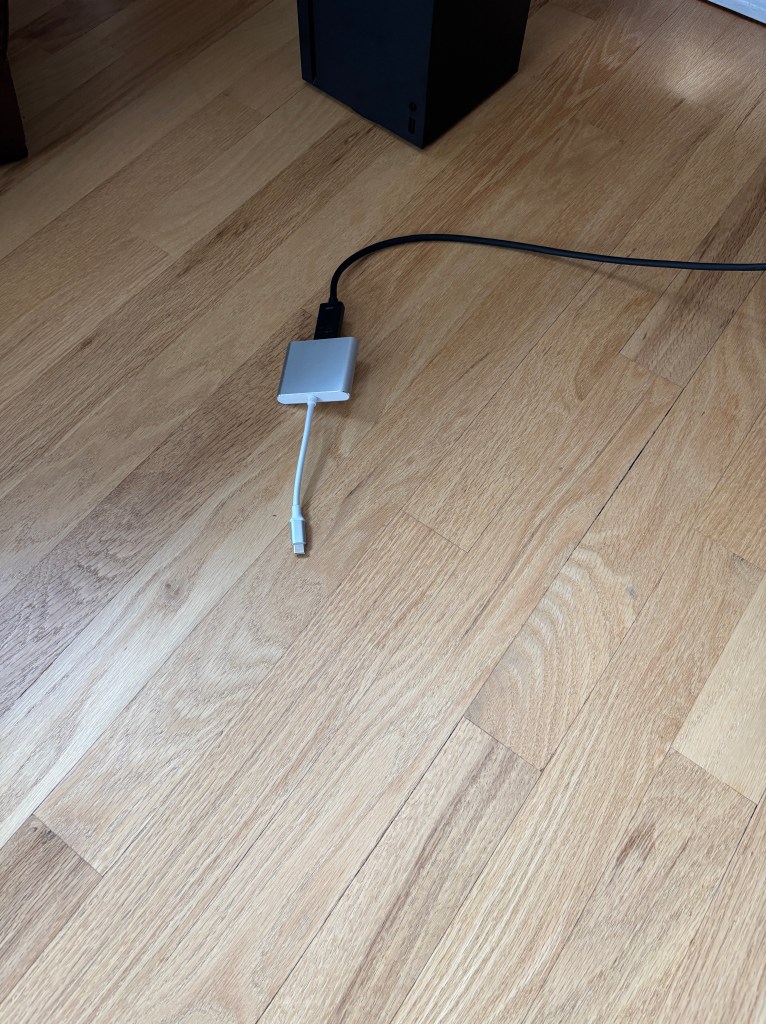
Until I couldn’t anymore. A few tears escaped into my coffee mug just hours before they left, and a few sobs after the three of us took a picture before they walked out the door. Then, as I closed the garage behind them, I lost it. As I wandered the house throughout the rest of the day, I noticed the lego succulents that my daughter and husband had built before he left for his business trip; the computer adapter my son had used to watch the movie with me; the cups –so many cups!– all over the house; the towels they had casually thrown in the laundry before leaving. I felt the grief of being alone in a house where my kids had left imprints, tiny marks of their presence that now signified their absence. And I know that FillingTime has shifted for me.
Singing has always been my escape. High school presented a lot of challenges for me – especially socially – and my choir class was the one place where I could get lost for a while, sinking into the choral music or the show choir or the spring musical. As I dealt with academic stress, relentless bullying, and the general angst of being a teen out of place, singing wasn’t just a hobby. It was survival. Every day for four years, first period was my escape. Don’t tell my athletic coaches, but that class was better at soothing my soul than all the hours I put onto the fields or the court.
I knew I wanted to keep singing in college – to bring that space of escape along with me when I left home. I joined the university select chorale, and I was surrounded by talented musicians who could read music, stay in tune, and tackle difficult pieces. It was a good space, but it was missing something that my high school (somewhat misfit) choir, with its attention to theatrical performance, had given me. In hindsight, I think what I was seeking was camaraderie, a sense of team that worked together to build something new and entertain at the same time.
I saw that kind of community in the male and female a cappella groups on campus. I attended all of their performances, and I wished that there was a place for me among them. I certainly could not join the male group, and to be honest, I didn’t want to sing in a group that did not have male voices. So I was left with the more structured choral group, missing a piece of me in the process.
One day after chorale practice, I confessed to my friend that I wished we had something like the all-male and all-female a cappella groups that performed on campus. As a musical theater person herself, my friend lamented with me. Our conversation led to a question: What if we started a co-ed a cappella group ourselves?
Not long after, the headline “Love to sing?” appeared in our printed campus newsletter — yes, the kind on real paper that we plucked by hand out of our mailbox each week. It invited anyone interested in forming a new co-ed a cappella group to come to a meeting. It was kismet. Needless to say, I showed the invitation to my friend, and we showed up at the informational meeting. After auditioning, both of us were selected, and just like that, I became one of the founders of the university’s first co-ed a cappella group. Thirty years later, that group came together to celebrate its history.
That history started with the group’s founder, who wanted to break out of the rigid, formal traditions of campus music. He wanted to create something that crossed cultures, brought together male and female voices, and celebrated diversity — both musical and human. That vision has guided the group for three decades, and as we have come together across generations through reunions and karaoke outings over the years, we have cultivated and solidified lifelong friendships that are more like family. Our 25th reunion was disrupted by Covid, so for the last two years, we have been planning an event that would both reunite the family while also inviting newer, younger members who did not know the strength of the alumni connections.
In this planning, I ended up taking on the role of Executive Producer. This basically means that I wrote the script for the performance, wrangled the alumni to get back to campus for the weekend, facilitated the schedule with the university, made sure the logistics were set, and sent all the emails. And there were a lot of emails. It was a huge lift, especially while sending my twins off to college this summer. But this past weekend, it all came together. About 50 people took the stage to sing across generations — representing eras from 1996 to the present day. We performed our favorite hits from each decade, sang the original songs that started it all, and closed with our traditional final number, “Still of the Night,” just as the group has done for 30 years.
Offstage, the magic simmered throughout the weekend. We rehearsed a new arrangement in our Airbnb, performed karaoke at the hotel bar, shared drinks, and told stories. We laughed until it hurt. The weekend wasn’t just a reunion; it was a rediscovery — of music, of friendship, of belonging.
People have told me I’m good at bringing others together, at organizing, at making things happen. This event reminded me again how much joy it brings me to do so – even if I have to sleep for a week after it’s over! It was volunteer work, yes, but it was also something deeper: a way to reconnect to the parts of myself that matter most.
So where do I go from here? Do I volunteer to find connection, or follow connection to find where I’m meant to volunteer? Maybe it doesn’t matter which comes first. Maybe it’s the mix of memory, music, and meaning that will help me to find the purpose in filling time.
My husband and I started dating our first year in college, and for spring break that year, he took me to his family’s lake house in Vermont. It was a modest cabin not too far from Okemo mountain, and since “spring” break was still snowy season in Vermont, he took me skiing. I had only been downhill skiing one time in my life at that point (where I had no instruction and basically butt-slid down the mountain), and his way of teaching me was to take me up the lift and say, “See you at the bottom!” while giving me a little push. He is lucky (1) I was an athlete, and (2) I appreciated his humor.
That summer, we went back to the lake house, that time to enjoy the water. Our second adventure together came with instructions from his parents not to let the motorboat sink until the rest of the family could arrive with a new drain plug. Having never been on a motorboat before, I had no idea what that meant, but I quickly learned that we needed to manually eject the water (including bailing it by hand) on a regular basis throughout the night. Though I learned quickly that waking up to take care of the boat was about as fun for me as taking care of pets, during that weekend, I also learned that I loved the feel of the wind in my face as the boat sped across the water. I loved canoeing, tubing, swimming, and just playing in the lake. I was willing to deal with a broken drain plug now and again for that feeling.
I was only 18, and at the same time I was falling in love with my forever-mate, I fell in love with the lake.
Over the next twenty-five years, that lake became a constant in our lives. The modest cabin grew with us into a house that slept 22 people at once (that was the record!) and became a place for high school, college, and post-college friends to gather. It helped us celebrate weddings, birthdays, and the start of the next generation. I wrote peacefully there, learned to cook for crowds there, and stepped away from the craziness of everyday life there, content to drink my coffee while watching the sun rise over the water when nobody else was awake in the morning. Though the ski mountains never felt like my place, even when the water was frozen, the lake called to me.
Over the years, I learned to downhill ski and slalom water ski from that house, and I shared adventures with so many family members, friends, and, most importantly, my own kids. I watched my children tentatively play on the edges of the water, hit home runs off the end of the boat, and fly like a rag doll when the tube flipped. (No injuries!). It was both the place and the gatherings that made it special. But if I’m completely honest, it was the water. It wasn’t the ocean, which has never given me peace, but it was nature’s elements coming together in a calming way that spoke to me.
When my in-laws sold the house six years ago, I didn’t just lose a vacation spot; I lost a happy place. Perhaps this is why I’ve subtly dropped hints over the years that I think my husband and I should invest in a lake house. He’s done a good job of ignoring those hints — until now.
As we imagine the next stage of life, he and I have started to talk about what it might mean to have a lake home of our own — a place to gather, to play, to welcome our grown children and, someday, perhaps, the next generation. This week, we decided to fill time with a long weekend away, searching for a new shoreline. We called it a house-hunting trip, but really, it was something more. It was time to pause, to look ahead together, to imagine the kind of life we want to build.
We got up before dawn on Friday, hopped on a plane, and flew south, to a lake with a longer season than the one we knew in Vermont. We were giddy with excitement to make this last-minute getaway — the first we have done in over 18 years — and to seek new adventures in new places. We joked as we drove an hour from the airport to meet with a realtor. As we passed a sign that said, “Bridge freezes before road,” my husband asked, “Does anything freeze down here?” to which I responded, deadpan, “Well, the bridge freezes before the road.” He erupted in laughter that made me start giggling uncontrollably. Later that day, we rolled our eyes at each other as our realtor got lost on our trip around the lake. Then, we joked about the fact that the Mexican restaurant that was recommended by Find Me Gluten Free was barely edible (and we left our margaritas nearly untouched on the table!). The next day, we laughed as my husband started arguing with our rental car when it yelled at him for taking his hands off the wheel at a stoplight. Our easy banter from 30 years ago was still there, simmering beneath the surface of our adulthood. This adventure was helping us to see it again.
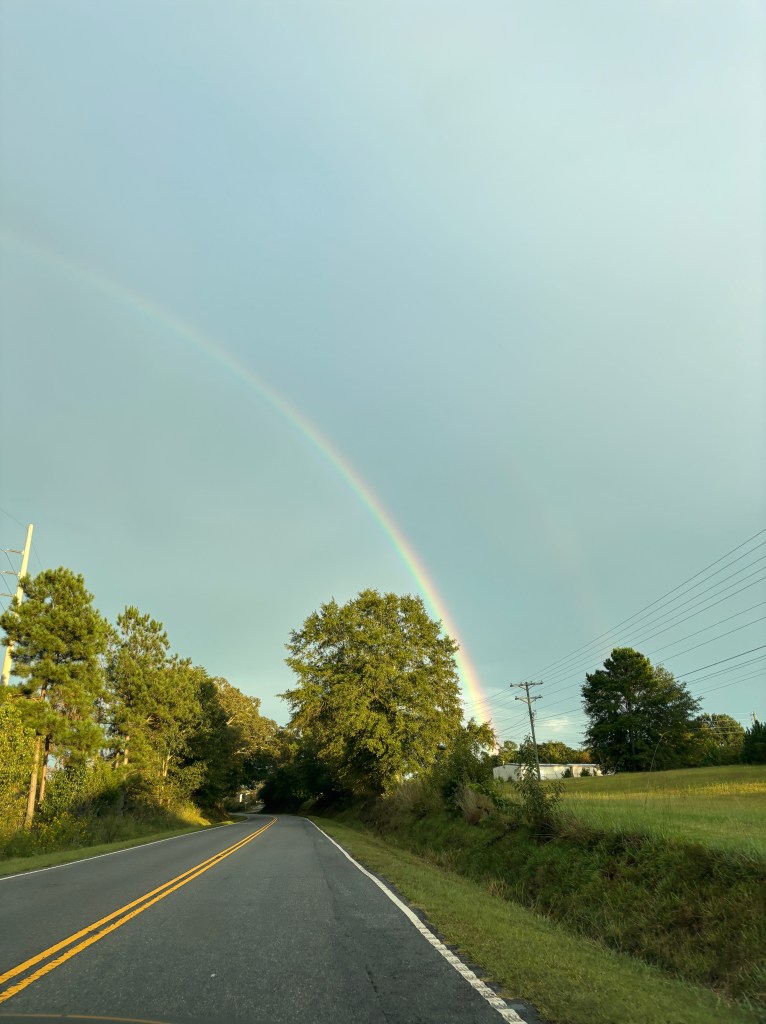
We filled time gathering information, reflecting on what we wanted — both in a house and in our future — and focusing on us (just us) for the first time in a long time. In our TwinLife message thread, I sent the kids a picture of the rainbow we saw at the end of our second day of exploration.
My daughter asked, “Did you get a house?”
I responded, “Can you ever find the pot of gold?”
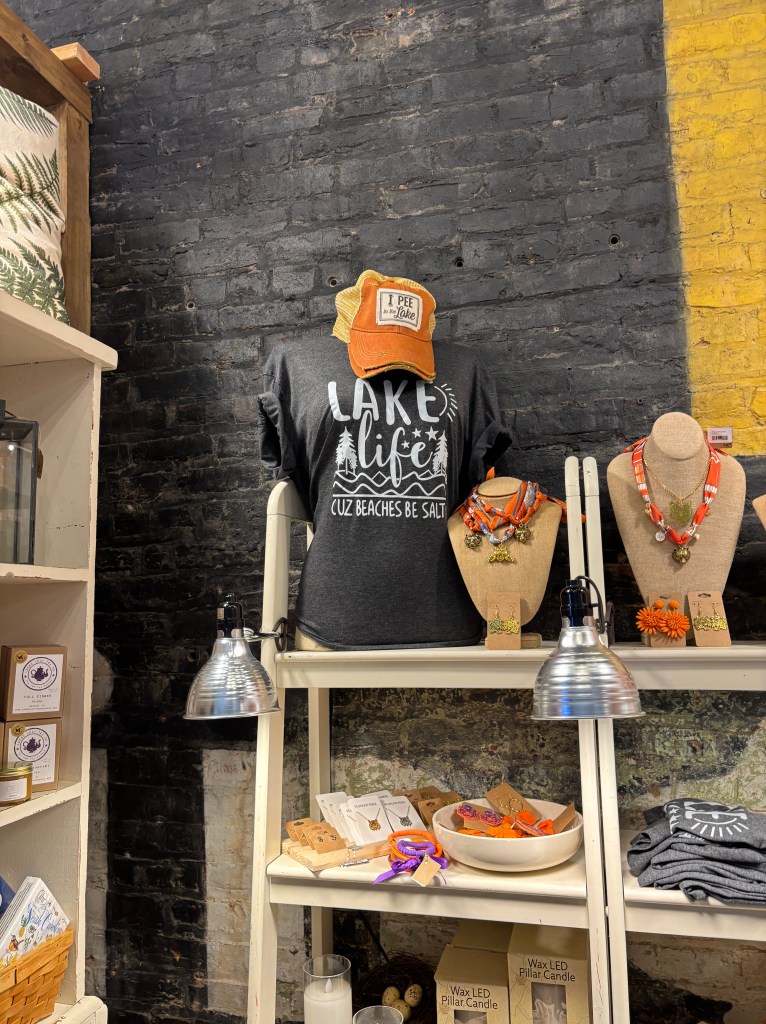
We don’t know yet if we’ll buy a lake house — or when. We don’t know if we will actually agree on what we want or where we want to retire, if that is indeed the quest. But I do know that the lake calls me. As I saw on a t-shirt in one of the shops we visited, “Lake life – cuz beaches be salty.”
Like the seemingly unsolvable debate of “pie or cake,” it’s not even a debate for me. Lake (cake) wins. Hands down. I/we just need to figure out where the lake is that will deliver our pot of gold.
September 17 is Constitution Day. Even as a history major, I didn’t know what this meant until I looked it up this year. Here is what the website of the US Government says:
On September 17, 1787, the Founding Fathers signed the U.S. Constitution. For over 200 years, the Constitution has served as the supreme law of the land. The Constitution, along with the Bill of Rights and other amendments, define our government and guarantee our rights. Each year, on September 17, Americans celebrate Constitution Day and Citizenship Day. In addition, September 17-23 is also recognized as Constitution Week. During this time, USCIS encourages Americans to reflect on the rights and responsibilities of citizenship and what it means to be a U.S. citizen.
We also recognize people who are taking steps to become U.S. citizens. To help them prepare, USCIS offers study resources for the civics and English portions of the naturalization interview and test. The Constitution and the rights and responsibilities of citizenship are important in the United States and prospective citizens may see these items in several places on the naturalization test. There are many questions on the civics test on these two topics, such as, “What is the supreme law of the land?” and “What are two rights of everyone living in the United States?”
I like the Constitution. I particularly like that Jefferson, the writer of the document (1) didn’t fully agree with it (he thought it needed a bill of rights and advocated that one be passed – which it was), and (2) thought it was a dynamic document that could be shaped or completely revised by future generations.
So when I think of the original intent of the document, I always turn to Jefferson (whose ideas helped draft it even if he didn’t get full authorship status) – even though I don’t agree with everything Jefferson did or thought at the time (e.g., I think the national bank was probably a good thing and he didn’t, and I also think a man who knew that slavery was wrong should have sucked it up and taken the financial hit by freeing his slaves.)
But overall, I like what he and his cronies (I use that term purposefully) tried to design. As a design thinker, I know that design is iterative, and Jefferson also believed this. In fact, I think he would be shocked that we are still arguing about his intentions in the year 2025. His view was that every generation probably needed to create its own constitution to reflect the state of the times, but the fact the founders crafted something that seems to have withstood many generations is impressive. And their intent to design a system where humans have inalienable rights is pretty cool – in an 18th century kind of way. Since they only accepted that certain humans had those rights at the time, we can only give partial credit on their creation, but all in all, it was a good start, one we have been working to revise over time.
Since I like the intent of the Constitution, I was intrigued when a friend sent me a link to an event to celebrate it, as well as to protest the actions of the current administration that are taking away the rights articulated in it. I wrote about women’s rights a few years ago, and my fears played out less than two years later. I barely have time to write about all of my fears in today’s world. The excerpt from the government website above specifically references immigrant rights, and these rights are being taken daily, even from people who are following all the rules. It is both heartbreaking and terrifying. As the well-known poem “First They Came” prophesies, if we do not stand up for someone else, eventually we will fall.
For me, this week, I’ve seen teachers and professors impacted by expressing their views, as protected under the First Amendment. We are in a moment where speaking may lead to retaliation but where silence ultimately will beget being silenced – permanently. We cannot be silent.
I have participated in other acts of resistance over the last decade, but I also have recognized that my generation has not really grappled with the terrors of war or civil unrest that our parents and grandparents did. Perhaps this has made us complacent, and we are a bit behind in responding effectively to the moment we are in.
Because we are in a moment. And this is why I filled time this week by joining my friends on a sidewalk, holding hands in the rain on Constitution Day. To make a statement that what we have here in the US is pretty cool – if imperfect – and that we need to stand together to keep it – and make it better. Making it better is, of course, the best way to fill my time.
I am not a cat person. Or a dog person. My husband and I both had – and loved – pets as kids, but we made the intentional decision not to bring pets into TwinLife. Managing two stressful jobs as well as twin schedules meant we wouldn’t have the time for an animal that it deserved. Our kids both wished we had a pet, but they also don’t know the responsibility involved in being a pet owner. They have loved my parents’ cats in lieu of having their own.
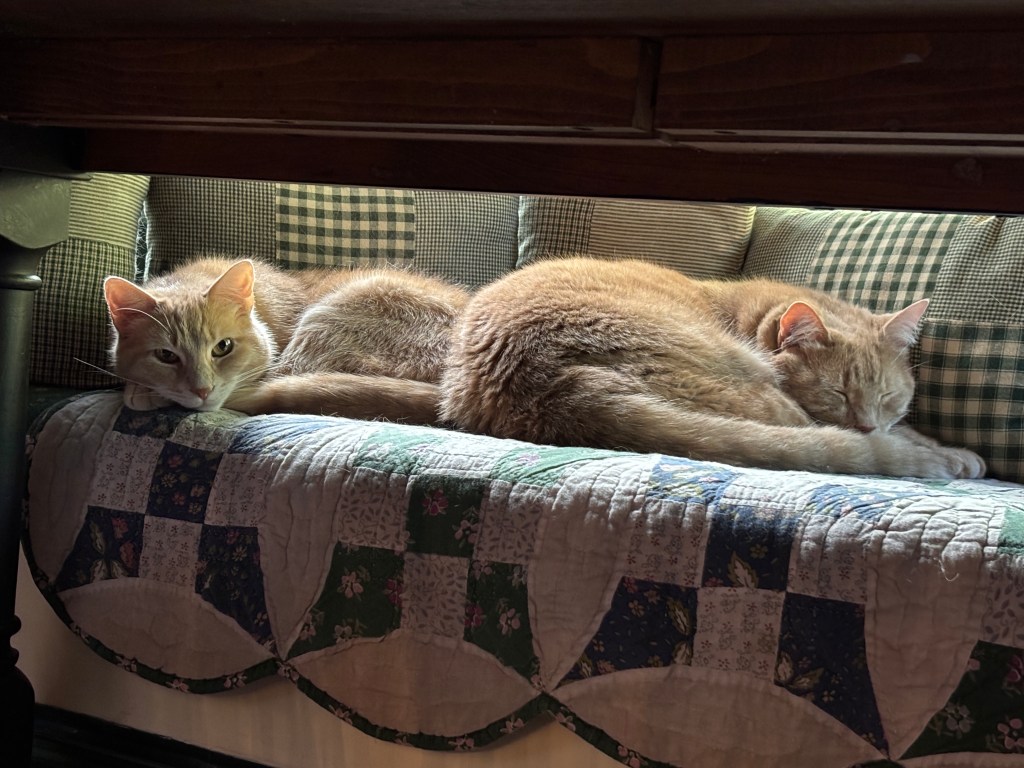
My parents currently have two cats, Leo and Linus, who were adopted as a bonded pair from a cat rescue near where they live. Leo is a happy cat, always ready to cuddle, who loves to eat. In fact, my parents had to develop a routine where the two cats ate separately so that he didn’t steal all the food. Since he has an orange-colored coat, I’ve called him Garfield more than once, joking that he is always eating.
Linus, on the other hand, is incredibly anxious. He rarely comes out when we are visiting, though my daughter has become a cat whisperer who can lure him out of hiding. She feeds him earwax to get him to warm up to her. Yup, apparently this is a thing.
Over the years I’ve found it easier to connect with Leo, understandably since Linus avoids me (and everyone), but to be honest, I’m an ambivalent big sister. The cats exist. My parents love them. I tolerate them. It was similar when my brother showed up five years into my life.
Unlike my brother, who has become a pretty cool human over the years, the cats remain cats. And as I led off in this post – I am not a cat person. Therefore, it’s kind of surprising that I just spent three and a half days hanging out with Linus and Leo, filling time.
A few weeks ago my parents had to take Leo to the emergency vet because he was not urinating. This started a harrowing time for them that included cat surgery, multiple vet visits, daily medication, and a new diet. I am not going to even try to explain what is wrong with the cat. The important part of this story is that it is crucial to monitor whether Leo urinates right now.
As this situation unfolded, my mom mentioned to me that she might not be able to take the trip she and my dad had planned to see longtime friends across the country. Because all of them had been dealing with health issues but were healthy enough right now to visit, this was an important connection point for them. My mom was going to make the sacrifice and let my dad do the visiting so that she could stay home to take care of Leo. Though she had worked it out with the vet that Leo could stay with them during the work week, she did not have a plan for the weekend, when the facility wasn’t open. Because of the complicated nature of his care, she didn’t feel comfortable having her regular pet caretaker fill in.
As I listened, I realized two things: (1) it was really important that Leo pee every day and that someone monitored it so that if he didn’t go, he could be rushed to the emergency vet, and (2) I literally had nothing on my calendar the weekend she needed coverage, and I could easily work from “home” (my childhood home) Thursday and Friday to make the situation easier on them.
For the first time in 18 years, I was able to drop everything (and by everything, I mean the nothing that I had to do) and help my parents – who had been doing this constantly for me over my life, but especially since the kids were born.
So for the last three and half days, I’ve been making sure Leo pees and doing my best to coax Linus into thinking I’m an ok human. So far, I’ve been successful in both goals! I’m really proud that Linus approached me today while I was sitting in my dad’s chair, and asked me to pet him and rub his belly. He’s still scared, but he’s been visible every day I’ve been in the house. And I didn’t even need to resort to earwax.
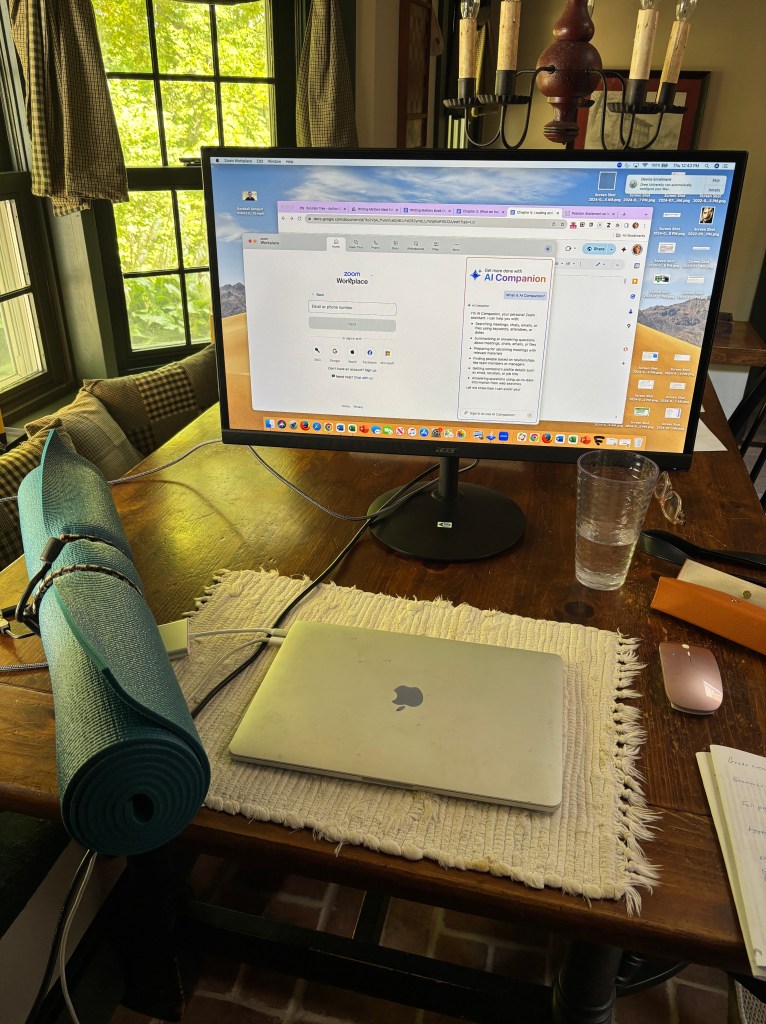
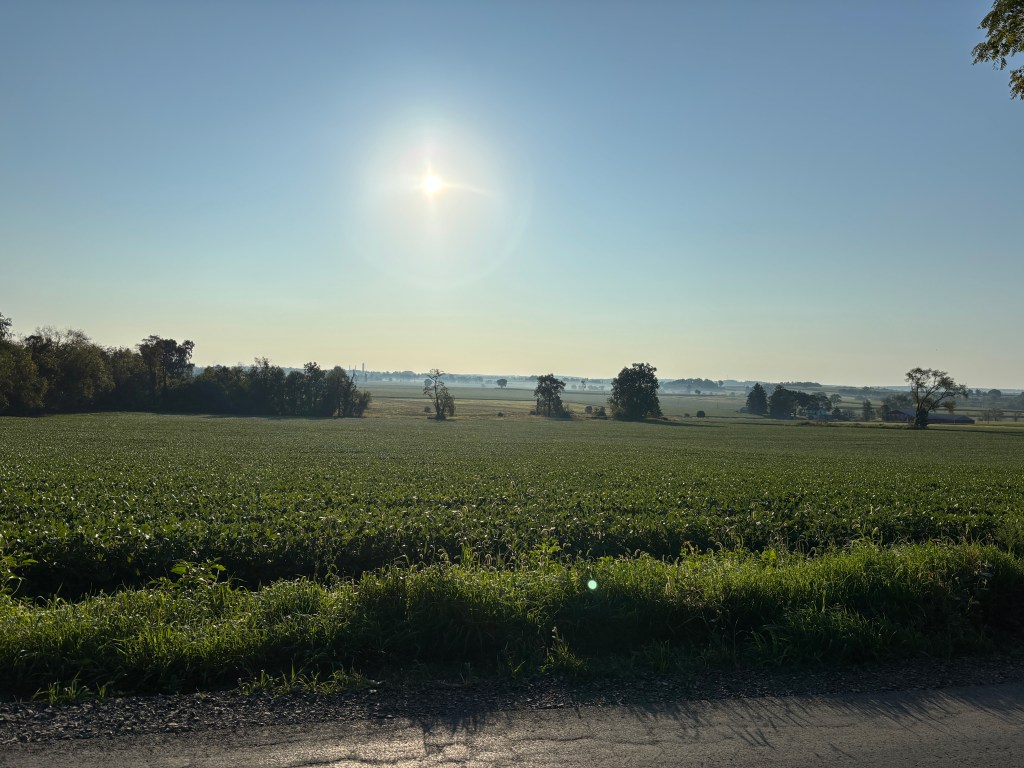
I’ve really enjoyed the time alone in a place full of quiet nature. I decided to call this long weekend a “writing and yoga retreat.”
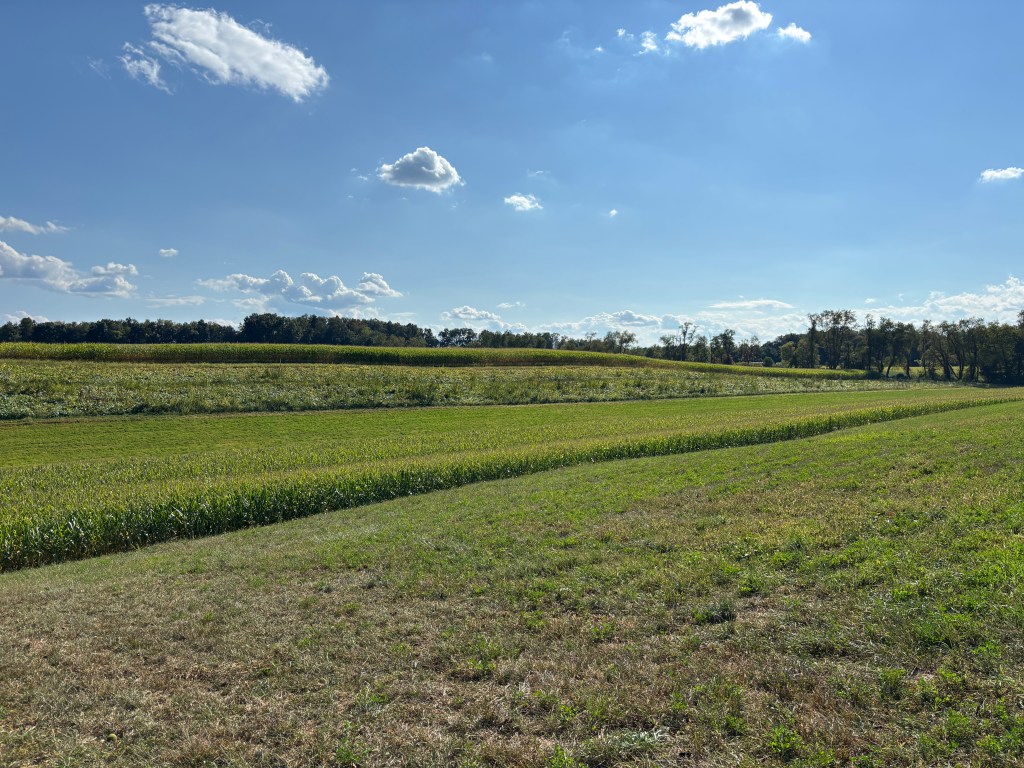
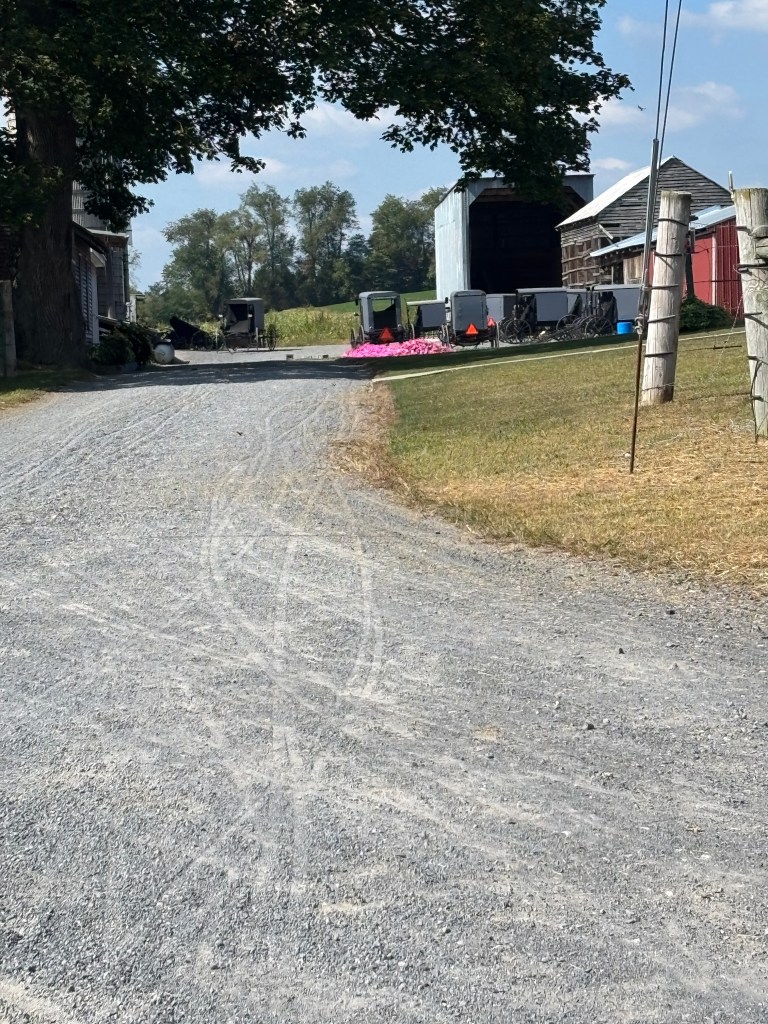
I didn’t actually do any yoga – though I did do long walks every day. Today I saw a caravan of Amish buggies passing me by as they went to Sunday service at my parent’s next door neighbors, and I reveled in the location and peacefulness that is very different from where I currently live. However, I haven’t been as productive as I imagined on the writing front. I’ve been more occupied caring for the cats than I have been sitting at my computer. It’s hard work, making friends with felines. And it’s not necessarily work I love. I have moved the needle from toleration to appreciation for these siblings of mine, but I still prefer my brother (and it’s not even close).
The things I’ve enjoyed about the cats:
They clearly love each other, and love always makes me happy.
Their personalities
Their acceptance of me
The things I don’t like doing for the cats:
Feeding them
Cleaning their litter
Making sure they aren’t getting into “off-limits” places by keeping doors shut
Giving them medicine
Generally, keeping them alive (meaning I don’t like the anxiety I feel in making sure they are safe)
And this is how I know that I definitely won’t be filling time as an empty-nester by getting a pet. I’ll stick with humans.
On a fun note, I did get to spend some human time reconnecting with high school friends during this low-key trip to my hometown. Sharing laughs together after decades apart gave me some insight into additional possibilities for filling time in the future. More to come!
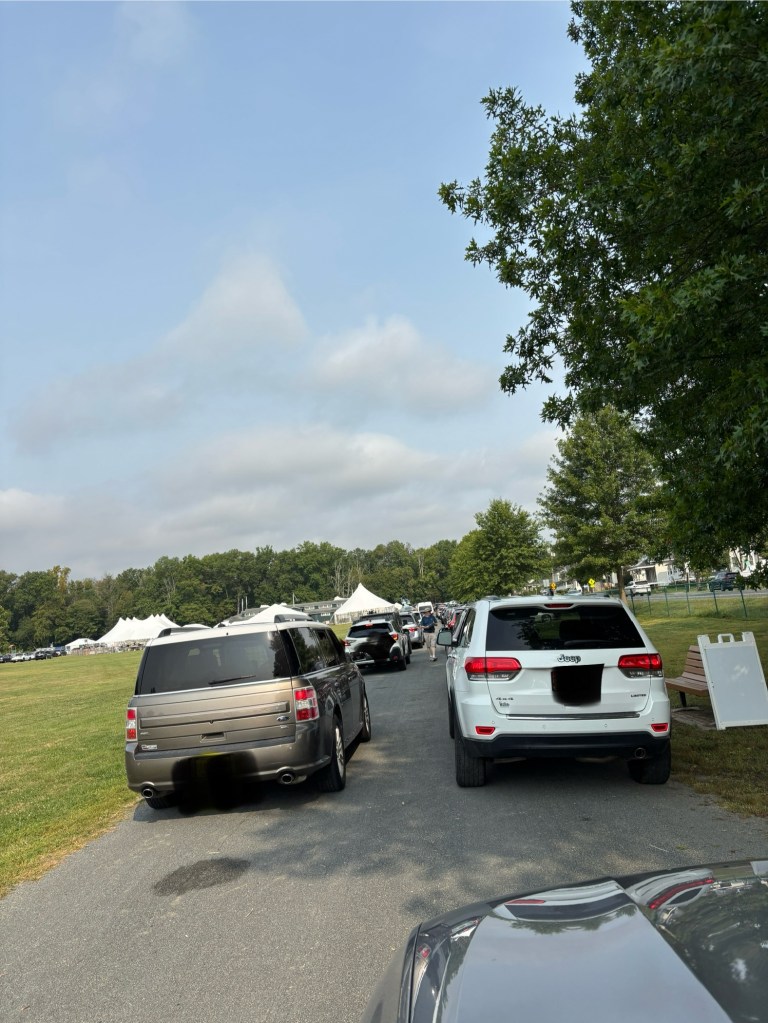
Twice a year the Visiting Nurse Association holds a huge rummage sale just down the road from me. It’s seriously massive. They collect items for several weeks with an army of volunteers sorting and displaying them in a pop-up village of tents, each labeled with the “department” name. The sale itself draws people from everywhere, and you need to arrive early to get the best deals.
When we first moved to the area, I would get in line before opening at the toys tent to try to snag Christmas or birthday gifts for my kids. I’d sip my coffee and chat with the other deal seekers. Each year I’d meet a new teacher from out of state who was there to purchase for their classroom. We’d chat until the line opened – and then we’d start the frantic race with everyone else to find the items that we didn’t know we wanted. It was great fun, and it also meant my kids always had some new-to-them toys or games that I wouldn’t have spent the money on at retail price.
After the toy tent, I’d head to the children’s tent, where I bought shoes and clothes that I knew they’d grow out of in a hot minute. Then sporting goods – I’d stock up on the next three sizes of cleats at $4 per pair – and books, where I spent the most time because we loved new stories in our house. Getting the deals meant knowing the ins and outs of the sale, including the sweet spot for when to arrive and wait for it to open.
As the years have progressed, I used the sale to clean out my house more than I did to fill it. I’ve gotten into a routine of doing a purge in the early spring and then again in the fall. The lines to donate, however, are just as long as the lines to purchase, and I’ve figured out that in order to minimize my time spent in line, it’s best to go mid-week about two weeks into collection, right as they open in the morning.
Normally, I wouldn’t take my donations on opening day because I know that the line is always long, and I usually have somewhere to be. But, I had nothing but time in front of me yesterday, and I had a room full of stuff to purge.
That’s right. A room full.
For the last year, I’ve been gently nudging my kids to start editing their collections. Each of their rooms had become an unorganized museum of their lives that included clothes that were too small, toys that hadn’t been played with for years, mementos of trips and events they couldn’t identify, and gifts and other items that they might use sometime eventually. As a person who likes organization but cannot manage to keep my office or bedroom tidy, I didn’t hassle my kids over the years to keep their rooms pristine. I never lost my cool unless we realized we didn’t have enough cups in the kitchen cabinet – at which point I knew to scold my son for hoarding them in his room. Every so often, I’d dig in and do a deep purge with each of them, donating clothes that were too small and toys they didn’t want anymore, but for the most part, I let them keep what they wanted to keep and live in the space that made them feel comfortable.
However, I knew that the transition to college meant that they were going to need to do a pretty deep analysis of what they owned, what they wanted to take with them, and what could be tossed or donated. We got serious about this work in the lead up to college departure, and by the time we were done, we had about ten bags of clothes and shoes and a few boxes of toys and household items for me to take to the VNA sale this fall. A pile has been sitting in my office, waiting for the donation lines to open.
Then, last weekend, as I faced the first full day without anything scheduled in a very long time, I looked at the list of “empty-nester tasks” I had started and decided to clean out the garage. This was the day after The Queens Adventure, and I probably should have just lounged around and rested. Instead, I got up early, went to the gym, and decided to purge 18-years worth of sports equipment and yard games.
As the donation pile started to exceed the keep pile, I realized I was going to lose my parking spot if I waited to donate everything to the VNA sale. So I started posting things on our local Buy Nothing Group, and by the end of the day, I had dissolved almost the entire pile, and it felt good!
By the end of the Labor Day weekend, I had loaded up the SUV with all of the bags and boxes that had been sitting in my office, as well as the items left from the garage purge. I was ready to take everything to VNA – on donation opening day, when I had another Saturday of nothing but time in front of me. The car looked like I was moving two kids into college, not like was I was cleaning out their rooms!
I had considered waiting until a weekday when I could manipulate my work-from-home schedule to do what I usually do and drop everything off relatively quickly. I figured I would spend Saturday morning tackling something else on the clean, purge, and fix list. However, as a friend rightly pointed out, if I burn through that list too fast, I’m going to end up with way more time to fill than I want.
So after the morning gym and a coffee with friends, I took my full car to the drop-off line – and filled time for an hour while I waited my turn to unload. And the purge felt good.
Monday began with a long day at work, and the rest of the week followed the same pattern. By Wednesday, I got home around 9 p.m., completely exhausted and ready to crawl into bed. As I was heading upstairs, my husband called out and asked what I thought about taking the day off work Friday and going to New York City to see either the U.S. Open or a Mets game. I would have been happy to go to the Mets game since there was a new rookie pitcher I thought would be fun to watch, but tennis has never been my thing. He had taken me to the U.S. Open once before, and the following year I politely told him to take someone else because the tickets had been wasted on me. Still, we are really trying to spend time together, filling time, and tennis is something he’s passionate about so I said I’d do whatever he wanted, but I preferred the Mets game. Since he preferred tennis, we ended up with a tentative plan to possibly do both.
Yes, you read that right. A couple of middle aged people thought it might be a good idea to do a double header, 12 hour day – AFTER a crazy few weeks of moving two kids into college.
I really didn’t want to do that. So I ignored the idea on Thursday, hoping he’d drop it and realize how tired we both were and that neither of us wanted to spend 12 hours in Queens. Luckily, (or so I thought) he didn’t mention it either, and I thought I was off the hook.
On Friday, I woke up early and went to the gym, still hoping he wouldn’t choose to fill the day with both tennis and baseball – or, quite frankly, any trip to Queens. But when I came home from working out, he was up and into it, saying, “All right, you ready to go? I’ve been looking at tickets. We can probably get a good deal — we’ll wait until we get there.” I rolled my eyes, showered, and then crawled back into bed, hiding under the blanket, trying to figure out (1) how I could get out of it, or (2) what in the world I was going to wear for a 12-hour day in New York City. I needed an outfit that would work for outdoor (posh) tennis in the middle of the day — what I call the “Pompous Long Island” look — and then something suitable for the Mets game later that night. I knew the temperature was going to vary widely and that I’d need to either carry or layer my full outfit needs for the day. I pulled the blanket further over my head.
He came into the room, “Um, you’re in bed?”
“Um, can you tell me the weather for today? I’m not sure how to make my outfit work,” I muffled under the covers.
After he checked the weather and talked me off my outfit ledge, I pulled myself out of bed, changed clothes, and we were ready to go.
“Who’s driving?” he asked. I gave him a withering stare. He grabbed the keys.
We had about two hours to get to the U.S. Open, find a parking spot that worked both for the tennis match midday and the Mets game that started at 7 (and finished, possibly, just before midnight), and buy tickets. That’s right, we didn’t have tickets to either of these events when we left our house. This isn’t actually unusual because my husband has perfected the art of the last minute purchase. He has figured out when to buy in order to “buy up.” We have many times purchased tickets from the parking lot. So the fact we didn’t have tickets for the 11:30 match when we left for it at 9:45 wasn’t a big deal. So we set off, lethargically, and I assumed my husband had done all the research needed since this was his thing, not mine. Traffic wasn’t bad, and we made great time, planning to arrive about 10 minutes before the match he wanted to see. As we got closer, he started talking about parking.
Normally, when we go to Citi Field once a year, we use a specific lot that makes leaving after the game easy. I’m not sure if he assumed this lot would be open or whether he just figured if it wasn’t open, we could find something easily, but, to make a long story short – we could not park where we wanted to park.
Because my husband kinda thought this would be the case, he had a loose plan to park in a tennis center lot where we could walk to both events without moving the car. I asked which lot he’d chosen, and he said, “I don’t know.” That’s when I realized he hadn’t done any research. He had literally just hypothesized without collecting data.
As we drove past the Citi Field lot we wanted — completely empty but also completely closed — we kept going straight with the rest of the traffic. It was at that point that I realized mistake number one: trusting my husband to handle pre-research. It was followed immediately by mistake number two: following the traffic instead of turning left.
Fighting my irritation, I pulled out ChatGPT and asked for parking suggestions. It gave us the name of a parking deck near a mall and the two best lots at the tennis center. We kept following traffic, continuing to circle around the tennis center. There were no open lots. Finally, as we rounded the halfway point of the circle around the complex, we were told we could park and take a shuttle back to the tennis center. A quick Maps search told me we were 2 miles away from Citi Field, where we would be ending the night 12 hours later. That wasn’t ideal for walking back to the car late at night. I suggested we keep circling back toward Citi Field to look for another lot. We did find a bunch of lots, including the ones ChatGPT had recommended – but all of those required pre-purchased parking passes.
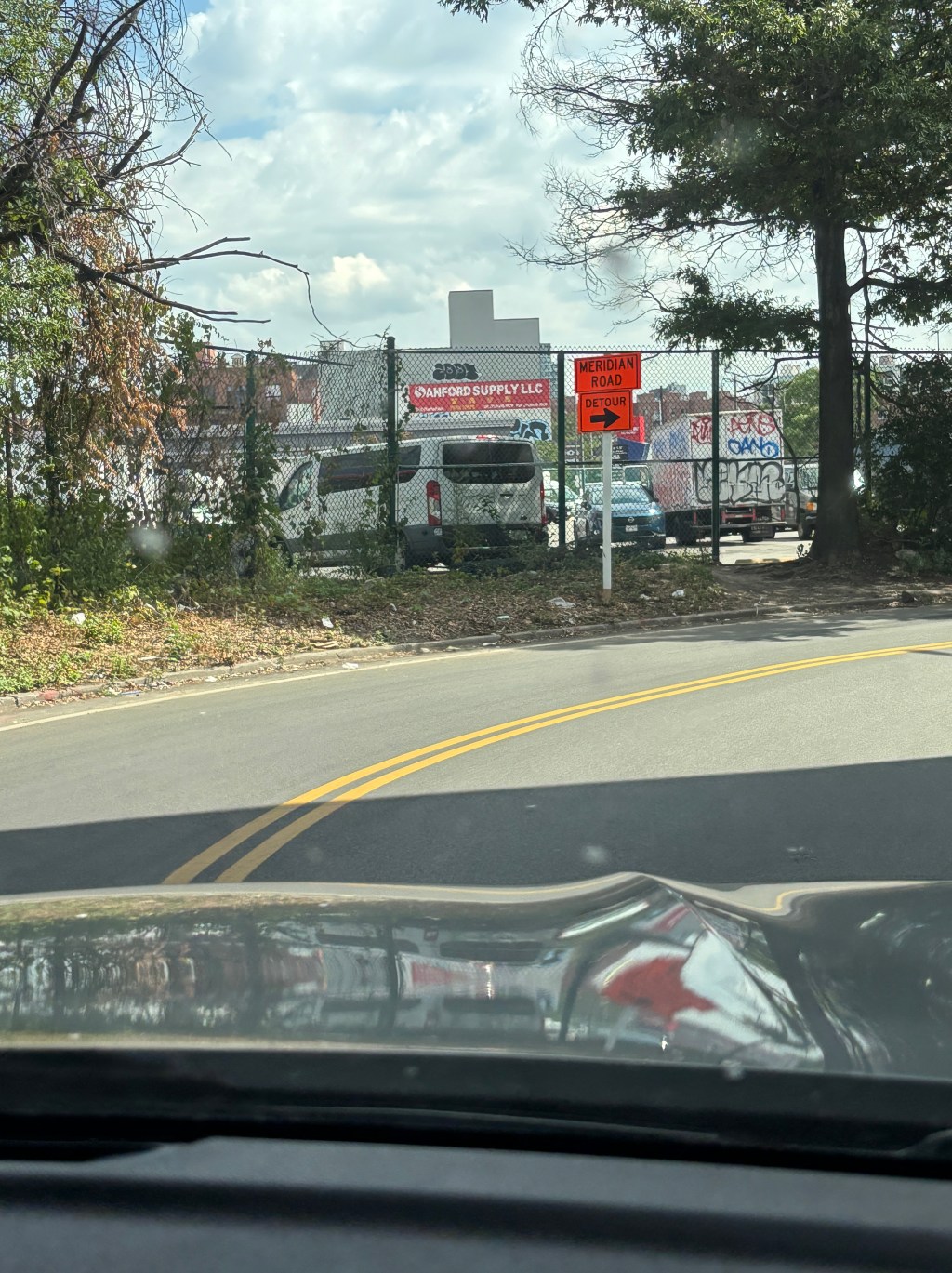
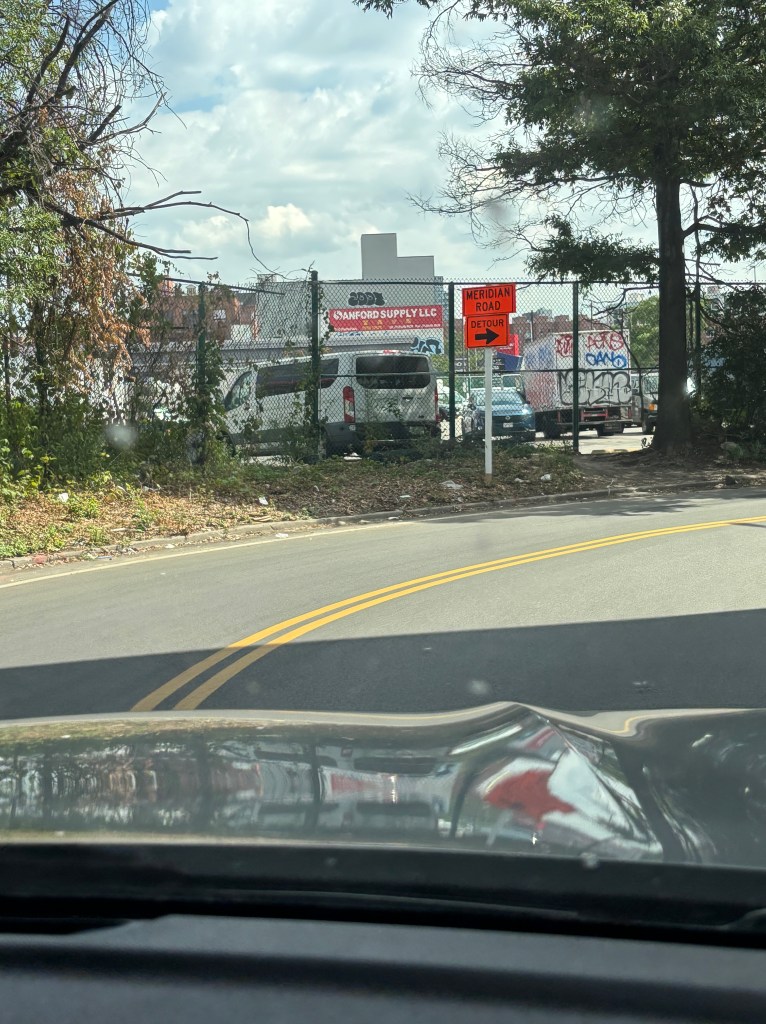
We continued around, coming close to making a full circle and ending up back at Citi Field until we hit a road closure and had to detour down small alleys in the opposite direction of where we wanted to go. Down one of those streets, we found a lot run by two guys sitting in lawn chairs. My husband rolled down my window, and asked if there was parking. The two guys looked at each other and smirked, “Yeah, yeah, there’s parking. Twenty bucks.”
My husband asked, “Seriously? If I give you $20, we can park here?”
The guy replied, “Yeah, park behind that truck, nobody’ll know.” I looked around and realized there was no safe way to walk from there to either the tennis center or Citi Field, not to mention our car would be parked illegally in an alley in Queens. For the second time that day, my withering stare got my husband to drive.
We moved ahead, each opening our Maps apps to figure out where to go next. I didn’t realize my husband had muted his navigation on the car’s dashboard, so when I turned mine off, we ended up missing the correct turn. That detour cost us even more time.
We seriously tested our marriage communication while we were lost in Queens, and while he cajoled me into enjoying our “filling time,” I tried REALLY hard not to lose my mind.
With Maps rerouted, I decided to search for private lots near the area, but nothing showed up as available. Then, I went back to ChatGPT, which an hour before had pointed us in the direction of a mall parking lot, about a nine-minute walk from Citi Field and 12 minutes from the U.S. Open. It was worth a shot. It was our only option at that point.
Drawing in my breath, I told my husband to turn at the same spot we should have turned an hour earlier when ChatGPT first gave me its output. We quickly found our way to a big mall, and parked at BJ’s, which was completely legal, by the way, according to the sign that said “event parking will be charged the full day rate.” It cost $25 for the whole day — not bad for New York City.
By then, we still didn’t have tickets to any event but we had a parking spot! We had been monitoring prices, which had steadily dropped from the time we woke up until we first got to the city. By the time we walked up to the tennis center, we were a little over an hour late for the match, and the prices reflected the late arrival. We ended up with amazing seats in the fourth row for a fraction of the original cost and only missed one set. Sometimes, not planning actually works out better.
The tennis matches were fun. My husband loved the tennis, and I appreciated the athleticism of the players. I entertained myself by studying the ball people and trying to figure out their rotations. I nearly solved the pattern during the final game, but just as I was about to confirm it with one more data point, a new team rotated in. I may just have to go back sometime to finish testing my hypothesis.
After tennis, we headed to the Mets game to watch the rookie’s first Major League appearance. While outside the stadium, we found reasonable tickets, bought them, and headed in for the second round of our Queens double header. We stayed until the seventh inning, and luckily, our team was winning. By then, we were exhausted and decided to head home.
In total, we had a 14-hour day filling time — chaotic, exhausting, and definitely an adventure.
Why is my stomach in knots as my husband pulls into the gas station 2 miles from home? We face forward, in our own thoughts, until he says, “We’re almost home.”
I grab his hand as I respond, “I know.” The tears are so close to leaking.
I fear the silence will engulf me, wrapping my body like a vice, not the hug of home.
My nose will remind me of the last time we returned, kids in tow, to the strange smell of home, one that quickly becomes unnoticeable, but is always noticeable after a few days away. How will that scent change over time, without teen spirit?
He pulls out of the gas station and takes the road we have taken so many times before. We are a mile away, a half mile, making the turn off the main road, onto our street. Into the driveway.
My stomach clenches as it does before I go onstage or give a presentation. No matter how confident I am, there is always the unknown, captured in more than butterflies and less than wanting to puke.
We are home.
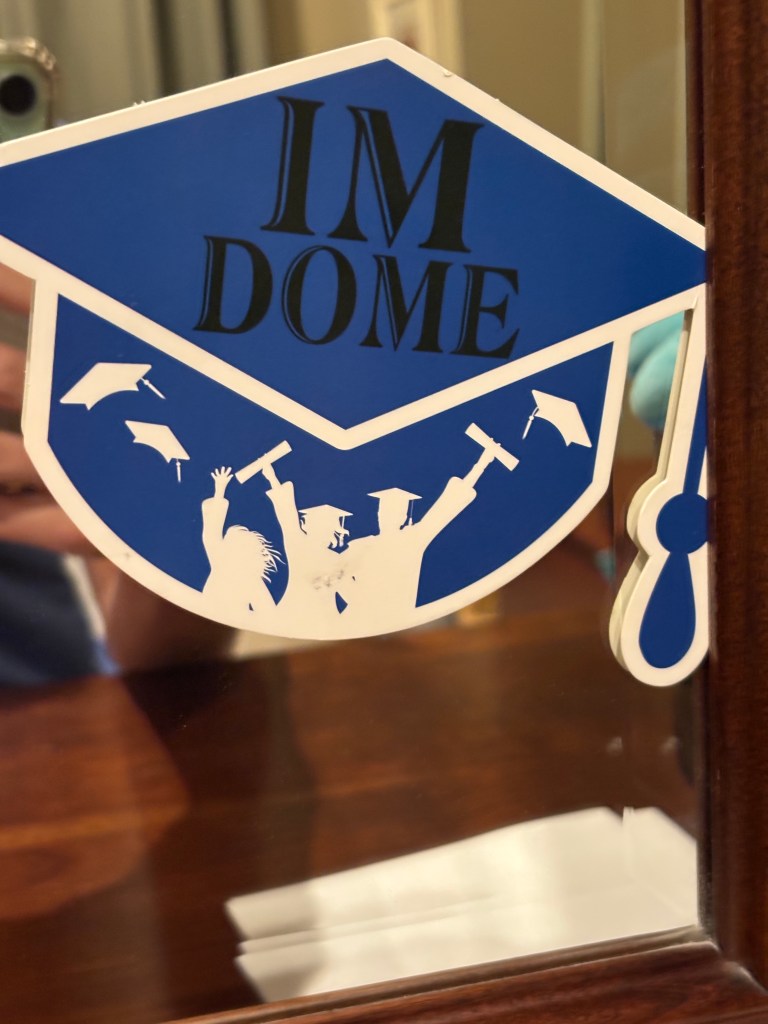
And I’m officially “dome.”
It’s familiar, comforting, and not nearly as empty as I thought it would be. My fears recede, my stomach relaxes, and I work on the task at hand – unloading the car – and NOT worrying about cleaning up the mess. That will be a task for another day.
Today, I rest. “I’m dome.” I’m home.
Note: This cut-out was part of a graduation pack that I purchased for the party for my twins. It became a running joke over the summer as I finished each aspect of Phase I Parenting (the way I’m now referring to the last 18 years). It is currently on my dresser mirror, and I think it’s finally true. I’m dome, at least with that journey.








 Filling Time: TwinLife Empty-Nesting